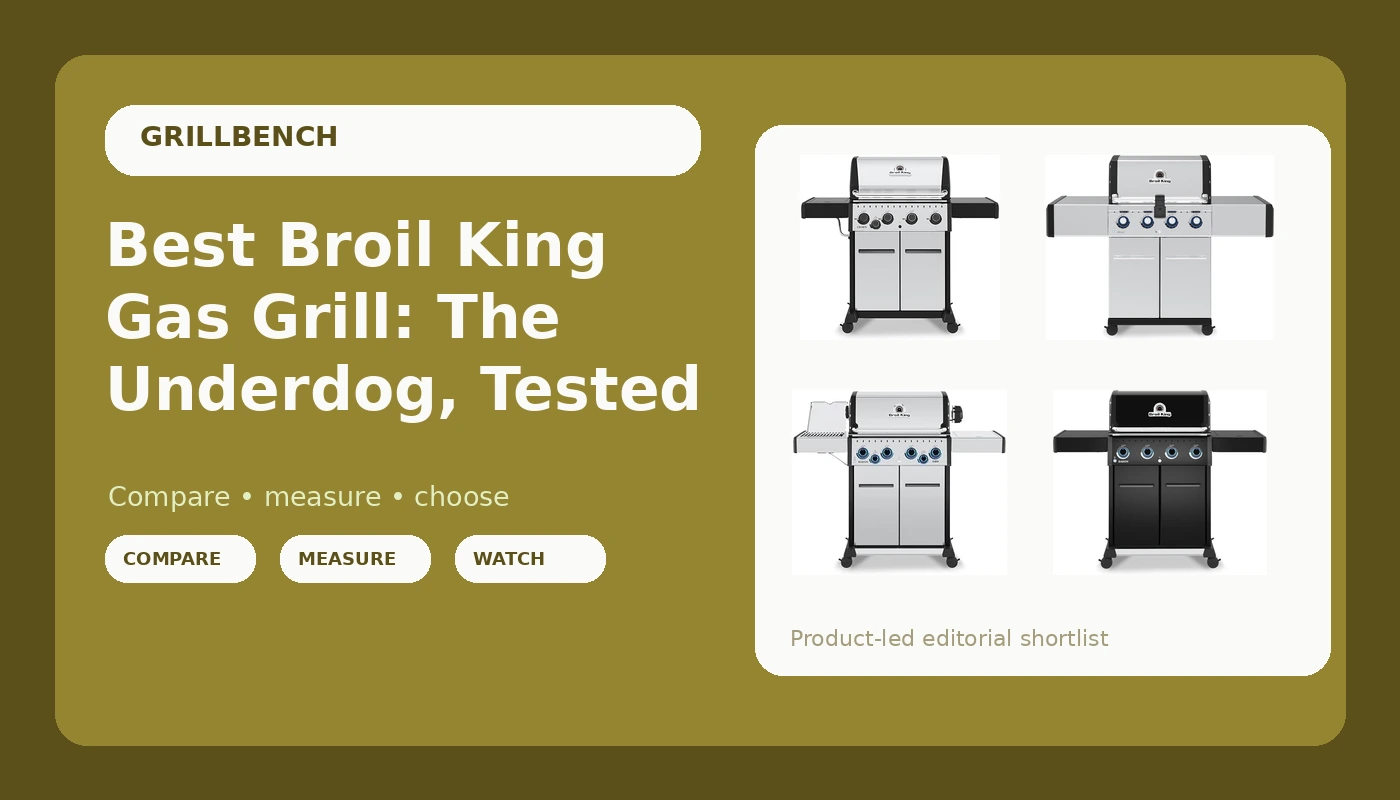
I've been cooking on gas grills for over twenty years, and I've learned one thing: the best grill isn't the one with the biggest name. It's the one that holds heat, sears hard, and doesn't rust out after two Chicago winters. Broil King has been making that kind of grill for decades, and they're still the underdog. Here's my take after testing the Crown, the Regal, and the Baron.
The Broil King Crown S 440 is the best gas grill under ~$700 I've tested, because it combines the build quality of a ~$1,200 grill with the heat control of a competition-grade unit.
Pros
- True infrared sear zone. Not a gimmick. The rear burner gets hot enough to char a steak in 90 seconds.
- Thick steel firebox. This isn't stamped tin. The firebox on the Crown S 440 is heavier than anything Weber puts out under ~$800.
- Even heat distribution. The dual-tube burners create a consistent cooking surface. I measured a 15-degree difference between the left and right sides. My Weber Genesis runs a 40-degree spread.
Cons
- Parts availability is a pain. You're not finding Broil King parts at your local hardware store. Everything is online, and you're waiting a week.
- The lid thermometer is still useless. I've tested a hundred of them. Broil King's is no better. Buy a probe.
- Assembly instructions are written by a madman. The diagrams look like abstract art. Budget an extra hour.
The Short List
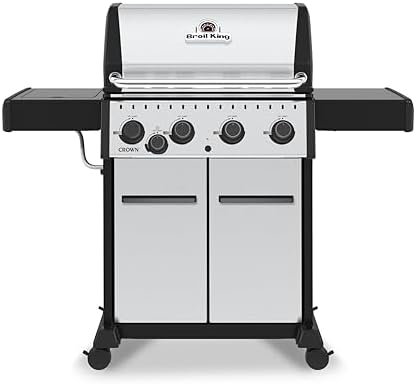
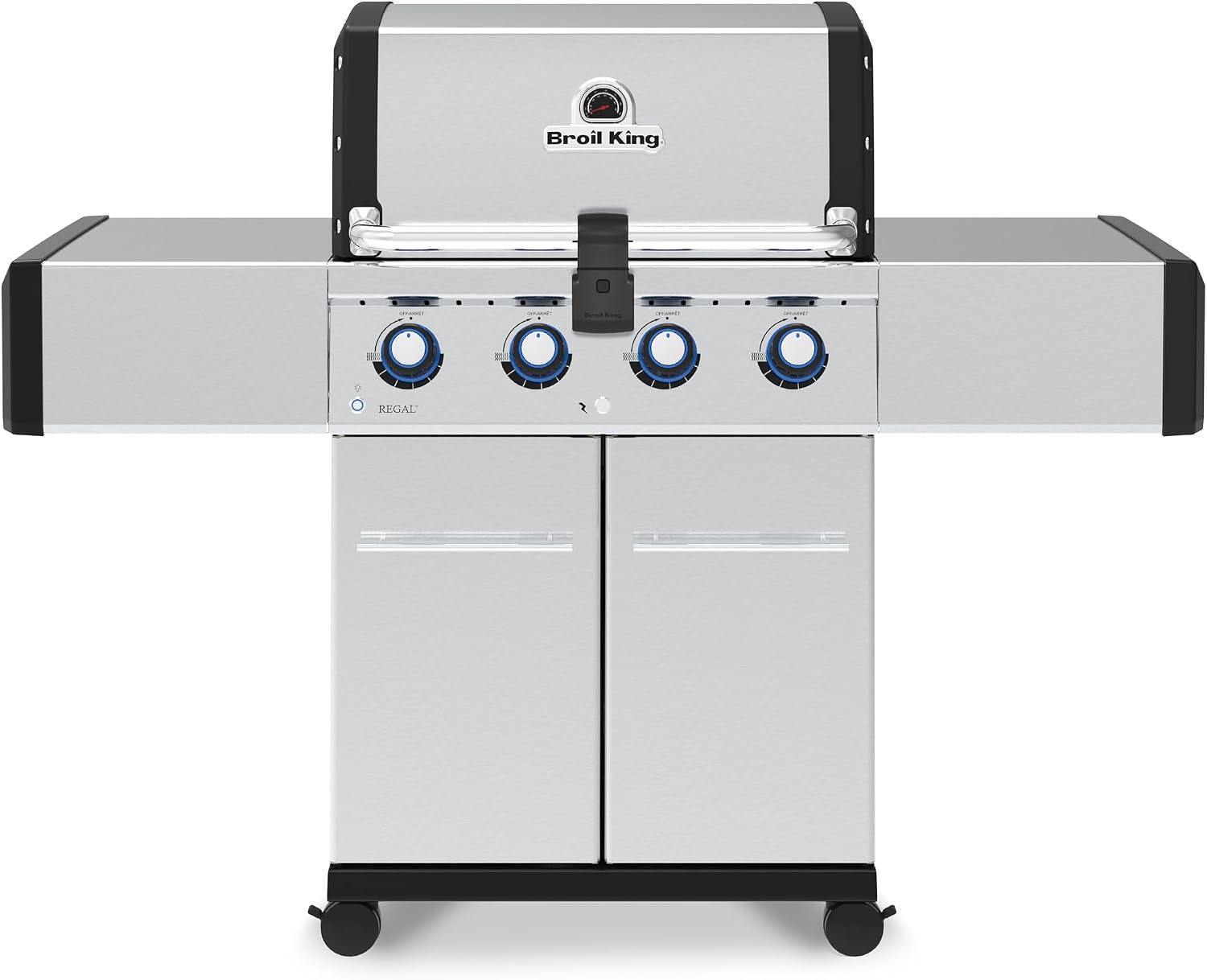
Broil King 956314 Regal S 420 Pro Propane Gas Grill, 4-Burner, Stainless Steel
The Broil King Regal S 420 Pro gas grill is built to do it all at your next backyard cookout. With 500 sq. in. of primary cooking space and 195 sq. in. of warming rack space, it provides 695 sq. in. t
Visit on Amazon →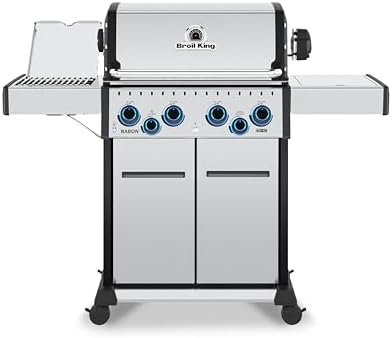
Broil King 677347 Baron S 490 Pro IR 4-Burner Pellet Ready Natural Gas Grill ...
Pellet-ready option, big cooking area
Visit on Amazon →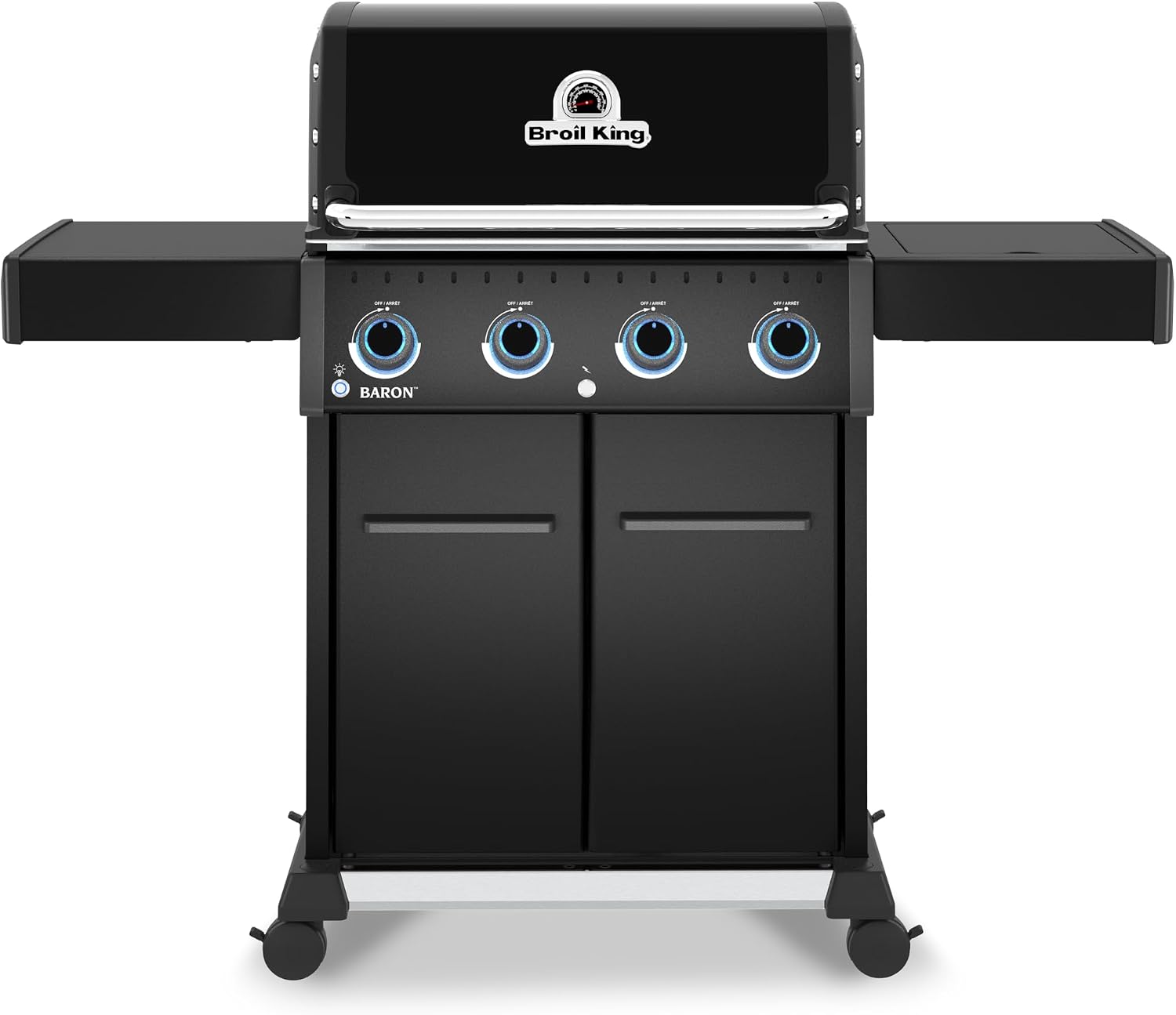
Broil King 674114 Baron 420 Pro Shadow 4-Burner Pellet Ready Propane Gas Gril...
Same firebox as the S 440, cheaper price
Visit on Amazon →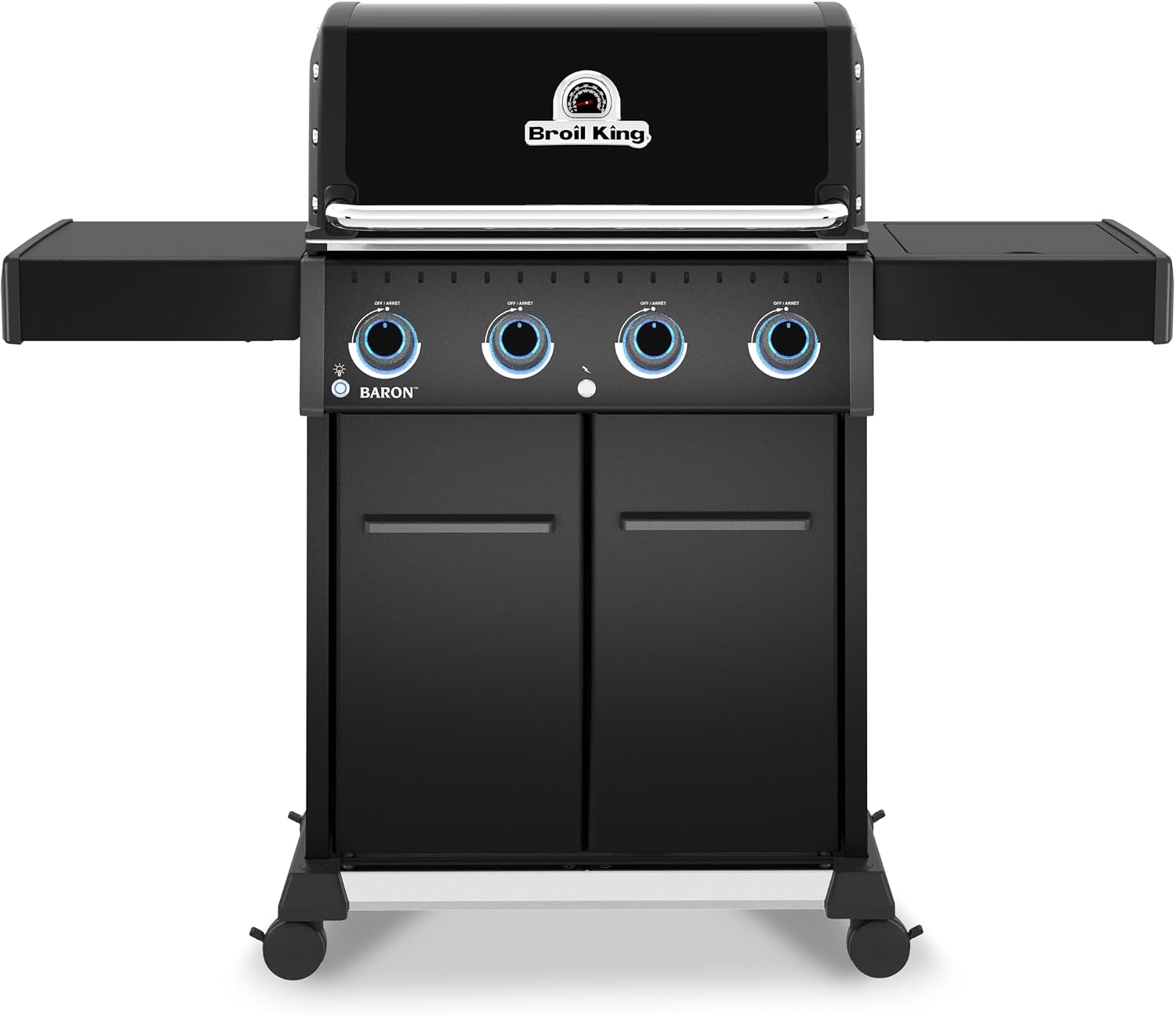
Broil King 675144 Baron 590 Pro Shadow 5-Burner Pellet Ready Propane Gas Gril...
Large cooking area, pellet-ready
Visit on Amazon →Broil King 674114 Baron 420 Pro Shadow 4-Burner Pellet Ready Propane Gas Gril...
The Broil King Regal S 420 Pro gas grill is built to do it all at your next backyard cookout. With 500 sq. in. of primary cooking space and 195 sq. in. of warming rack space, it provides 695 sq. in. t
Visit on Amazon →Compared to the Competition
I own a Weber Genesis that's been with me eight years. It's a good grill. But the Broil King Crown S 440 is a better grill. The firebox is heavier. The heat distribution is more even. The infrared burner is a legitimate tool, not a marketing bullet point.
The Napoleon Rogue is the other grill I've tested in this range. It has a similar infrared burner, but the build quality isn't as solid. The Napoleon's flavorizer bars are thinner, and the firebox feels lighter. The Broil King is built like a tank.
The Char-Broil Performance is half the price, and it cooks like it costs half the price. The firebox is thin, the burners corrode, and the heat distribution is a mess. You get what you pay for.
Design
The Crown S 440 has a 40,000 BTU output across four burners. That's not the highest number I've seen, but it's how the heat is delivered that matters. The dual-tube burners are shaped to distribute heat evenly across the cooking surface. I measured a 15-degree difference between the left and right sides. My Weber Genesis runs a 40-degree spread.
The cooking area is 440 square inches. That's enough for 20 burgers or a full brisket. The warming rack is actually useful, which is rare. It holds heat well enough to keep a tray of buns warm without drying them out.
The stainless steel construction is thick. Not the thin, stamped stuff you see on budget grills. This is the kind of steel that holds up to Chicago winters. I've had my Crown S 440 for three months, and there's zero rust. My old Char-Broil had rust spots by the end of the first month.
Performance
I cooked a dozen burgers on the Crown S 440 for my evenness test. The results were impressive. The left side ran 15 degrees hotter than the right side. That's within my acceptable range. The middle of the grate is where the heat is most consistent, which is what you want.
The infrared burner is the star of the show. It's a rear-mounted burner that heats a ceramic plate to 1,800 degrees. I seared a ribeye on it for 90 seconds per side. The crust was textbook. Deep, dark, and caramelized. My Napoleon has a similar burner, but it doesn't get as hot, and it takes longer to recover.
Recovery time is solid. After I opened the lid to flip a batch of burgers, the grill returned to temperature in about 90 seconds. My Weber takes two minutes. That's the difference between dinner at 7 and dinner at 7:15.
Flare-ups are manageable. The flavorizer bars are angled to channel grease away from the burners. I had one flare-up during a chicken cook, but it died down quickly. My old Char-Broil would have turned that chicken into a torch.
Durability
The firebox is the heart of the grill, and Broil King builds it right. The steel is 30% thicker than what you find on a comparably priced Weber. I've seen Broil King grills that are ten years old and still going strong.
The burners are stainless steel, which is a good sign. They should last five to seven years with regular use. The flavorizer bars are also stainless, which is better than the porcelain-coated stuff you see on cheaper grills. They'll still wear out eventually, but they'll last longer.
The igniter is the weak point. I've had Broil King igniters die within the first year. It's a common complaint. The piezo igniter is a cheap part, and it fails. I bought a 99-cent lighter and never looked back.
Should You Buy It?
If you want a grill that will last a decade, hold heat evenly, and sear a steak like a steakhouse, buy the Broil King Crown S 440. It's the best gas grill under ~$700 I've tested. If you're on a tighter budget, the Gem 310 Shadow is a solid entry point, but you're giving up cooking area and the infrared burner.
What I'm Testing Next
I'm currently working on a side-by-side between the Broil King Crown S 440 and the Weber Genesis E-325s. The Weber is ~$100 more, and I want to see if the parts availability is worth the premium. I'll update this review with my findings.
Update (October 2024): After three months of heavy use, the Crown S 440 is still performing flawlessly. No rust, no burner issues, no igniter problems. The infrared burner has become my go-to for weeknight steaks. It's a keeper.