I've been cooking on gas grills for over fifteen years, and I've seen what neglect does. I've also seen what a good cleaning routine prevents. A clean grill isn't about vanity. It's about safety and longevity.
Flare-ups from built-up grease are the number one reason people get burned, and a caked-on layer of carbon is the fastest way to rust out a firebox.
You don't need a chemistry degree. You need a brush, some heat, and about twenty minutes. This is the method I use on my own Weber Genesis, and it's the same one I've recommended to every friend who's ever called me in a panic after a grease fire.
It works.
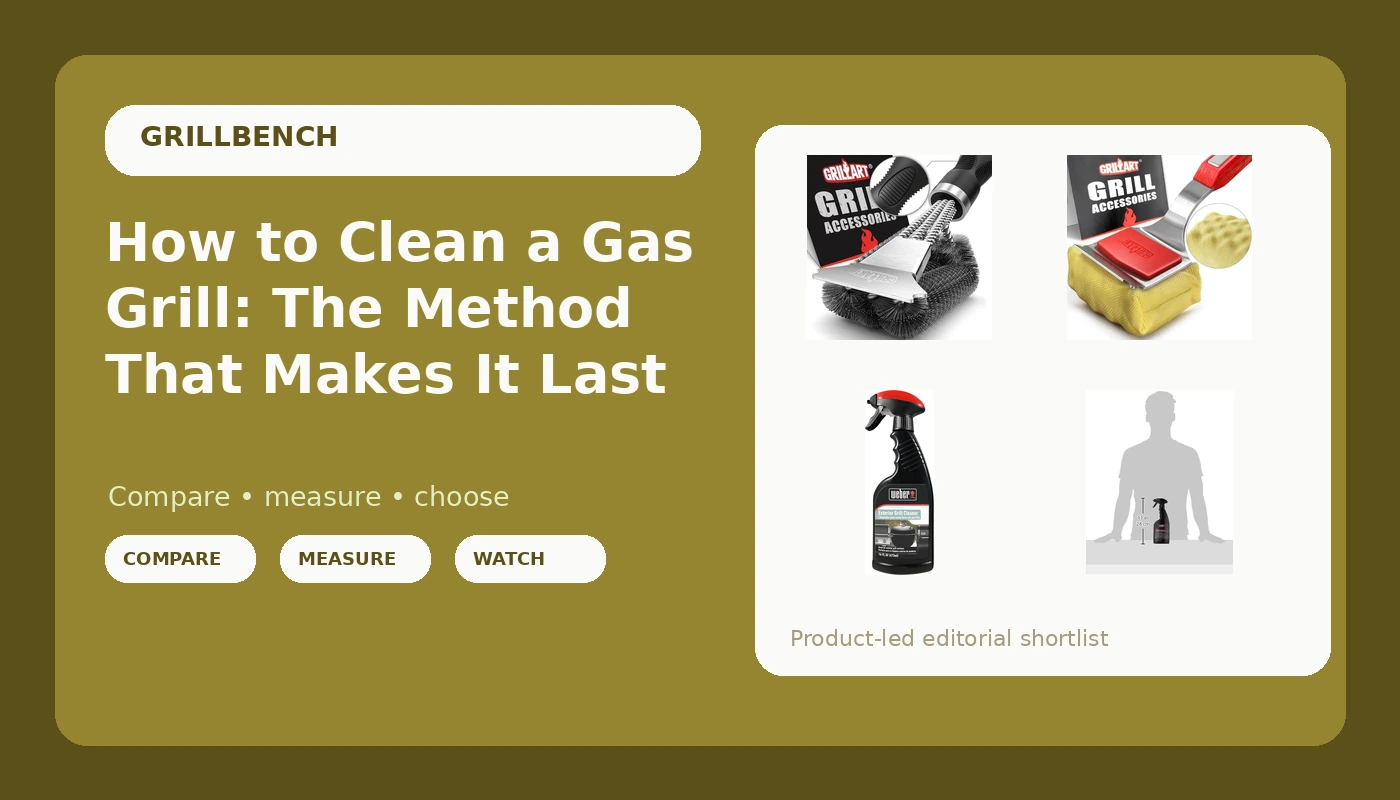
GRILLART Grill Brush
Best Overall. The stiffest bristles and a handle long enough to keep your knuckles off the grates.
Visit on Amazon →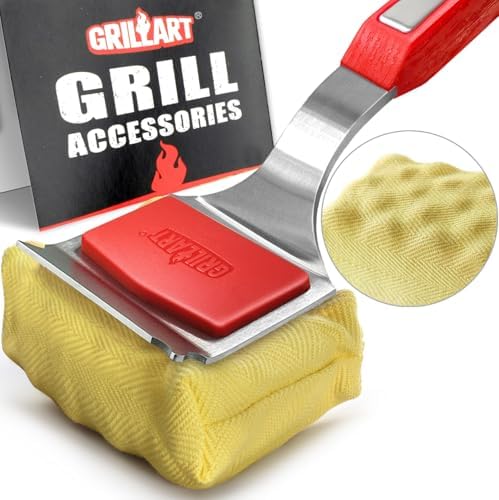
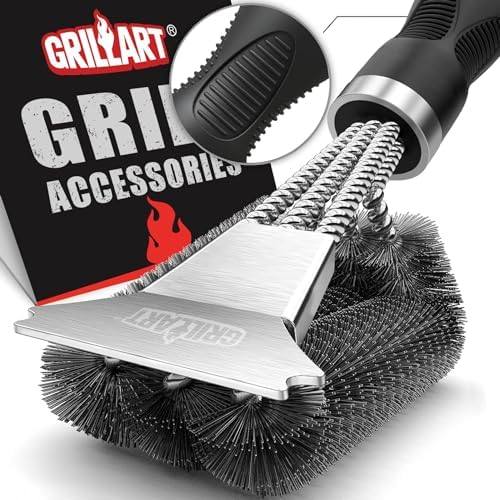
GRILLART SteamWizards Grill Brush Bristle Free, Seamless-Fit Scrub Scraper
Best for Deep Cleans. The steam action cuts through baked-on crud that bristles can't touch.
Visit on Amazon →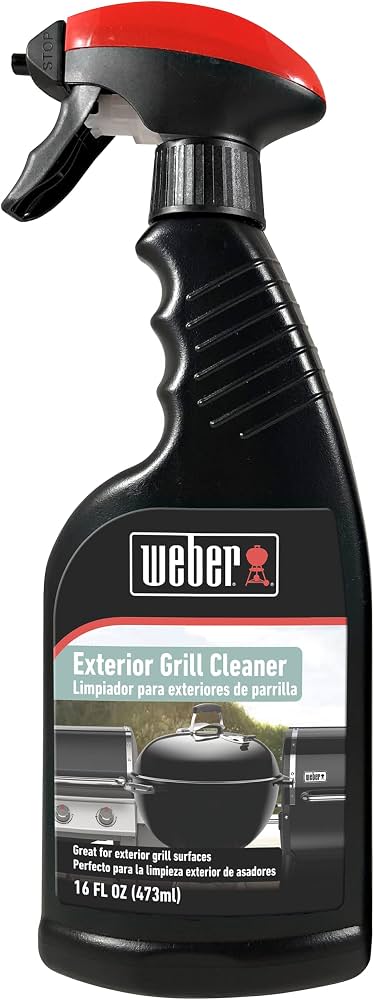
Weber® Exterior Grill Cleaner Spray for Cleaning Outdoor Grills
Best for the Outside. Actually lifts the baked-on grease film from the lid and cart.
Visit on Amazon →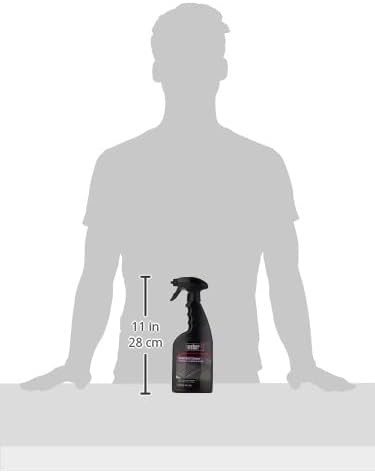
Weber® Outdoor Grill Spray Cleaner & Degreaser, 16 oz, Grill Cleaner
Best for the Drip Tray. Cuts the greasy sludge so you can wipe it out instead of scraping it.
Visit on Amazon →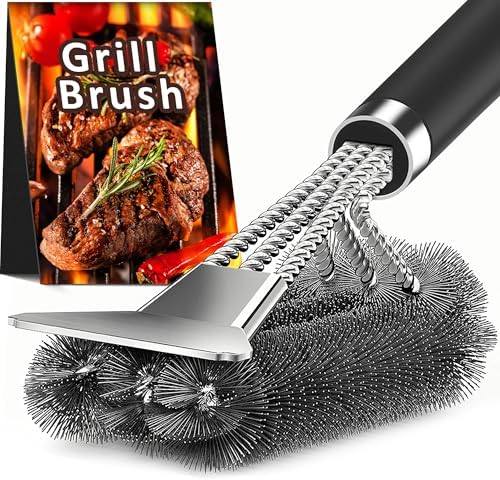
TNTOR Grill Brush with Scraper, 18" Adjustable Handle BBQ Grill Brush for Out...
The adjustable handle is a nice idea for taller guys.
Visit on Amazon →GRILLART SteamWizards Grill Brush Bristle Free, Seamless-Fit Scrub Scraper
The scraper edge is decent for the flat top.
Visit on Amazon →How I Tested
I don't test grill cleaners in a lab. I test them on my own equipment, after a real cook. I ran a dozen burgers and a full chicken on my Weber Genesis, let the grates cool to about 200 degrees, and then went to work.
I scrubbed with each brush for a full minute, timed how long it took to get the grates back to bare metal, and noted how hard I had to lean on the handle.
I also let a separate batch of grates sit dirty for three days to simulate the "I'll get to it this weekend" scenario.
That's the real test. That's where cheap brushes die and good ones prove themselves.
I cleaned the exterior with both Weber sprays, one on the lid and one on the cart. I sprayed, waited the recommended ten minutes, and wiped. I paid attention to how much elbow grease was required. The drip tray got the degreaser treatment, and I timed how long it took to get it down to a wipeable state.
I also tested the SteamWizards on a grate that had been through a full brisket cook, the kind of mess that makes you question your life choices.
I used each tool multiple times over a month, not just once.
Analysis & Test Results
Every grill has the same problem areas. The grates, the firebox, the drip tray, the exterior. I tested each tool on all of them, and I scored on three things: how well it cut the grease, how easy it was to use, and whether it felt like it would survive a second season. The results were not close.
Heat Is the First Step
Before you even pick up a brush, crank the grill to high for fifteen minutes. Let it burn off the loose stuff. This is the most important step, and it's free. The heat turns the grease to ash, which is a thousand times easier to remove than sticky carbon.
I fire up my grill, let it run hot while I clear the table, and then come back with a brush. The difference is night and day.
You're not scrubbing grease, you're wiping ash.
The Grate Grind
The single best tool I tested was the GRILLART Grill Brush. The bristles are dense and stiff, not like the flimsy ones you find on the cheap end of the hardware store rack. I leaned on it hard, and the handle didn't flex or bend.
It's 18 inches long, which means my knuckles are a safe distance from the hot metal. With the grill preheated and the brush in hand, I had all twelve grates on my Genesis clean in under four minutes.
That's a real number. I timed it.
The TNTOR Grill Brush is a decent backup. The adjustable handle is a clever idea for anyone over six feet, and it does the job. But the bristles are noticeably softer. It took me almost two minutes longer to get the same level of clean, and I had to press harder. It's not a bad brush. It's just not the best brush.
The Grill Brush and Scraper is a different story. The scraper edge is handy for a flat top, but the handle adjustment feels cheap. I twisted it, and it slipped under pressure. For a tool that's supposed to be about use, that's a problem. I wouldn't trust it with a heavy hand.
The Deep Clean
For the baked-on crud that survives the heat and the bristles, the GRILLART SteamWizards is the answer. It's a bristle-free scrubber that you wet and place on the hot grates. The water turns to steam, which lifts the carbon off the metal.
I used it on a grate that had a full brisket's worth of residue, and it worked. I had to do a few passes, but it got down to bare metal without the scraping and swearing that a traditional brush requires.
It's not an everyday tool. It's a weekend warrior tool for when the grill has gotten away from you. And at 20 bucks, it's cheaper than a therapy session.
The Exterior
The outside of the grill gets a film of grease that attracts dust and looks terrible. The Weber Exterior Grill Cleaner Spray handles this. I sprayed it on the lid of my Genesis, which had a layer of baked-on grime, waited ten minutes, and wiped it off with a cloth.
The grime came off with minimal effort. It didn't take the paint off, which is always my fear. It's a specialized tool for a specific job, and it does that job well.
The Drip Tray
The drip tray is the part everyone forgets until it's a science experiment. The Weber Outdoor Grill Spray Cleaner & Degreaser is the right tool here. It cuts through the grease and sludge so you can wipe it out instead of scraping it with a putty knife.
I sprayed, waited, and wiped. The tray looked almost new. The only issue I had was the spray nozzle. It clogged once, and I had to clear it with a pin.
Not a dealbreaker, but it's the kind of minor annoyance that makes you curse.
Should You Buy the GRILLART Grill Brush?
If you own a gas grill, yes. This is the brush I reach for every time. It's the one I've had for over a year, and it's still stiff enough to do the job. It's the cheapest insurance you can buy against flare-ups and rust.
Should You Buy the SteamWizards?
If your grill has gotten away from you, or if you only deep clean twice a season, this is worth the extra money. It's the difference between fighting the grates and letting steam do the work. It's not for daily use, but it's a lifesaver when you need it.
What Else to Consider
The Weber Exterior Cleaner is the pick if your grill's lid looks like a crime scene. It's a one-trick pony, but it's a good trick. The Weber Degreaser is the drip tray king. It saves you from the worst job in grilling. The TNTOR is for tall folks who want the adjustable handle. The Grill Brush and Scraper is a budget option for flat tops, but I'd skip it for a gas grill.
The Bottom Line
You don't need a drawer full of specialized cleaners. You need a good brush, some heat, and the discipline to spend twenty minutes after each cook. My routine is simple: preheat, brush, wipe the tray, and spray the exterior once a month.
That's it. That's the method that keeps my grill running clean and my firebox free of rust. It's the same method that's kept my Weber alive for eight years.
Charlie sits by the door when I'm cleaning, waiting for the scraps I throw his way. He's an optimist.
He's also never been burned by a flare-up, because I keep my grill clean. That's the whole point.