I've got a drawer full of grill accessories that seemed like a good idea at the time. A rotisserie basket for wings that never fit right. A "heavy-duty" cover that shredded in one winter. A set of skewers I've used exactly once.
Related: Best Gas Grill Under $1,000: Where the Real Value Lives
So when I set out to find the best gas grill accessories under 50, I wasn't shopping for gadgets. I was shopping for the stuff I actually reach for on a Tuesday night cook, the tools that have survived three seasons in my driveway without ending up in the rust bucket pile.
I'm Ray. I've been judging BBQ circuits for 12 years and cooking on my Weber Genesis for 8. My dog Gus supervises every cook from his spot downwind. I keep a spiral notebook of every grill session, including the failures. Here's what's worth your money.
The Instant-Read Thermometer
My wife thinks I have too many thermometers. She's right. I own seven. But if you're only buying one accessory this year, it's an instant-read, and the ThermoPop style thermometer is the one I grab first.
The built-in lid thermometer on your grill is a decoration. I've said it a hundred times. It tells you the temp at the dome, not at the grate, and it's usually off by 30 to 50 degrees. If you're cooking by that needle, you're guessing.
I've had my ThermoPop for three years. It's survived being dropped on concrete, left in a hot grill for ten seconds, and splattered with brisket fat more times than I can count. The probe is thin enough that it doesn't leave a visible hole in a steak, and it reads in about three seconds. That speed matters when you're checking a pork loin that's climbing toward 145 fast.
The magnet on the back is strong enough to stick to the grill hood, which is where it lives. The battery lasts forever. I replaced it once in three years, and that was only because I left it in the rain.
Is it perfect? The buttons are small and stiff when your hands are greasy. But you won't use the buttons much. You'll just open the probe, stick it in the meat, and read the number.
At ~$35, it's the single best value in grilling. A ~$40 brisket deserves better than a guess.
The Grill Brush That Actually Cleans
I'll be honest with you. I hate cleaning the grill. It's the worst part of the cook, and for years I used a cheap wire brush that shed bristles into the food. One of those bristles ended up in Gus's mouth once. He was fine, but I threw that brush in the trash and never looked back.
The Grill Rescue Steam brush is what I use now. It's a plastic paddle with a sponge head. You dip it in water, press it against the hot grates, and the steam does the work. No wire bristles to break off and end up in your ribeye. No scraping. No elbow grease.
It takes about thirty seconds to clean a set of grates after the cook. The sponge head is replaceable, and one head lasts me about six months with weekly use. The handle is long enough that my knuckles don't hit the lid.
The downside? You need the grill hot for it to work. If you're cleaning a cold grill, you're back to scraping. And the sponge does wear out faster than a wire brush ever did. But I'm not eating steel wool with my steak, so I'll take the trade.
For ~$15.24, it's the right tool for the job. My old wire brush is in the trash where it belongs.
The Flameless Plasma Lighter You'll Actually Use
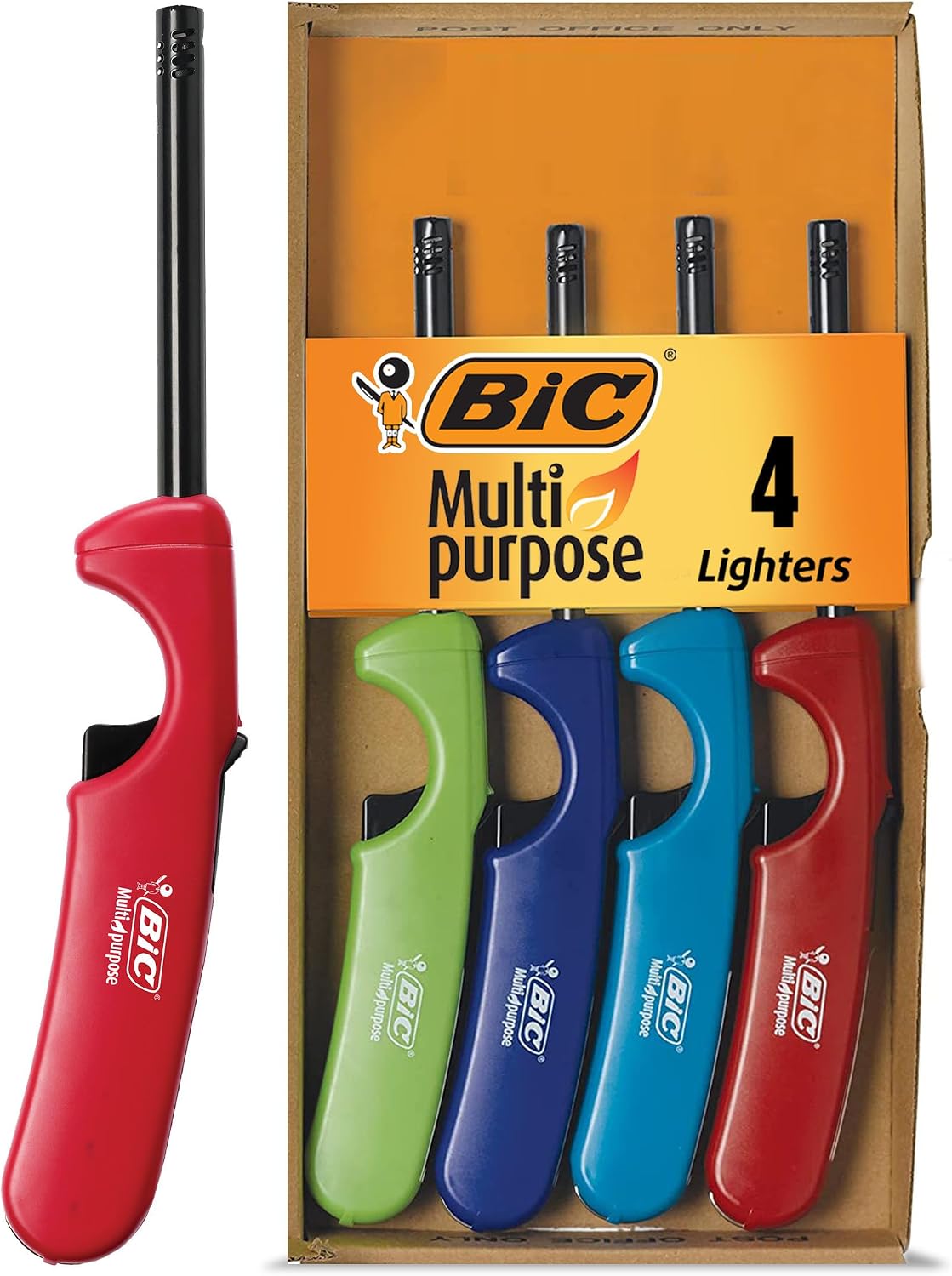
Every gas grill owner has a story about the igniter. Mine died in the second season of my old Char-Broil. The one on my Genesis is still going after 8 years, but I don't trust it. Piezo igniters are the first thing to fail, and when they do, you need a backup.
This is a long-reach butane lighter. It's 12 inches long, so you don't have to shove your hand into the firebox and hope. The trigger mechanism is simple, and the flame is consistent. I've had mine for two years, and I've refilled it maybe four times.
The best part? You can see the flame before you light the burner. That matters when you're checking for gas flow. With a match or a regular lighter, you're guessing. With this, you see exactly what's happening.
It's ~$15. Buy one for the grill, buy one for the garage. You'll use it more than you think.
The Thermometer That Lives In Your Grill
I told you the built-in lid thermometer is useless. I meant it. But you still need to know the temp at the grate, and you don't want to stand there holding an instant-read for the whole cook.
This is a leave-in probe thermometer with a wired probe that clips to the grate. The display sits outside the grill, so you can see the temp without opening the lid. It's the difference between cooking blind and actually knowing what's happening.
I've used this style of thermometer for years. The probe is rated for high heat, so it survives the 500-degree sears. The wire is long enough to route out from under the lid without pinching. The display is magnetic, so it sticks to the side of the grill.
The battery door on mine is a little flimsy. I've had to tape it shut once. But the reading is accurate, and it's held up for two seasons so far.
If you cook low and slow on your gas grill, this is essential. You can't hover over a brisket for six hours. You need to walk away. This lets you do that.
The Brush For The Deep Clean
Twice a year, I do a full deep clean on the Genesis. I pull the grates, scrape the flavorizer bars, and vacuum out the firebox. For that job, I need more than a steam brush.
This is a heavy-duty grill brush with a scraper on the back. The bristles are stainless steel, and they're crimped into the head so they don't fall out. I've had mine for a year, and I haven't found a single bristle in the food or on the grates.
The scraper is the real selling point. It handles the baked-on crud that the bristles can't touch. I use it on the flavorizer bars and the inside of the lid. It saves me a solid twenty minutes on every deep clean.
The handle is long and comfortable. The head is angled, so you can reach the back of the grill without burning your forearms on the lid.
It's not something you'll use every week. But when you need it, you need it. And at ~$20, it's cheaper than replacing a grill because you never cleaned it.
The Burn-Off Routine
Here's the thing nobody tells you about gas grills. The best cleaning method isn't a brush at all. It's heat.
After every cook, I crank all burners to high, close the lid, and let it run for 15 minutes. That burns off the grease and food residue. Then I hit it with the steam brush for thirty seconds, and it's clean.
This doesn't require any special accessory. It just requires a grill that gets hot. But if your grill doesn't get hot enough, or the firebox is too small, this routine doesn't work.
My old Char-Broil couldn't hold high heat for more than a few minutes before the firebox started glowing orange. The Genesis holds 500 degrees for 20 minutes without complaint. That's the difference between a grill you can maintain and a grill that turns into a rust bucket.
If you're shopping for a new grill, factor this in. The best accessory is a grill that cleans itself.
The After-Cook Routine
I know I said I hate cleaning the grill. But I also know that the ten minutes I spend after each cook saves me hours of scraping later. Here's my routine.
After the burn-off, I use the steam brush to knock off the remaining residue. Then I close the lid and let it cool. Once it's cool, I wipe down the grates with a paper towel and a little oil. That keeps them seasoned and prevents rust.
The drip tray gets checked every other cook. If it's more than half full, I change it. A full drip tray is a grease fire waiting to happen. I've burned my eyebrows off once. I'm not doing it again.
This routine takes ten minutes. It's the difference between a grill that lasts eight years and a grill that dissolves in two winters. I know which one I prefer.
The Bottom Line
You don't need a drawer full of gadgets. You need four things: an instant-read thermometer, a safe grill brush, a leave-in probe, and a long lighter. That's it. Everything else is marketing.
The best gas grill accessories under 50 aren't the flashiest. They're the ones you reach for every single cook. I've been doing this for 27 years, and those four tools are the ones that survived the cut. Everything else ended up in the garage sale pile.
Buy the thermometer first. Then the brush. Then the probe. Then the lighter. You'll be set for a decade.