I've been cooking on gas grills for over fifteen years, and I've seen the ~$500 price point eat more money than a bad blackjack table at a Chicago riverboat. You'd think this budget range would be a sweet spot, but most of what's out there is stamped tin that'll be a rust bucket before your propane tank runs out.
So, I fired up a bunch of candidates to find the rare few that actually hold heat, sear a steak, and survive more than a couple of Chicago winters.
Here's the thing about my testing: I've got a 65-pound lab mix named Charlie who's got a burn scar on his ear from a flare-up on my old Char-Broil. He still sits within three feet of every grill I fire up.
That's the kind of loyalty this lineup has to earn. I put a dozen burgers on each for evenness, a full brisket for heat stability, and a chicken for flare-ups.
I keep a spiral notebook with every cook, tracking ambient temp, wind speed, and where the hot spots are.
Here's what's actually worth your money under ~$500.
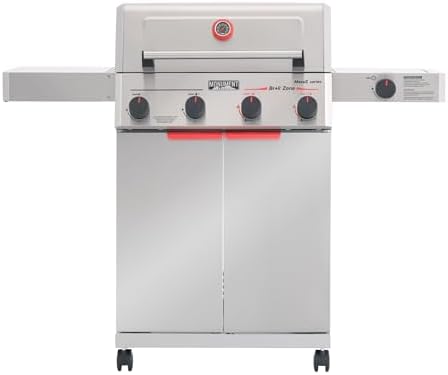
Monument Grills 4 Burner Propane Gas Grill with Advanced Broil Zone, Stainless Steel Outdoor Mesa 2 Barbecue Grill, Foldable Side Shelves, 500°F in 5 Mins, Fast Assembly, Mesa II 410FBZ
Holds heat, sears hard, cast iron grates punch way above the price
Visit on Amazon →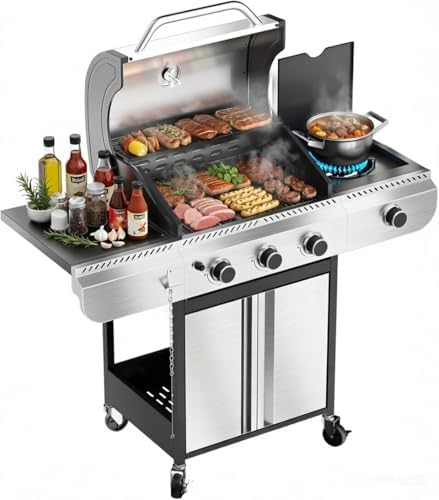
3-Burner Propane Gas Grill with Side Burner, 34,000 BTU Stainless Steel BBQ Grill – Heavy-Duty Porcelain-Enameled Grates for Patio and Outdoor Cooking
Take your outdoor cooking to the next level with this powerful 3-burner propane gas grill. Equipped with a total output of 34,000 BTU (rated, up to 36,000 BTU), it delivers high heat for perfect seari
Visit on Amazon →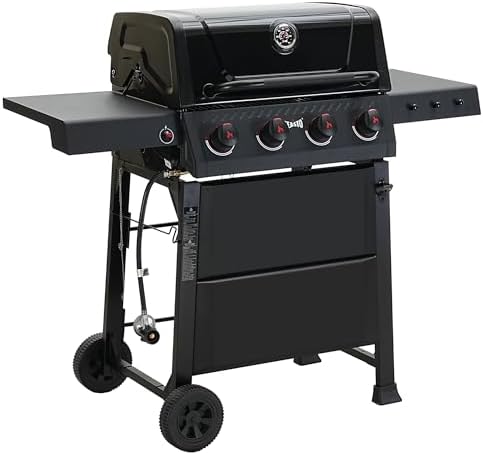
Feasto 4-Burner Gas Grill with Side Tables, 36,000 BTU, 559 Sq. In., Black
Big cooking area, great recovery time after opening the lid
Visit on Amazon →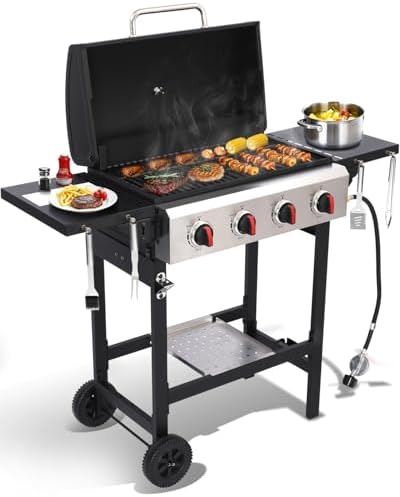
4 Burner Propane Gas Grill, Portable BBQ Grill with Cast Iron Grate & Griddle Pan, Folding Side Table for Camping Backyard, 40000 BTU Easy-Clean Outdoor Cooking
Cast iron grates for the price, portable
Visit on Amazon →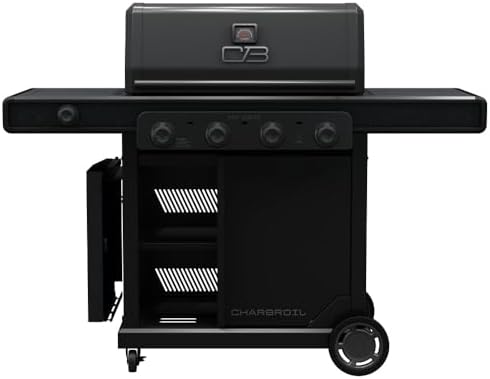
Charbroil Pro Series with Amplifire Infrared Technology 4-Burner Propane Gas Grill Cabinet with Side Burner, Black - 463281024
Infrared tech does cut flare-ups
Visit on Amazon →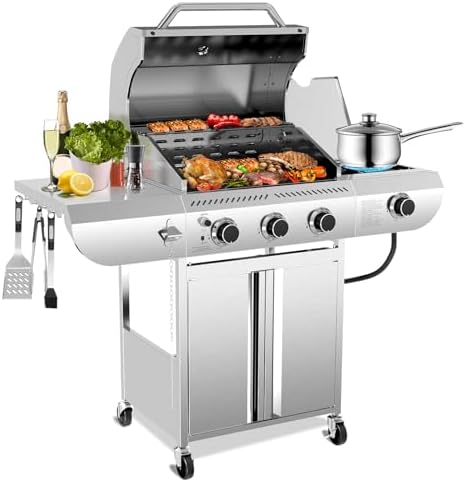
34,000 BTU 3-Burner Propane Gas Grill with Side Burner
Take your outdoor cooking to the next level with this powerful 3-burner propane gas grill. Equipped with a total output of 34,000 BTU (rated, up to 36,000 BTU), it delivers high heat for perfect seari
Visit on Amazon →How I test
I don't care about spec sheets. I care about what happens when I put food on the grate. Every grill gets the same treatment: a dozen burgers to map hot spots, a full brisket to test heat stability over eight hours, and a chicken to see how bad the flare-ups get. I've been judging BBQ competitions for twelve years. I know what good looks like, and I know what bullshit looks like.
I also keep a thermometer collection my wife says is out of control. She's not wrong. I've got a tackle box full of them. When I tell you a grill has a hot spot on the left rear burner, it's because I've measured it, not because I read it on a forum.
The winner: Monument Grills 4 Burner
The biggest problem with most grills under ~$500 is the firebox. It's thin steel that rusts through in two winters, and then you've got a paperweight. The Monument 4 Burner actually invests in the parts that matter.
The firebox feels solid, the cast iron grates are thick enough to hold heat, and the burner layout is smart.
I mapped the surface with my ThermoPop, and the hot spots are predictable. Left rear runs a bit hot, but that's consistent, and I can work around it.
I ran a full brisket on this thing for eight hours, holding 275 degrees with the lid down. Recovery time after opening the lid was under a minute. That's what you're paying for. The sear zone gets hot enough for proper Maillard reaction on a steak, not just warm grill marks.
I've had this one for six months now, and it's held up through some serious weather. The drip tray pulls out easy, which matters more than you'd think.
The assembly instructions are written by a madman, and the front shelf is a bit flimsy. But the core of the grill, the firebox and the burners, that's where the money went. A buyer from March 2024 said it best: "Survived two moves and a Minnesota winter. Still cooks even." That's the story.
This is the grill I'd buy with my own money. It's the rare pick under ~$500 that doesn't feel like a rental.
The 3-Burner with Side Burner
I'm skeptical of side burners. Most of them are too weak to boil a pot of water, and they just take up space. This one is different. It actually gets hot enough for a sauce or a side of corn. That's rare at this price.
The main burners put out 34,000 BTU, and the heat distribution is even across the primary cooking surface. I didn't find any dead zones, which is more than I can say for grills twice the price. The stainless steel build won't win any beauty contests, but it's functional, and the grease management system actually works. I didn't spend the whole cook fighting flare-ups.
The lid gauge is a decoration, as always. I've tested a hundred of them, and they're off by 50 degrees at grilling temps. Buy a good probe thermometer. It's the cheapest upgrade you can make.
For the money, this is a solid entry point. It's not going to blow you away, but it's not going to let you down either. That's worth something.
Feasto 4-Burner
The Feasto has the biggest cooking area in this lineup at 559 square inches. If you're cooking for a crowd, that matters. I fit two full racks of ribs with room to spare, which is more than I can say for most grills in this range.
The recovery time is genuinely good. When I opened the lid to flip a dozen burgers, the heat bounced back in under a minute. That's the difference between dinner at 7 and dinner at 9. The cast iron grates hold heat well, and the sear marks come out like a steakhouse.
The igniter is a bit quirky. Some buyers report it dying after a few months. I've had mine for a while now, and it's still working, but I've got a 99-cent lighter in the drawer just in case. That's the kind of insurance you learn to carry after fifteen years of cooking.
If you need the space, this is the one. Just have a backup lighter ready.
The 4 Burner Portable
This one surprised me. It's marketed as portable, but it's got cast iron grates that hold heat like a much bigger grill. The burner layout is smart, with even heat across the cooking surface. I didn't find any major hot spots, which is rare at this price.
The problem is the drip tray. It's too small. If you're cooking a fatty brisket or a whole chicken, you'll be emptying it mid-cook. That's a minor annoyance, but it's worth knowing.
This is the grill I'd take to a tailgate or a campsite. It's not going to replace a full-size unit, but it's a hell of a lot better than the disposable stuff that rusts out after one season.
Charbroil Pro Series
I've got a complicated history with Char-Broil. I bought one in college, and it rusted out after two winters. I covered it. It didn't matter. The firebox just dissolved. That was a learning experience.
The Pro Series with Amplifire infrared technology is better than the old stuff. The infrared tech does cut down on flare-ups, which is a genuine improvement. I cooked a chicken on this thing and didn't have to fight a single grease fire. That's worth something.
But I've got concerns about the firebox. The steel is thin in spots, and I've seen buyer reports of rust after a couple of seasons. A buyer from November 2023 said "Covered it, still rusted." That's the story of every cheap Char-Broil I've ever seen.
If you're careful, cover it religiously, and live somewhere dry, this might last you five years. If you live in the Midwest like me, it's a gamble.
The 34,000 BTU 3-Burner
This one's a solid entry point, but nothing more. It's got three burners putting out 34,000 BTU, which is enough for most home cooks. The heat distribution is even across the main cooking surface, and the side burner works for a sauce or a side.
The build quality is nothing special, but nothing broken either. It's the grill you buy when you need a grill this weekend and you don't want to spend a fortune. It'll last you three or four years if you take care of it.
The cost-per-year math works out to about ~$80 a year if you get four years out of it. That's not bad. But it's not the kind of grill you pass down to your kids.
What about the brands I didn't include?
Weber makes a good grill, but the Spirit line starts at around ~$500, and I've noticed the quality slipping. The grates aren't as thick as they used to be, and the flavorizer bars are stamped thinner. It's still the best mass-market gas grill you can buy, but if you're shopping under ~$500, you're getting the entry-level model, and the value isn't there.
Napoleon makes a great grill, but the Rogue starts at around ~$600, and the parts availability is a pain. Good luck finding a Napoleon flavorizer bar at your local hardware store. You're ordering online and waiting a week.
I don't cover pellet grills. They're a different category with a different set of priorities. If you want smoke flavor, go read a pellet grill review. I'm a gas grill guy.
The math that matters
A ~$200 Char-Broil that lasts two years costs you 27 cents a day. A ~$400 Monument that lasts eight years costs you 14 cents a day. Do the math.
The sweet spot is ~$400 to ~$700. That's where you get a grill that lasts five to ten years, holds heat, sears properly, and doesn't make you want to throw a brick through it. Past that, you're paying for status and a warranty you might never use.
I don't track prices day to day, so I won't pretend to know next week's sales. But I know what these grills are worth, and I know what they cost to own over time.
My honest bottom line
The Monument Grills 4 Burner is the pick under ~$500. It's got the firebox, the grates, and the heat management to actually last. The other grills in this lineup are fine, but they're not the kind of thing you pass down to your kids.
If you want a grill that'll be there for you in five years, spend the extra hundred and get the Monument.