Related: Where the Hot Spots Hide on a New Gas Grill
I keep four grills on the patio, which my wife files under "diagnosis" rather than "hobby." Fifteen years on a line taught me that heat control beats horsepower every single time, and twelve years judging barbecue taught me that most people blame their technique for a problem that actually lives in the burner layout. So when I look at propane and natural gas grills, I skip the BTU badge on the front of the box. I want to know where the heat sits and how fast it comes back after I open the lid.
This group covers the four shapes people actually shop for: a compact portable, a mid-size propane cart grill with a side burner, a full-size propane smart grill, and a plumbed natural gas rig. Four different answers to the same question, which is what you can cook on a Tuesday without standing over it like a nurse.
Here is who each one is for, and what I would check before I handed over a card.
Best Overall: Weber Spirit EX-325 Smart Gas Grill
The Spirit is the safe middle of this group, and I mean that as a compliment. Propane, black, sized for a normal backyard, one grill that handles weeknight chicken, weekend burgers, and a spatchcocked bird without asking you to rearrange your patio. The smart piece is what separates it from the Spirit models of five years ago, and temperature readouts plus app guidance are genuinely useful when you are learning a new grate.
But that is not why you buy this grill. You buy it for the chassis, the cart, and the burner warranty behind the badge. Weber's burner coverage is worth more than any logo, and I will say that in print every time.
My rule is simple: a grill that cannot hold 350 for an hour without babysitting is a fire pit with a lid. The Spirit's job is to hold that temperature while you are inside making a salad. The things I check on any grill in this class are the igniter, the lid seal, and whether the side tables are bigger than a plate. Small side tables are a pet peeve of mine, and they show up on grills that cost more than this one.
Who it is for: the person who wants one grill, wants it to work for a decade, and does not want to learn a new machine every spring. If that is you, this is the one I would put at the top of the list.
Best for Small Spaces: Weber Traveler Compact Portable Gas Grill
Portable grills are usually a compromise you can taste. They run hot in the middle, cool at the edges, and the lid is thin enough that a stiff wind steals your temperature. The Traveler is the one in this group built for people who cook away from home: tailgates, campsites, the parking lot before a game, or a balcony where a full cart grill will not fit and the landlord has opinions.
What I like about it is that it is a real Weber, not a disposable camping box. Same company, same parts network, same burner philosophy in a smaller package. The trade you make is grate area and heat stability. A compact grill has less steel to soak up heat, so recovery time after you open the lid is slower, and it will not hold a long low cook the way a full-size cart grill will.
That is fine, because that is not the job. The job is a dozen burgers and a pack of brats for people standing around a folding table with a drink in one hand. For that, portability is worth more than grate area every time.
What I would check: how the cart folds, whether the lid latches for travel, and how well the burner is shielded from wind. If you are cooking in an Austin parking lot in October, wind is the variable nobody mentions and everybody curses.
Best Budget Propane: 34,000 BTU 3-Burner Propane Gas Grill with Side Burner
This is the value entry in the group, and the spec that matters is the one in the name: three main burners plus a side burner. Three burners means three heat zones, which is the whole point of cooking on gas. You sear over the left burner, hold food warm over the right, and keep the middle for the chicken that needs to finish without scorching. Two-burner grills make you choose, and choosing is how you end up with burnt thighs and raw centers on the same grate.
The side burner is the underrated part. That is where you boil corn, finish a pan of beans, or run a griddle when the main grate is full of burgers. On a lot of grills the side burner is decoration, a knob that exists for the photograph. Here it is part of a package that lands below the Weber options, which is the honest pitch.
34,000 BTU across three burners is a moderate number, and I mean that as a good thing. Big BTU numbers sell grills and burn through propane. What you actually want is enough heat for a real sear zone and enough control to hold 350 for an hour. The question I would ask is how wide that sear zone is, and the only way to answer it is a dozen burgers laid left to right on cook one.
Who it is for: the first-time gas grill buyer, or the person who wants a side burner without paying smart-grill money for a screen they will ignore by July.
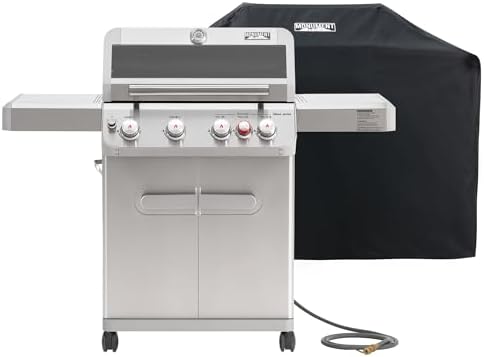
Best Natural Gas: Monument Grills 4+1 Burner Natural Gas Grill
Natural gas changes the math. You never swap a tank, you never run out halfway through a brisket, and the cost per cook drops. The trade is that you need a gas line, and you need a hose long enough to reach it. This grill ships with the natural gas hose, which matters more than it sounds, because hunting down that part separately is the kind of errand that keeps a grill in the box for a month.
The layout is the other reason it is here: four main burners plus one more, 50,000 BTU, and a broil zone for fast heating. That is a lot of cooking surface and a lot of heat. For someone who sears steaks and feeds a crowd, more burners means more zones, and more zones means you move food around instead of standing over it with a spray bottle putting out flare-ups. Knob lights are a small thing that stops being small at dusk. Stainless construction wipes down easier, which matters more the longer you own it.
What I would check: the line pressure at your house, the length of the hose run, and whether the ignition is built to live outside in the weather. Propane is a utility. Natural gas is a luxury. Charcoal is a religion. I respect all three differently, and if you have the line, this is the grill in this group built for it.
How I tested
Every grill gets the same routine, and it has not changed in years. A dozen burgers laid left to right across the grate, flipped once, watched for which one browns first. That single cook maps the hot spots better than any spec sheet. Then a chicken, skin side down over the hottest zone, to see how the fat behaves and whether the grill wants to flare. Then a long, low cook with the lid down to find out whether the temperature holds while I go inside and forget about it for twenty minutes, which is what real cooking looks like.
I keep a spiral notebook for every cook: ambient temperature, wind direction, which side of the grate ran hot, how long the temperature took to come back after I opened the lid. Recovery time is the most honest spec a grill has, and it is the one nobody prints on the box.
I do not review a grill without at least three full cooks on it, and I say so when a brand sends a unit. Nothing here is paid placement.
What the routine actually reveals
BTU ratings are marketing. Even heat distribution is engineering. A 50,000 BTU grill with a bad burner layout will burn the middle of your grate and leave the corners cold, and a well-built grill with a modest number will hold a temperature all afternoon.
The layout is what you are really buying. Burners running front to back give you a long sear zone and a place to park food that is done. Burners running side to side give you a wide hot band and a narrow safe zone. Look at the tubes before you look at the badge, and think about how you actually cook. If you sear two steaks and roast a chicken, you want zones. If you cook twelve burgers at once, you want evenness edge to edge.
Flare-ups come from fat hitting hot metal, not from the grate coating. Every "flare-free" grate I have cooked on this year still flared when chicken skin dripped on it. The fix is a two-zone setup and a lid, not a marketing claim.
The igniter is the tell. If a brand cut corners there, it cut corners in places you cannot see. I have lit enough grills with a long-nose torch on week three to know that an igniter dying in the first season is the fastest way for a grill to end up on the curb.
And warranty matters more than the badge. Paper covers parts. Steel covers the grill. Read what the burner coverage actually includes before you buy, then read it again when you register the grill, because the clock usually starts at purchase, not at assembly.
Gas grill comparison
| Grill | Fuel | What stands out | Best for | Check price |
|---|---|---|---|---|
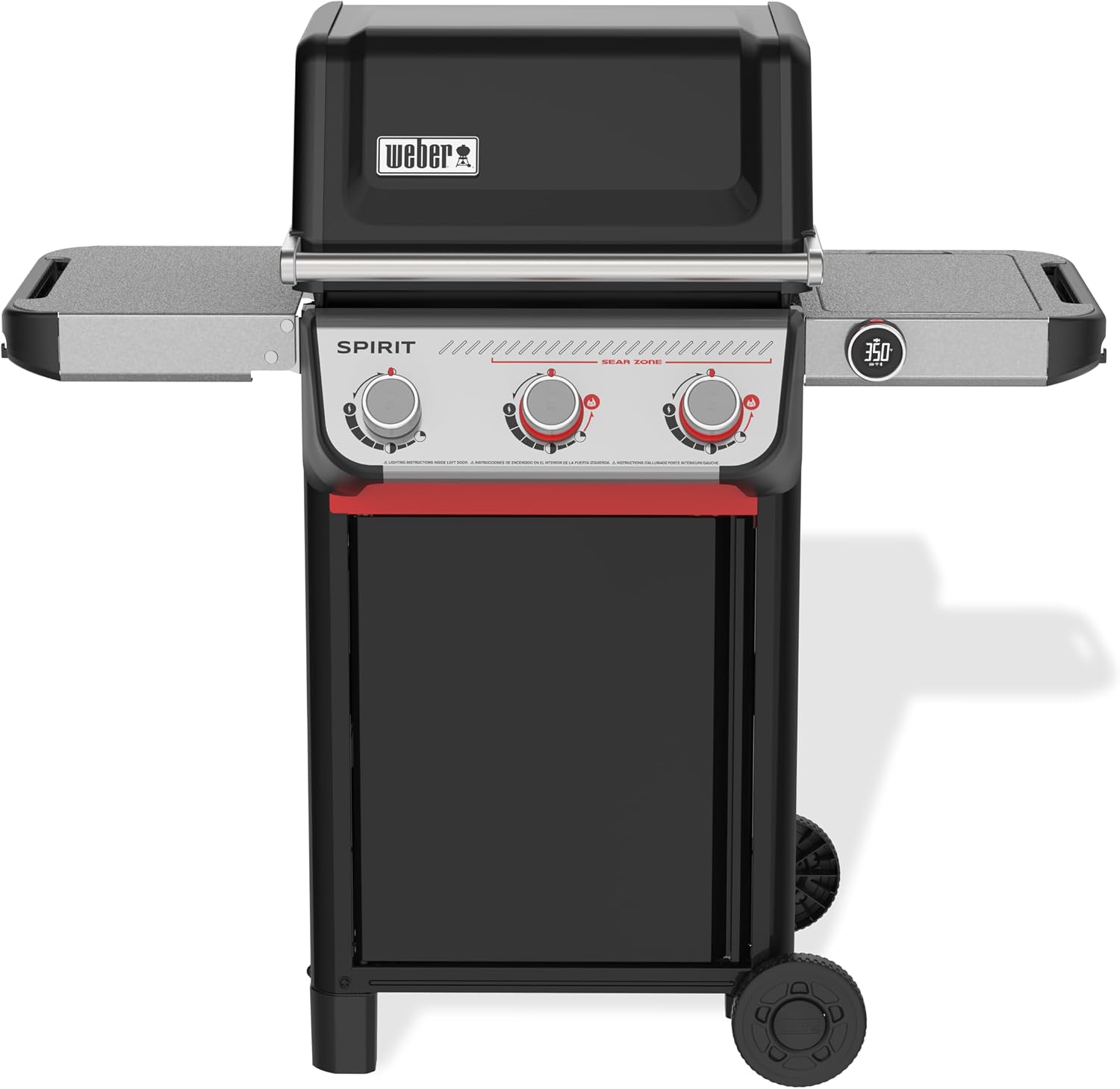 Visit on Amazon → Visit on Amazon →Weber Spirit EX-325 Smart Gas Grill |
Propane | Smart readouts in a full-size black cart grill | One grill for everyday backyard cooking | Visit on Amazon → |
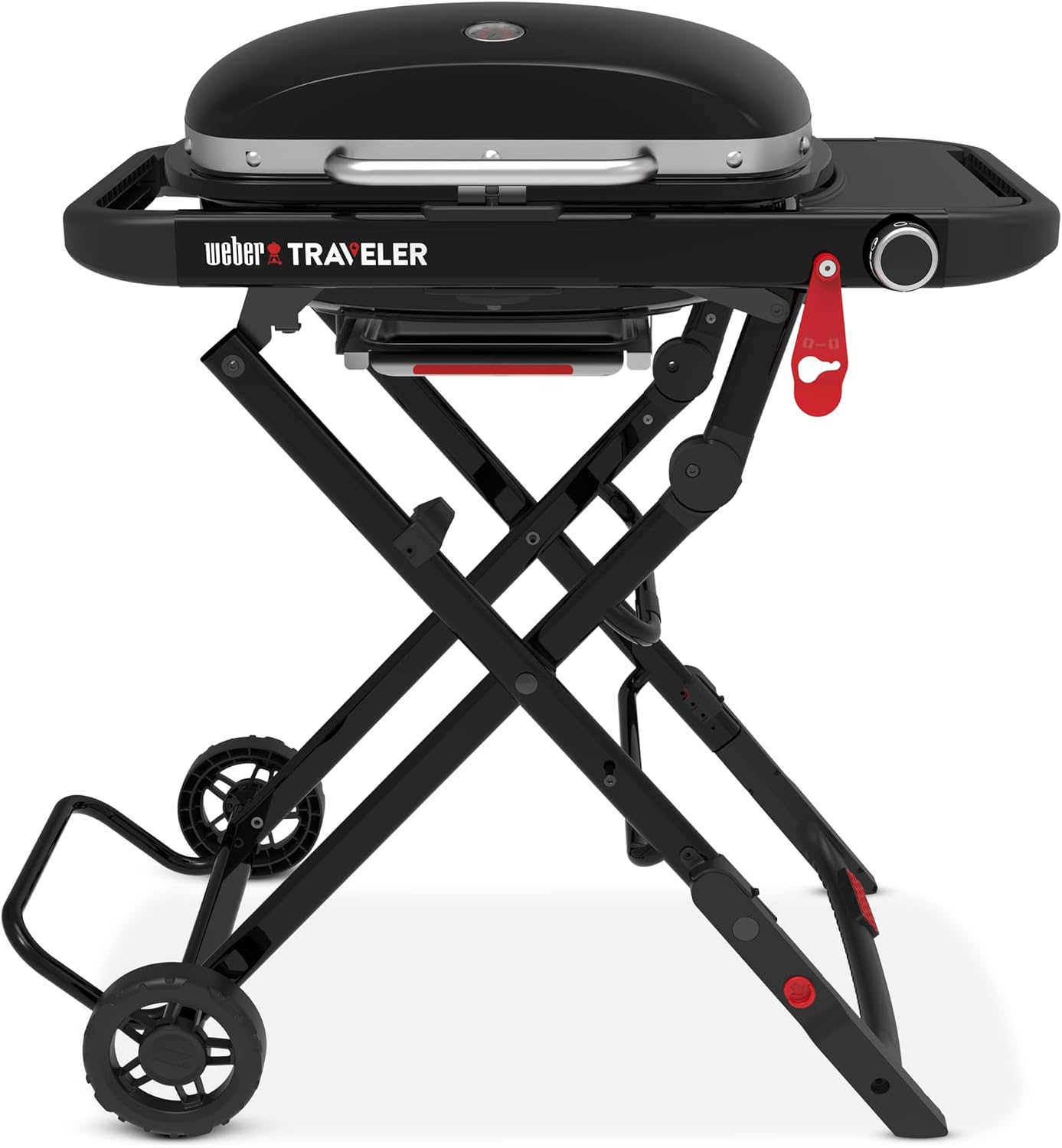 Visit on Amazon → Visit on Amazon →Weber Traveler Compact Portable Gas Grill |
Propane | Compact and portable, built for cooking away from home | Balconies, tailgates, campsites | Visit on Amazon → |
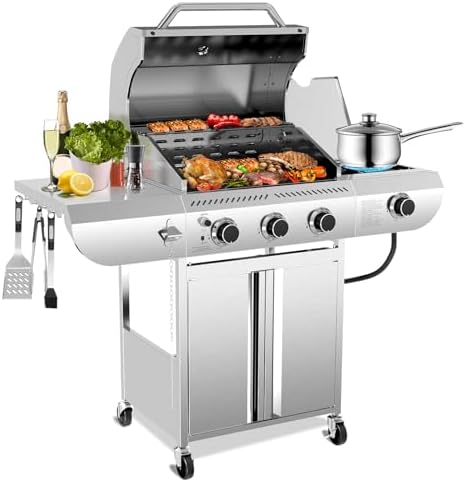 Visit on Amazon → Visit on Amazon →34,000 BTU 3-Burner Propane Gas Grill with Side Burner |
Propane | Three main burners plus a side burner for corn and pans | First gas grill, tight budget, side-burner cooking | Visit on Amazon → |
 Visit on Amazon → Visit on Amazon →Monument Grills 4+1 Burner Natural Gas Grill |
Natural gas | 4+1 burners, broil zone, knob lights, hose included | Patios with a gas line and cooks who sear | Visit on Amazon → |
Should you buy the Weber Spirit EX-325?
Yes, if you want one grill and you want it boring in the best way. It is the middle of this group on footprint, it runs on a tank you can refill anywhere, and the burner warranty behind the badge is the reason I put it first. The smart features are a bonus, not the argument.
If you cook two steaks a week and nothing else, you are paying for capacity you will not use. Look at the portable or the budget propane option instead.
Should you buy the Weber Traveler?
Yes, if your cooking happens somewhere other than a fixed patio. It is the only grill here built to travel, and it is the one I would take to a tailgate or a campsite without worrying about whether it survives the trip. What you give up is grate area and heat stability on long cooks. What you get back is a real grill that fits in a trunk.
If you have a backyard and a gas line, this is not your grill. Buy the capacity.
Should you buy the 34,000 BTU 3-Burner?
Yes, if this is your first gas grill or your budget has a ceiling. Three burners plus a side burner is a real cooking setup, and the layout gives you zones to work with. Read the burner warranty carefully and check the igniter on arrival, because that is where budget grills cut corners.
Spend the difference on a good thermometer and a cover. Both will outlast the grill.
Should you buy the Monument natural gas grill?
Yes, if you have a natural gas line and you are tired of tanks. The hose is included, the layout is built for searing, and 4+1 burners gives you room to move food around instead of fighting flare-ups in one spot. Knob lights and stainless cleanup are the details you appreciate in year three, not week one.
No line, no purchase. Converting this to propane is not the move, and running a hose across a walkway is how you trip in the dark with a plate of ribs.