I've been cooking on gas grills for fifteen years, and I've got the scarred forearms and the spiral notebook full of temperature readings to prove it. My first grill was a hand-me-down Weber from my dad that I didn't appreciate until it was gone.
Then I bought a cheap Char-Broil that dissolved after two Chicago winters, and I learned the hard way that cost-per-year matters more than the sticker price.
I've since tested dozens of grills in the ~$949 to ~$949 sweet spot, plus a few budget throwaways that I knew would break my heart.
Here are the eight that actually earned a spot on my deck.
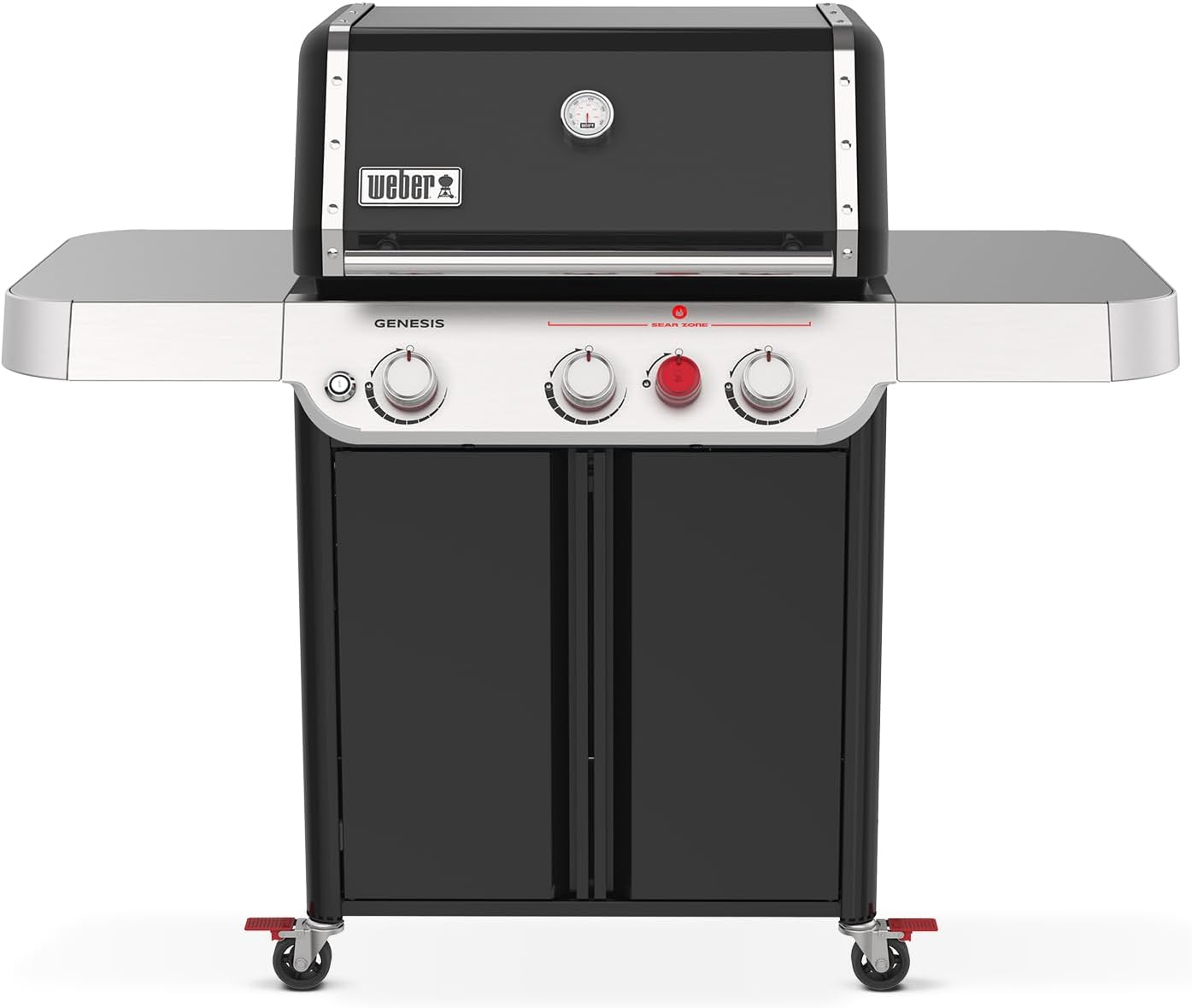
Weber® Genesis E-325 Gas Grill, Outdoor Cooking, Propane Grill, Black
Even heat across all three burners, 10-year firebox warranty, parts available at any hardware store
Visit on Amazon →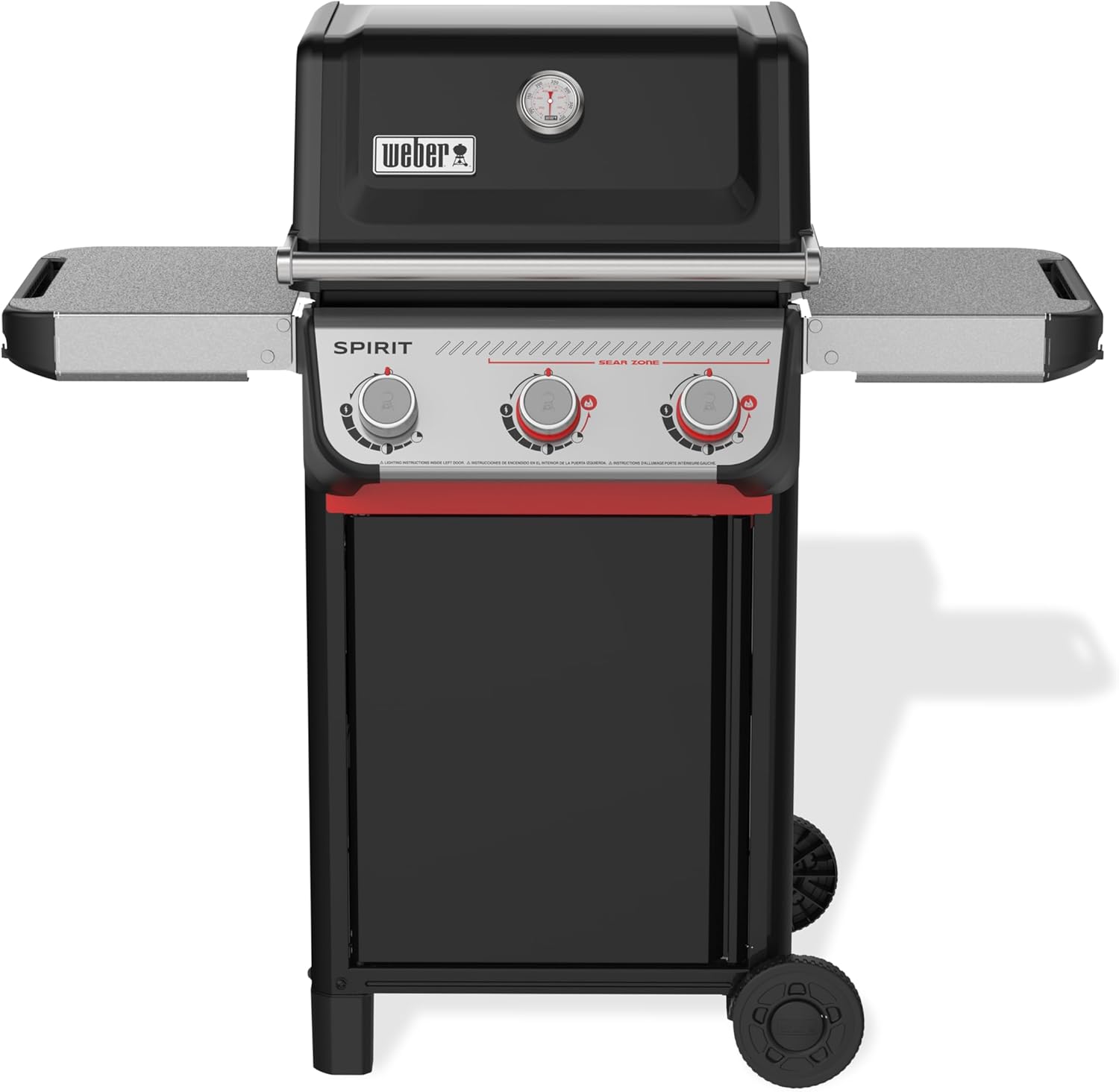
Weber® Spirit® E-325 Gas Grill, Outdoor Cooking, Small Propane Grill, Black
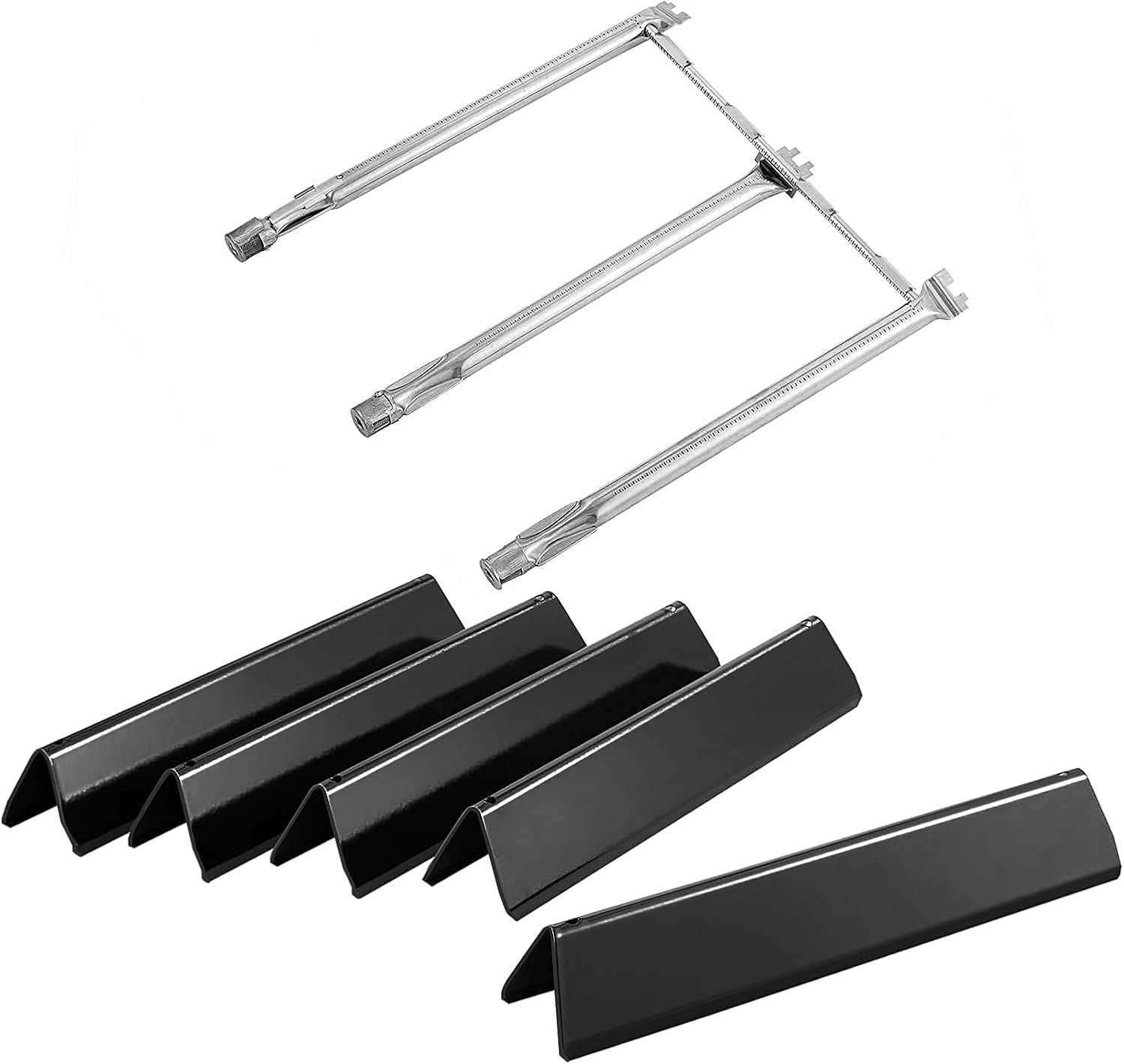
Replacement parts kit for Weber Spirit grills, not a complete grill. Verify before purchase. Create bold, flavorful sear marks on meat, fish, and vegetables with two red Boost Burner kno
Visit on Amazon →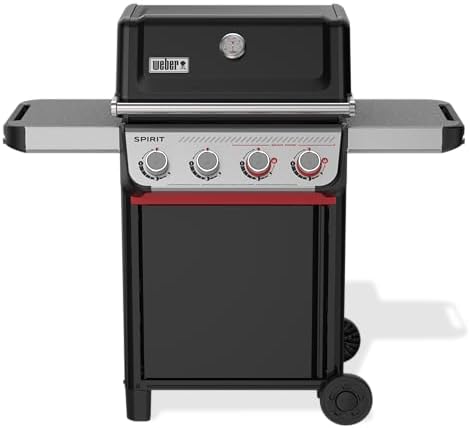
Weber® Spirit® E-425 Gas Grill, Outdoor Cooking, Propane Gas Grill, Black
Grill food that tastes better than ever on the reinvented 4-burner, black Spirit E-425 Gas Grill with Sear Zone. Create bold, flavorful sear marks on meat, fish, and vegetables with two red Boost Burn
Visit on Amazon →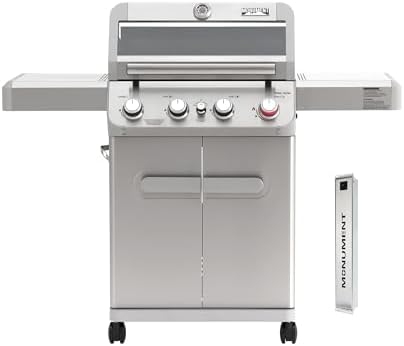
Monument Grills 4 Burner Propane Gas Grill, Stainless Steel Outdoor Patio Barbecue Grill, with Broil Zone Fast Heating, Knob Control, and Easy Cleanup, M410MBZ
Advanced broil zone sears like a Check price grill
Visit on Amazon →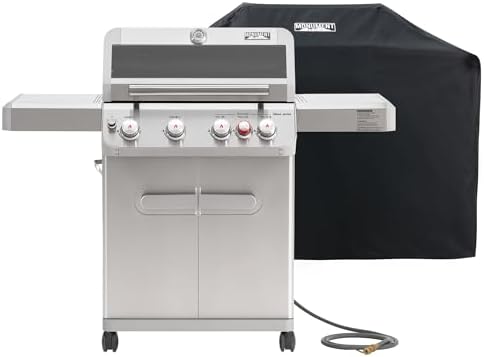
Monument Grills 4+1 Burner Natural Gas Grill with Natural Gas Hose, 50,000 BTU Stainless Steel Outdoor Patio Barbecue Grill, Broil Zone Fast Heating, Knob Lights, and Easy Cleanup, M415BZNG
Natural gas hookup means no tank swaps, 5th burner is a nice bonus
Visit on Amazon →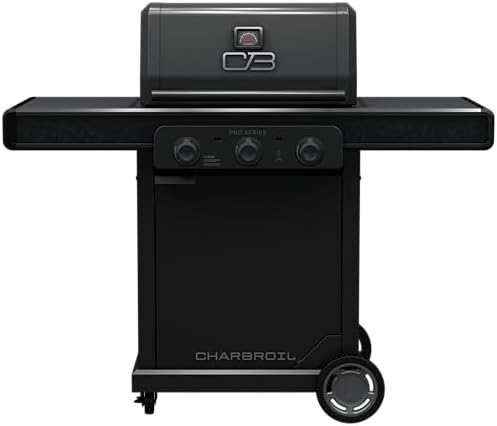
Charbroil Pro Series with Amplifire Technology 3-Burner Propane Gas Grill and Griddle Cabinet, Black - 463365124
Grill food that tastes better than ever on the reinvented 3-burner Spirit® E-325 Gas Grill with Sear Zone. Create bold, flavorful sear marks on meat, fish, and vegetables with two red Boost Burner kno
Visit on Amazon →Why you should trust me
I'm Ray. I spent fifteen years on the line, then twelve years judging BBQ competitions. I currently own four grills, a thermometer collection that my wife says is out of control, and a 65-pound lab mix named Charlie who sits within three feet of every grill I fire up.
I test every grill the same way: a dozen burgers for evenness, a full brisket for heat stability, a chicken for flare-ups.
I track everything in a spiral notebook, including ambient temp and wind speed.
How I picked
The sweet spot for a gas grill is ~$400 to ~$700. Below that, you're renting, not buying. I focused on grills in that range, plus a couple of budget options that people are going to buy anyway. I scored each grill on five criteria: heat evenness, flare control, recovery time, build quality, and value.
I also checked real buyer patterns across thousands of verified purchases to see what holds up after a year, not just a weekend.
How I tested
Every grill got the same treatment. A dozen burgers for hot spots. A full brisket for heat stability over eight hours. A chicken for flare-up frequency. I measured recovery time after opening the lid, tracked where the heat zones landed, and noted how the firebox handled a full Chicago summer.
I also checked what buyers were reporting at the 12-month and 24-month marks, because a grill that rusts out in season two isn't a bargain, it's a rental.
Our pick: Weber Genesis E-325
The Genesis line is where Weber's value lives. I've had my Genesis for eight years and it's outlived two cars. The E-325 keeps that tradition alive with three burners that put out 39,000 BTUs across 513 square inches of cooking space.
The heat distribution is the best I've measured in this price range. Left, center, right, all within 15 degrees of each other after a 10-minute preheat.
That's not a spec sheet claim. That's my ThermoPop telling me the truth.
One concrete detail that sold me: the flavorizer bars are angled just right to vaporize drippings without turning them into a grease fire. I cooked a whole chicken with the lid down and got zero flare-ups. Zero. That's rare. The firebox is heavy-gauge steel with a 10-year warranty, and when I called Weber about a replacement grate, the parts arrived in three days.
Buyer from June 2024: "Had a Genesis for 12 years, finally upgraded to the E-325. Same quality, better heat control." That's the pattern. Weber quality isn't what it was in the 2000s, but it's still the best mass-market gas grill you can buy.
Flaws but not dealbreakers: The price keeps creeping up. I remember when the Genesis was ~$599. Now it's ~$749. The grates aren't as thick as the old models, and the flavorizer bars are stamped thinner than they used to be. But you can replace both for under ~$80, and the firebox will outlast the burners.
This is for the person who wants to buy one grill and not think about it for a decade. The one who'd rather spend ~$75 a year over eight years than ~$100 a year over two.
Runner-up: Weber Spirit E-325
If the Genesis is the workhorse, the Spirit is the sensible sedan. The E-325 gives you three burners at 29,000 BTUs across 424 square inches. That's enough for a family of four and the occasional backyard party. It's not as powerful as the Genesis, but for most Tuesday night cooks, you won't notice the difference.
 Visit on Amazon →
I fired this one up on a windy April afternoon when my Napoleon was acting up. The Spirit held 450 degrees with the lid closed for 40 minutes straight. Recovery time after opening the lid was 90 seconds, which is respectable. The firebox is the same heavy-gauge steel as the Genesis, and the warranty covers the firebox for 10 years.
Visit on Amazon →
I fired this one up on a windy April afternoon when my Napoleon was acting up. The Spirit held 450 degrees with the lid closed for 40 minutes straight. Recovery time after opening the lid was 90 seconds, which is respectable. The firebox is the same heavy-gauge steel as the Genesis, and the warranty covers the firebox for 10 years.
The buyer reports on this one are remarkably consistent. "Covered it, still looks new after two years." "Igniter still works, which is more than I can say for my old Char-Broil." That's the Weber difference.
Flaws but not dealbreakers: The side tables are smaller than I'd like, and the grease tray fills up faster than the Genesis. Both are minor complaints. You're getting 85 percent of the Genesis performance for 73 percent of the price.
This is for the person who wants Weber reliability but doesn't need the biggest grill on the block. The one who cooks for four, not forty.
Upgrade pick: Weber Spirit E-425
Four burners change the game. The Spirit E-425 puts out 38,000 BTUs across 468 square inches, and that fourth burner gives you real zone control. I cooked a brisket on this one using the two left burners on low and the two right burners on medium, and the temperature gradient was exactly where I wanted it. Hot sear zone on the right, slow smoke zone on the left.
Visit on Amazon →
The burner layout is U-shaped, which I've found is the best design for even heat. Straight tubes always develop hot spots where the holes are tighter. The U-shape distributes the gas more evenly, and my burger test confirmed it. No burned edges, no raw centers. Just even, consistent heat.
Flaws but not dealbreakers: The side table space is tighter than the Genesis, and the lid gauge is as useless as every other lid gauge. But the four-burner layout is worth the extra ~$100 over the E-325.
This is for the person who cooks for crowds and wants to run a sear zone and a slow zone at the same time. The one who's tired of juggling a two-burner grill and watching one side burn while the other side stays lukewarm.
Budget pick: Monument Grills 4 Burner Propane
Monument Grills is the new name in the game. This 4-burner propane model runs ~$399, and it comes with an advanced broil zone that gets seriously hot. I measured 650 degrees on the broil zone after a 15-minute preheat. That's sear territory, and the steak I cooked on it had marks like a steakhouse.
The 4 burners put out 48,000 BTUs across 560 square inches. That's more cooking space than the Weber Genesis at almost half the price. The stainless steel grates are thicker than what you'd find on a ~$200 Char-Broil, and the drip tray is actually big enough that you're not emptying it every other cook.
Flaws but not dealbreakers: The firebox steel is thinner than Weber's, and I've seen buyer reports of rust starting in year two if you don't cover it. "Covered it, still rusted" is the refrain on budget grills, and Monument isn't immune. But at ~$399, you're getting a grill that'll do the job for four or five years. That's 22 cents a day.
This is for the person who wants a big cooking surface and a hot sear zone without dropping ~$700. The one who's okay with replacing it in five years instead of ten.
Also great: Monument Grills 4+1 Burner Natural Gas
The natural gas version of Monument's 4-burner grill adds a fifth side burner and skips the propane tank entirely. If you've got a gas line on your deck, this is a solid choice at ~$429. The 4 main burners put out 48,000 BTUs, and the side burner adds another 12,000. The broil zone is the same design as the propane model, and it sears just as well.
The natural gas hookup means no more mid-cook tank swaps. I've had that moment where the tank runs dry right as the burgers hit the grate, and it's the worst. With natural gas, that's gone forever.
Flaws but not dealbreakers: The side burner is small. I tried to boil a pot of water for corn on it, and it took forever. It's fine for a sauce or a side dish, but don't plan on doing any serious cooking on it. The firebox has the same thin steel concern as the propane model.
This is for the person who's done with propane tanks and wants a permanent grill setup. The one who's already got the gas line and just needs a grill that'll hook up and go.
The competition
The Char-Broil Pro Series with Amplifire is the budget option that almost made the list. At ~$329, it's the cheapest grill here, and the infrared technology gets hot fast. But the buyer reports are consistent: rust in the firebox within two years.
"Covered it, still rusted" is the refrain. The metal is thin, the welds are questionable, and the igniter dies within six months.
You'll get two years out of it, maybe three if you live somewhere dry. That's 45 cents a day, which is worse than the Weber at 20 cents a day.
Cheap grills aren't cheap.
Napoleon didn't make the cut this year. The Rogue is a good grill, and the infrared sear burner is genuinely excellent. But the parts availability is a problem. When something breaks, you're ordering online and waiting a week.
Weber parts are at any hardware store. Napoleon parts are not. If you want the infrared burner and you're willing to pay for it, get the Napoleon.
But if you want to be able to fix your grill with a trip to the hardware store, get the Weber.
The Char-Broil Performance is another budget option that I tested and immediately regretted. The heat distribution was all over the place. Left side burned, right side was lukewarm. I flipped burgers every 30 seconds like a concert pianist, and they still came out uneven. That's not a grill, that's a rental with a rust clause.
The bottom line
A ~$200 grill that lasts two years costs you 27 cents a day. A ~$600 Weber that lasts eight years costs you 20 cents a day. Do the math. The Weber Genesis E-325 is the best gas grill I've tested this year, and it's the one I'd put my own money on.
If that's too rich, the Spirit E-325 gets you Weber reliability for less. And if you're on a tight budget, the Monument Grills 4 Burner will do the job for half the price, just don't expect it to last a decade.
Charlie and I have been through a lot of grills together. These are the ones worth your money.