A gas grill is one of the few purchases where the spec sheet tells you almost nothing about how the thing will actually cook. BTU figures get inflated for the side of the box, burner count gets used as a stand-in for build quality, and "flare-free" shows up stamped on grates that have never met a dripping chicken thigh. This guide looks at six gas grills for backyard cooking, from a portable three-burner tabletop unit to a five-burner natural gas cart with a rear rotisserie burner, and sorts them by the details that still matter in season three: fuel type, burner count and layout, what kind of side burner you actually get, and how much grill you have to store when it is not in use.
None of these are exotic. They are the models people ask about at the counter, and the differences between them are mostly structural rather than cosmetic. Two run on natural gas, four run on propane. Three come from the same Napoleon Rogue family, which makes the price steps between them unusually easy to read: each jump up buys a specific feature, not a vague feeling of quality.
Related: How to Season and Maintain Grill Grates So They Last
Quick answer
The Napoleon Rogue PRO 525 4-Burner Propane Grill with Infrared Side Burner is the strongest fit for cooks who want a genuine sear zone alongside a full four-burner body, because the infrared side burner is a dedicated high-heat station rather than a pot burner pressed into searing duty. Choose the Weber Spirit E-325 Natural Gas Grill instead when you have a fixed gas line and want a simpler, smaller grill that never needs a tank swap.
Gas grills worth comparing
The differences that decide whether you like a grill a year from now are not the ones the marketing copy leads with. Four things separate these six models.
Fuel and hookup. Two of the six, the Weber Spirit E-325 and the Broil King Baron 590 Pro Shadow, are natural gas models built to connect to a fixed line. The other four run on propane tanks. That one choice decides where the grill can live, whether you can cook during a power outage, and whether you will ever be standing in the rain swapping a tank with a half-cooked pork shoulder on the grate.
Burner count and body size. The group runs from a three-burner tabletop unit to a five-burner cart grill, with three-burner and four-burner cart models in between. Burner count sets how many independent heat zones you can hold at once, and zone control is what lets you sear on the left while holding a low zone on the right. Total BTU is a much weaker signal than the number of burners doing the work.
Side burner type. A conventional range-style side burner is a pot station: sauces, beans, a skillet of onions. An infrared side burner is a searing tool that gets a steak crusted without dragging the main grate up to full blast. The Napoleon Rogue PRO 525 carries the infrared version; the Rogue 425 and the Broil King carry range-style side burners.
Footprint and portability. The Bestfire tabletop unit and the cart grills are not competing for the same space. One lives on a picnic table or in an RV bay, the others occupy a patio permanently and need clearance behind and above them.
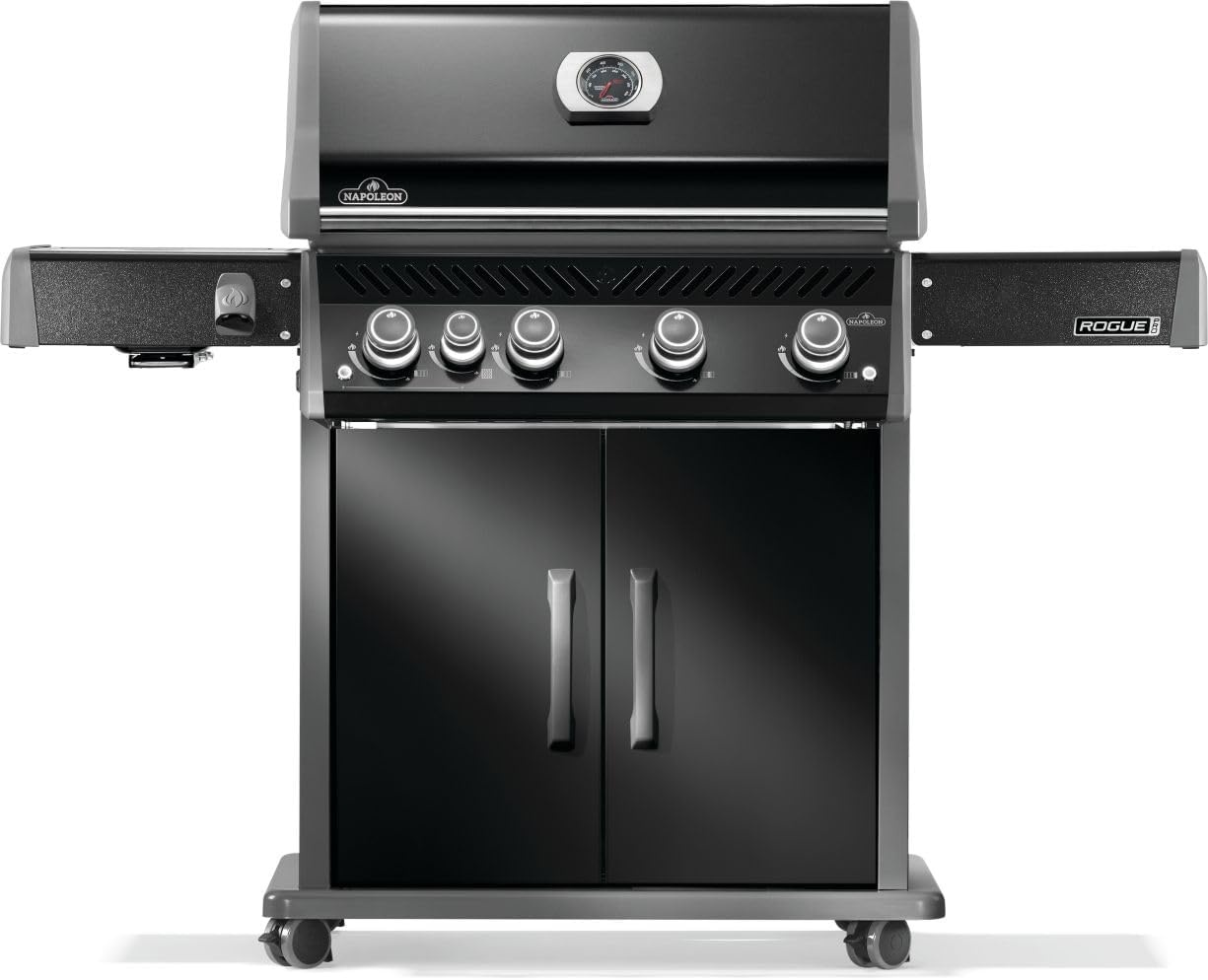
Napoleon Rogue PRO 525 4-Burner Propane Grill with Infrared Side Burner
A four-burner propane cart grill with a dedicated infrared side burner, which gives it a separate high-heat searing station the other Rogue models in this group do not have.
Visit on Amazon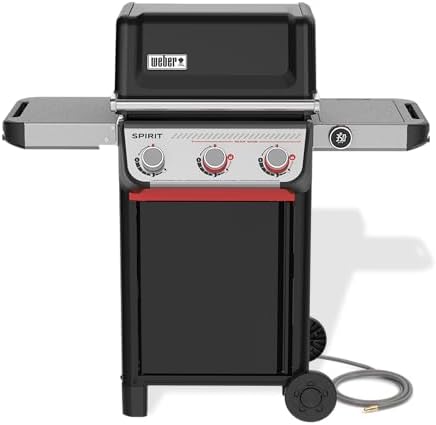
Weber® Spirit® E-325 Gas Grill, Outdoor Cooking, Natural Gas Grill, Black
Check current Amazon price
A compact natural gas grill that connects to a fixed line instead of a tank, which removes refills from the equation entirely and suits a permanent patio hookup.
Visit on Amazon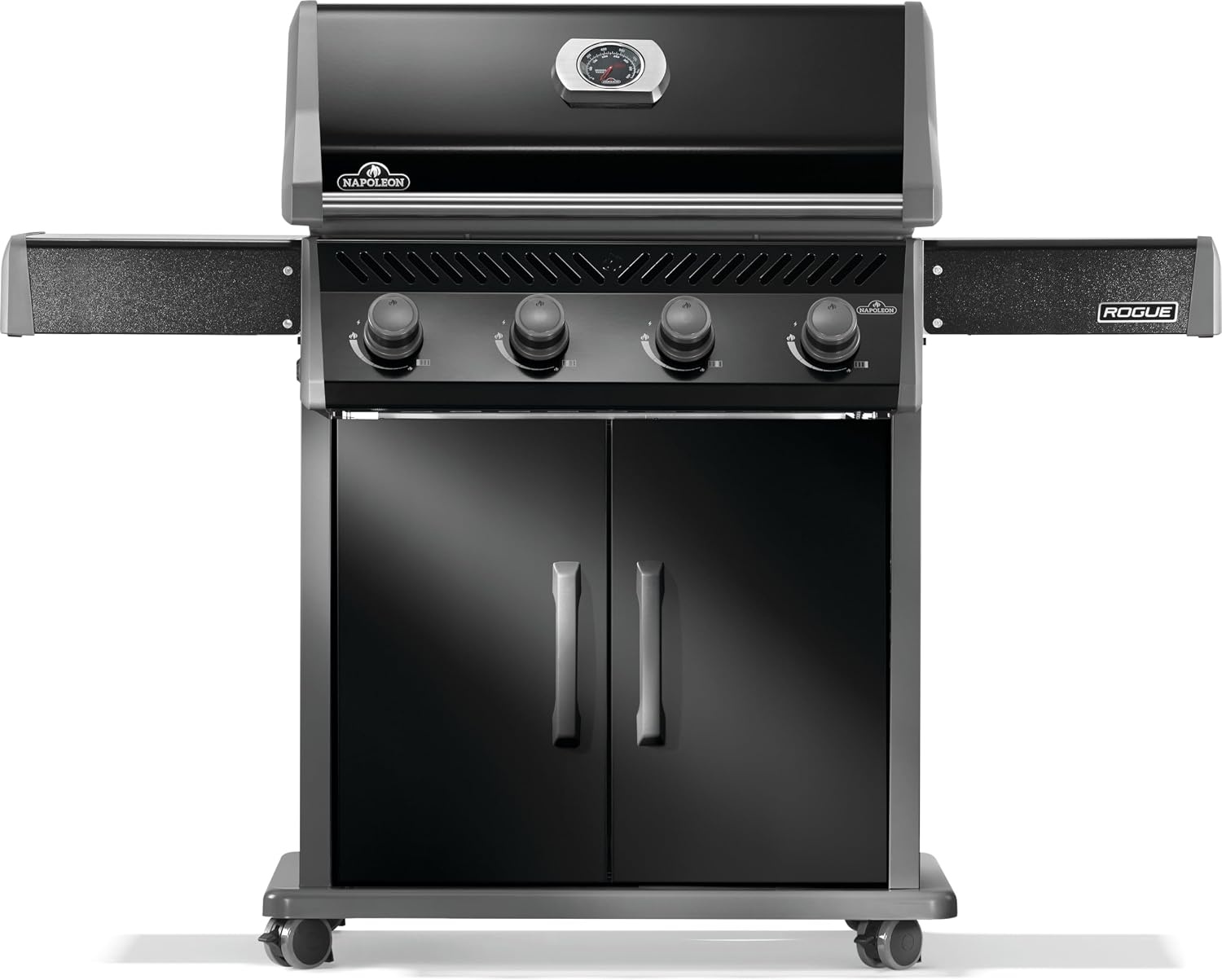
Napoleon Rogue 525 4-Burner Propane Grill
The four-burner Rogue body without the infrared side burner, a fit for buyers who want the larger cooking footprint and plan to sear over the main grates.
Visit on Amazon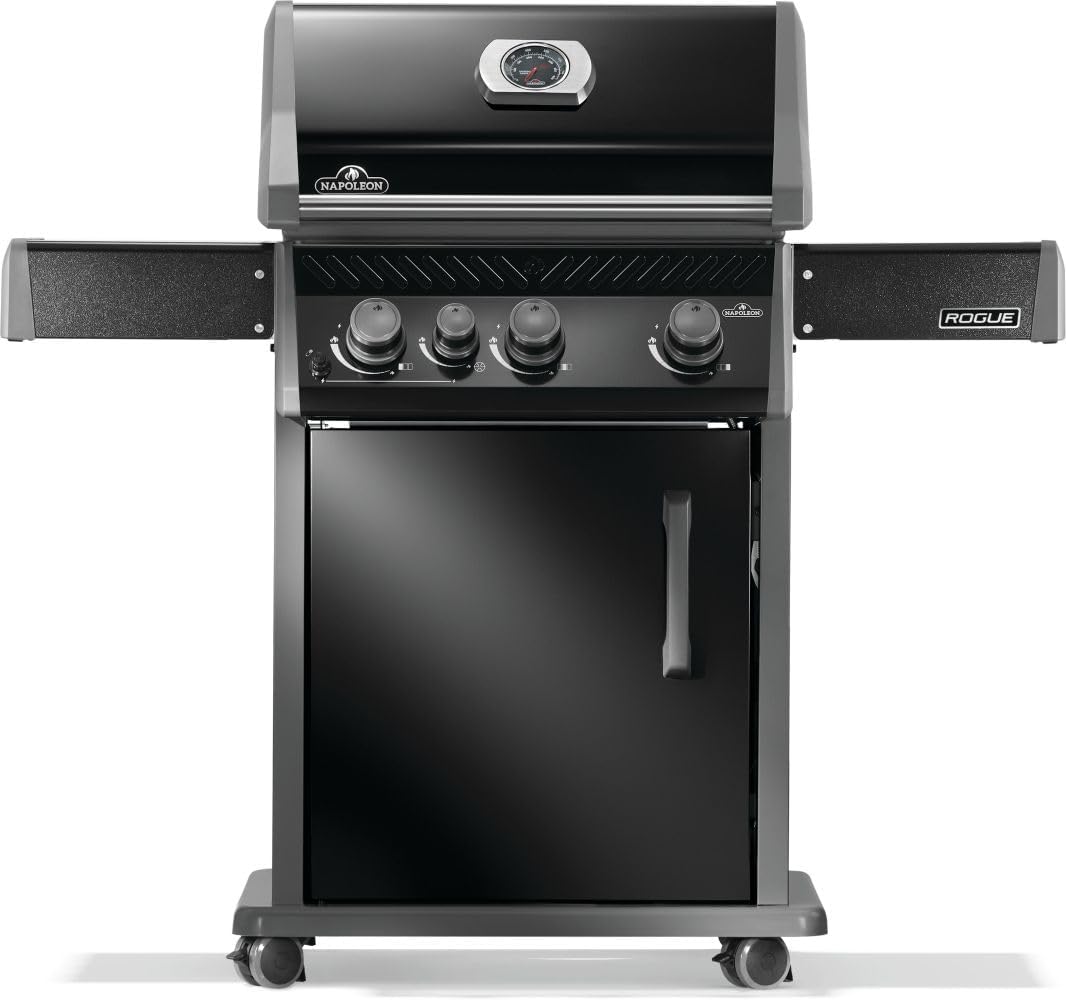
Napoleon Rogue 425 3-Burner Propane Grill with Range Side Burner
A three-burner propane cart grill with a conventional range-style side burner, sized for smaller patios and cooks who want a pot station next to the main grate.
Visit on Amazon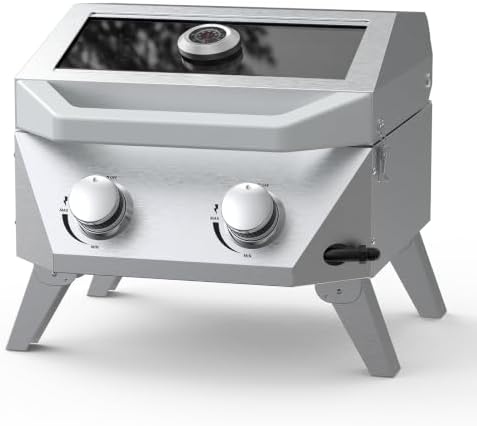
Bestfire 3-Burner Tabletop Gas Grill, 30,000 BTU Portable Propane Grill with Heavy-Duty Thickened Grates & Knobs, Compact Design&Detachable Legs for Camping, RV, Backyard BBQ
A 30,000 BTU three-burner propane grill with detachable legs that lets it sit on a table or travel, aimed at camping, RV, and small backyard setups.
Visit on Amazon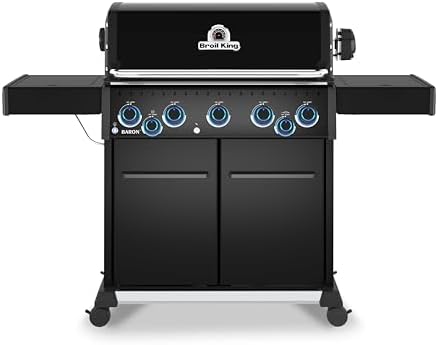
Broil King 675147 Baron 590 Pro Shadow 5-Burner Pellet Ready Natural Gas Grill in Black with Side Burner and Rear Rotisserie Burner
Check current Amazon price
The largest and most feature-dense grill in this group: five burners on natural gas, plus a side burner and a rear rotisserie burner, in a black Pro Shadow finish.
Visit on AmazonPrices and availability may change. Check the retailer for current details.
How these products were compared
Every model here was placed against the same five criteria: fuel type and hookup, burner count and layout, side burner type, overall footprint and portability, and the feature set spelled out in the model name. Product names, images, and retailer links are matched to the same product record so that every card points to the product shown.
This comparison is built from manufacturer-listed specifications and product records. It is not a hands-on cooking test and does not claim to be. Where a feature appears in the model name, such as an infrared side burner or a rear rotisserie burner, treat that as a documented difference between models rather than an inference. Where a number is not published, this guide does not guess at it. Use the product links to confirm current price and availability before you commit.
How to choose the right gas grill
Start with fuel, because it is the one decision you cannot change later without buying a different grill. If you have a natural gas stub at the house, the Weber Spirit E-325 and the Broil King Baron 590 Pro Shadow connect directly and end the tank cycle for good. If you rent, move the grill around the yard, or want to take it camping, propane is the only practical answer, and four of the six models here are propane. Converting a propane grill to natural gas is not a hose swap; it involves different orifices and should be done with the manufacturer's conversion kit.
Then decide burner count by counting your real cooks, not your imagined ones. A three-burner grill holds two solid heat zones plus a warm edge, which covers burgers, chicken, and vegetables for a family. Four burners add a third usable zone and make it easier to hold a low-and-slow side while searing on the other. Five burners, as on the Broil King, is a party grill, and it only pays off if you regularly cook for a crowd large enough to fill the grate.
Side burner type is the most misunderstood spec in this group. A range-style side burner, as on the Napoleon Rogue 425 and the Broil King, is a pot station. It is genuinely useful for sauces, beans, and a skillet of onions, but it is not a searing surface. The infrared side burner on the Napoleon Rogue PRO 525 is a different tool: it concentrates heat for crusting, which is why it is the feature that separates that model from the standard Rogue 525 sitting one step below it in the same family. If you want to finish steaks without running the whole main body wide open, that distinction is worth paying for. If you mostly want somewhere to keep a pot of beans warm, it is not.
Finally, plan the space before you plan the features. Cart grills need clearance behind the lid, room to open the doors, and a spot that is not directly under a low roof or overhang. If you can read the maintenance routine you are willing to keep up with before you buy, the footprint question usually answers itself.
Napoleon Rogue PRO 525 4-Burner Propane Grill with Infrared Side Burner
This is the pick because it solves the problem that most mid-range grills create. A four-burner body gives you enough zone control to hold a low side and a hot side at the same time, and the infrared side burner gives you a dedicated searing station that does not compete with the main grate for heat. On a weeknight that means you can cook a whole meal on one unit without dragging a cast iron pan inside. On a weekend it means steaks get a hard crust while the main body handles sides at a lower setting.
The layout also reads cleanly against its own family. The standard Napoleon Rogue 525 has the same four-burner footprint without the infrared burner, and the three-burner Rogue 425 sits below both with a conventional range-style side burner. The PRO 525 is the top of that ladder, and the step up buys exactly one thing: the searing burner.
The trade-off is straightforward. It is a propane grill, so it needs a tank and it needs a place to store a spare. The infrared side burner adds cost and adds one more burner to maintain and keep clean. And a four-burner cart grill takes up real patio space, which is more than some buyers with a small deck should sign up for. If either of those is a dealbreaker, the smaller Rogue 425 or the natural gas Weber are the honest alternatives.
Alternatives to consider
The Weber Spirit E-325 Natural Gas Grill is better suited to a permanent patio with an existing gas line, where never swapping a tank matters more than burner count or searing stations. It is also the smaller footprint of the two natural gas models here, which makes it the easier fit on a tight deck. The Napoleon Rogue 525 4-Burner Propane Grill is a stronger fit when you want the four-burner Rogue body but have no interest in paying for an infrared side burner you will rarely light.
The Napoleon Rogue 425 3-Burner Propane Grill with Range Side Burner, the Bestfire 3-Burner Tabletop Gas Grill, and the Broil King Baron 590 Pro Shadow cover the rest of the range. The Rogue 425 is the compact cart option with a pot station. The Bestfire is the only grill here that is not tied to a patio at all, with detachable legs and a 30,000 BTU three-burner setup aimed at camping, RV travel, and small backyard cooks. The Broil King is the opposite end of the scale: five burners on natural gas plus a side burner and a rear rotisserie burner, which makes it the choice for people who cook for a crowd and want rotisserie capability built in rather than bolted on.
Day-to-day use and maintenance
Gas grills fail in predictable places, and none of them are the burners. Grease trays, igniters, and the underside of the firebox do most of the damage, so the routine that keeps a grill alive is mostly about keeping it dry and keeping it clean. Scrape the grates while they are still warm, empty the grease tray before it fills, and check the tray for pooled fat before every cook rather than after.
Twice a season, pull the grates and the heat deflectors and look at the burner tubes. Rust flakes and clogged ports show up there first, and a burner with blocked ports will produce an uneven cook no matter how good the layout is. Brush the tubes, check that the ports run clear, and confirm the igniter still sparks on the first press. An igniter that needs three tries in month two is telling you what month twelve looks like.
For propane models, store tanks upright in a ventilated spot, never in a closed garage or a car trunk, and check the hose and regulator connections for cracks. A soapy water test on the connections after any tank swap will find a leak in seconds. For natural gas models, have the connection made and checked by a qualified technician, and never run a gas grill indoors, in a garage, or under a flammable overhang. Keep the lid open when you light it, and if the burner does not catch within a few seconds, turn the gas off and let it clear before trying again. A cover is worth the money on any of these, including the Bestfire, which spends more of its life in transit than the cart grills do.
Buying checklist
- Measure the patio or deck space, including lid clearance and room to open the cart doors.
- Decide fuel first: natural gas for a permanent line, propane for anything that moves.
- Choose burner count based on your normal cook size, not the largest party you might host once a year.
- Confirm that the exact model includes the side burner type you want, since range-style and infrared burners do different jobs.
- Check whether a rotisserie burner or rotisserie capability is built in if that matters to you.
- Read the cleaning and maintenance instructions for the specific model before the first cook.
- Verify the current retailer price, availability, and return terms.
Final recommendation
Choose the Napoleon Rogue PRO 525 4-Burner Propane Grill with Infrared Side Burner when you want a four-burner propane grill with a real searing station and you have the patio space for a full cart. Choose the Weber Spirit E-325 Natural Gas Grill when you have a fixed gas line and want a smaller, simpler grill that never needs a tank. If neither of those fits, the decision narrows cleanly: the Napoleon Rogue 425 for a compact cart with a pot burner, the Bestfire for cooking that has to travel, and the Broil King Baron 590 Pro Shadow for a large natural gas grill with rotisserie capability on board.