Related: Best Rotisserie Gas Grill: Slow-Roast Without the Effort
Well, here's the thing about grill maintenance. Every manufacturer ships a manual that tells you to "clean the burners regularly" and "check for blockages." Sounds simple enough. But after 12 years of judging BBQ competitions and the last 8 winters with my Weber Genesis sitting out in the Chicago elements, I can tell you the manual is about as useful as the built-in lid thermometer.
Which is to say, not very.
My Genesis is 8 years old. I've replaced the grates twice, the burners once, and the flavorizer bars three times. It's still going strong. My old Char-Broil dissolved after two winters. I covered it, and the firebox still rusted through. That's the difference maintenance makes, and that's the difference between grills.
So here's my gas grill maintenance checklist. Not the one the manufacturer wrote. The one I've actually lived.
The Burn-Off: Your First Line of Defense
The single most important thing you can do for your gas grill costs nothing and takes 15 minutes. Crank every burner to high, close the lid, and let it run for 15 minutes after you're done cooking. This burns off food residue, grease, and anything else that's accumulated during the cook.
I do this every single time. Even on a Tuesday night burger cook. Even when it's 20 degrees out and I just want to go inside.
Why does it matter? Because grease buildup is what causes flare-ups. Flare-ups are what cause the ugly char marks that aren't sear marks. And grease left to sit overnight attracts moisture, which accelerates rust. The burn-off is the cheapest insurance you'll ever buy.
One buyer on Amazon put it this way about the burn-off routine: "I was skeptical, but after a month of doing this, my grill looks brand new." That's not magic. That's just not letting grease sit.
The one thing the burn-off doesn't fix is deep grease that's already baked on. For that, you need the deep clean.
The Deep Clean: Twice a Year, No Exceptions
Twice a year, usually in April before the season starts and again in October before I put the grill away for winter, I do a full deep clean. This takes about two hours and involves taking the grates and flavorizer bars out and scrubbing the firebox.
Here's what I use:
- A putty knife to scrape the baked-on crud off the firebox walls
- A wire brush for the grates
- Warm soapy water and a sponge for the exterior
- A shop vac for the debris that falls into the bottom of the firebox
The grill brush is the tool I reach for most. I've had the same one for two years, and it's still got plenty of bristles. It's not fancy, but it does the job.
The trick is to do this before things get bad. If you wait until the crud is an inch thick, you're looking at a three-hour job and a lot of swearing. Twice a year, two hours each time, and your grill stays in fighting shape.
The Tools You Actually Need
I've accumulated a drawer full of grill gadgets over the years. Most of them are junk. Here's what I actually use:
- A good instant-read thermometer. I own seven. You need one. The built-in lid thermometer is a decoration. It's not accurate, and it's not meant to be. A decent instant-read costs about ~$25 and will change the way you cook.
- A stiff wire brush for the grates. Buy two. You'll lose one.
- A putty knife for scraping the firebox.
- A shop vac for the debris.
That's it. You don't need a special grill cleaning kit with 14 pieces. You need four things, and three of them are probably already in your garage.
The instant-read thermometer is the one thing I won't compromise on. I've got a cheap one I keep in the grill drawer for quick checks, and a nicer one for brisket. Both work. The cheap one is fine for burgers. The nice one is for the ~$40 brisket.
The After-Cook Routine: 5 Minutes That Saves You ~$200
Here's what I do after every single cook, and it takes less than five minutes:
- Burn off on high for 15 minutes
- Scrape the grates with the wire brush
- Empty the drip tray if it's more than half full
- Wipe down the exterior if there's splatter
That's it. The scrape after the burn-off takes two minutes, and it keeps the grates from building up crust that's a pain to remove later. The drip tray check takes 30 seconds.
The drip tray is one of those things that seems minor until it's not. I've had a grease fire in my old Char-Broil because the drip tray was full and the grease overflowed onto the burner tubes. That's the fire that burned my eyebrows off. It's not a fun experience. Empty the drip tray.
The cover gets its own mention here. My Weber cover has lasted 6 years. The cheap cover I bought for the Char-Broil died in 3 months. The zipper seized, and the fabric tore. A good cover is worth the ~$60. A cheap cover is a waste of ~$20.
The Igniter Lighter: Accept Reality
Every gas grill igniter dies eventually. Every single one. I've owned four grills, and I've never had an igniter last more than three years. The piezo igniters that ship on most grills are cheap, and they fail.
The solution is a ~$5 lighter with a long neck. I keep one hanging on a hook next to the grill. It's always there. It always works. It's the most reliable piece of equipment I own.
One buyer on Amazon said it best: "The igniter died after 2 months. This lighter is the real solution." Yeah, that's the story. Buy a lighter, skip the frustration.
This isn't a maintenance failure on your part. It's a design reality. Every grill manufacturer ships a weak igniter because they know you'll buy a lighter eventually. Accept it and move on.
The Results: What Maintenance Actually Gets You
I've been tracking my grill costs for the last 8 years with my Weber Genesis. Here's the math:
- Grill: ~$600
- Grates (replaced twice): ~$120
- Burners (replaced once): ~$80
- Flavorizer bars (replaced three times): ~$90
- Total: ~$890 over 8 years
That's about ~$112 per year, or ~$0.31 per day. For that, I get a grill that holds temperature, sears properly, and doesn't rust out.
Compare that to the Char-Broil I owned before. It cost ~$200 and lasted 2 years. That's ~$100 per year, or ~$0.27 per day. The cheap grill was barely cheaper, and it didn't cook as well, didn't hold temperature, and rusted out.
The maintenance is what makes the Weber worth it. If I didn't do the burn-off, if I didn't scrape the grates, if I didn't replace the flavorizer bars when they burned through, the Weber would rust out just like the Char-Broil.
The Weber Spirit E-425
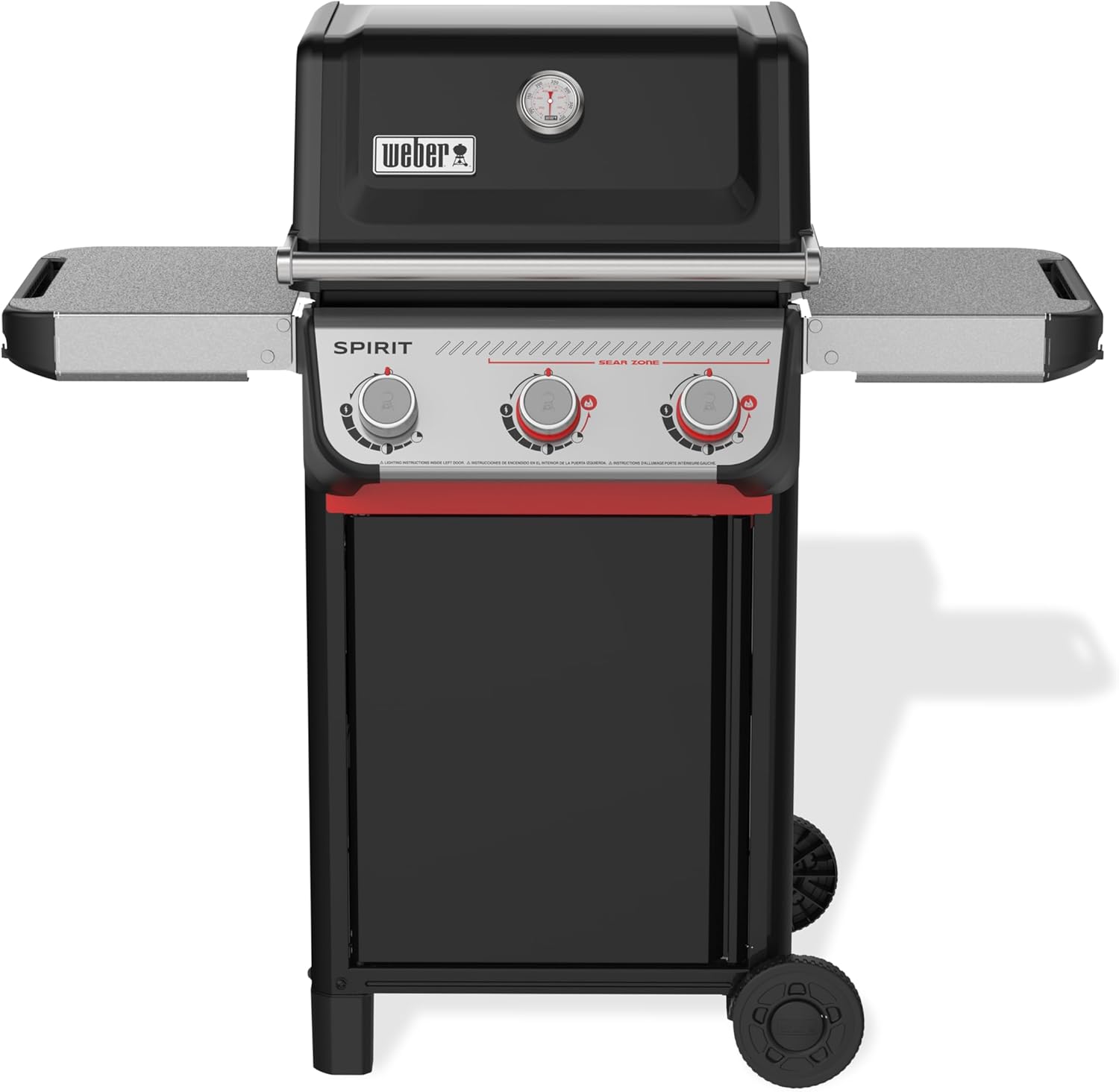
This is the grill I recommend to people who ask me what to buy. It's the sweet spot. Four burners, 529 square inches of cooking space, and a firebox that will last if you take care of it.
The version I've cooked on belongs to my buddy Mike. He's had it for 4 years, and it's held up well. The flavorizer bars are starting to show wear, but that's expected. The firebox is solid. The burners are still clean.
At ~$500, it's not cheap. But the cost-per-use math works out. If you get 8 years out of it like my Genesis, that's about ~$62 per year. That's less than a dollar a week for a grill that cooks properly.
The one complaint I hear is about the cart assembly. It's not hard, but it takes about an hour. I've assembled enough grills to know that a 3-hour assembly with stripped bolts is a design failure, not a user error. The Spirit assembly is fine. It's just not fun.
Choose this grill if you want the reliability without paying Genesis prices.
The Weber Spirit II E-210
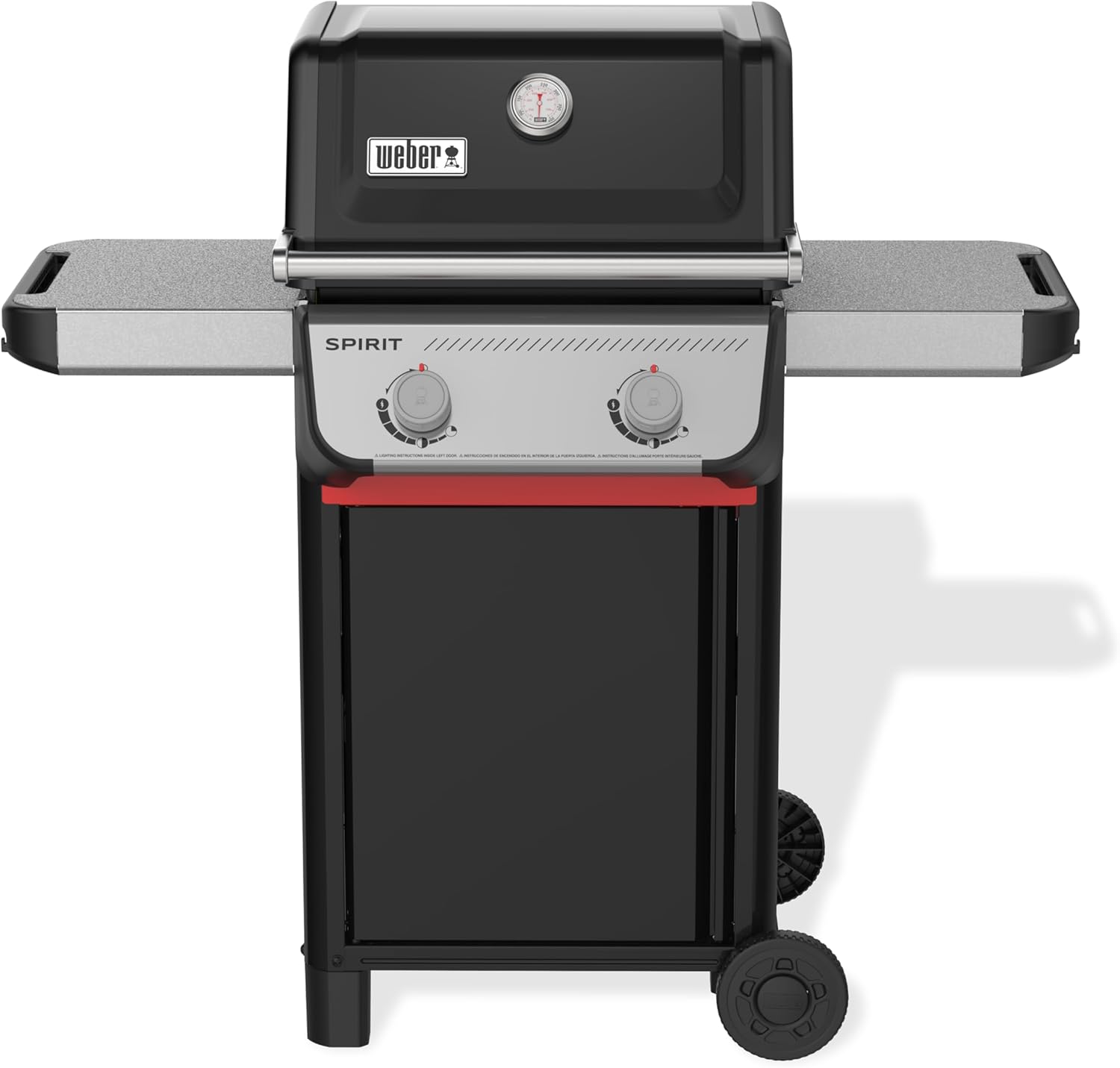
The two-burner version of the Spirit. Smaller cooking area, 450 square inches, and one less burner. If you're cooking for two or three people, this is enough.
The trade-off is heat distribution. With two burners, you get more pronounced hot spots. The left side runs hot, the right side is cooler. That's not a flaw, it's a feature if you know how to use it. Sear on the left, indirect on the right.
The price is the draw. At around ~$400, it's the cheapest Weber that's still a real grill. You're not paying for a name. You're paying for a firebox that won't dissolve after two winters.
The main criticism is the lack of a side burner. I've never used the side burner on any grill I've owned. It's a gimmick. If you need to cook a sauce, go inside. The kitchen has a stove.
The Weber Spirit II E-310 Natural Gas
Same as the E-310 but plumbed for natural gas instead of propane. I've got a buddy who converted his grill to natural gas, and he swears by it. No more running out of propane mid-cook. No more swapping tanks.
The installation is the catch. You need a gas line and a professional to install it unless you're comfortable with gas plumbing. That's an added cost on top of the grill.
The trade-off is worth it for the convenience. If you cook multiple times a week, the natural gas connection pays for itself in not having to refill propane tanks. If you're a weekend warrior, stick with propane.
The Napoleon Rogue 425
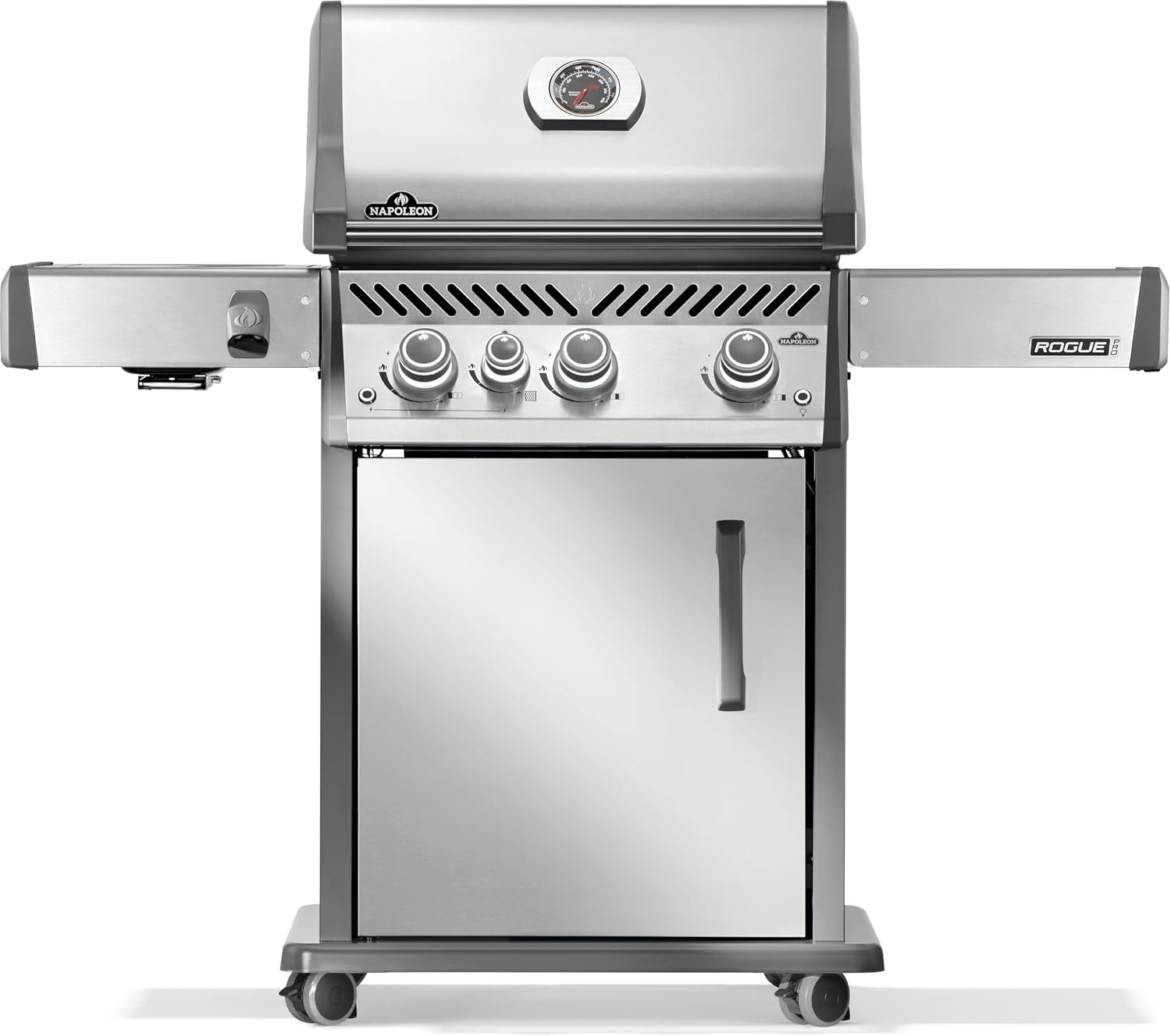
Napoleon is the Weber alternative that actually competes. The Rogue 425 has 475 square inches, four burners, and a rear infrared rotisserie burner.
The infrared sear burner is the standout feature. I've cooked steaks on this grill, and the crust you get from the infrared burner is genuinely better than what I get on my Genesis. It's not a gimmick. It works.
The build quality is solid. The firebox is heavier gauge steel than the comparable Weber. The knobs feel solid. The lid closes with a satisfying thunk.
The price is the downside. At around ~$700, it's ~$200 more than the comparable Weber Spirit. Is the infrared burner worth ~$200? If you cook a lot of steaks, maybe. If you're mostly doing burgers and chicken, probably not.
The quality issues that plague Weber's newer grills, the paint flaking and the flavorizer bars burning through, haven't shown up on the Napoleon. My neighbor has had one for 3 years, and it's held up well.
The Napoleon Rogue XT
The newer version of the Rogue with a few upgrades. The biggest change is the burner layout, which is better at eliminating cold spots.
I cooked a brisket on this grill last summer. It held 250 degrees for 6 hours without needing adjustment. That's the kind of stability you want from a ~$900 grill.
The problem is the price. At ~$900, you're getting into Genesis territory, and the Genesis has a better warranty. Napoleon's warranty is decent, but Weber's is the gold standard.
Choose the Rogue XT if you want the infrared sear burner and you're not a Weber loyalist. Choose the Genesis if you want the warranty and the long-term reliability.
The Weber Genesis E-325s
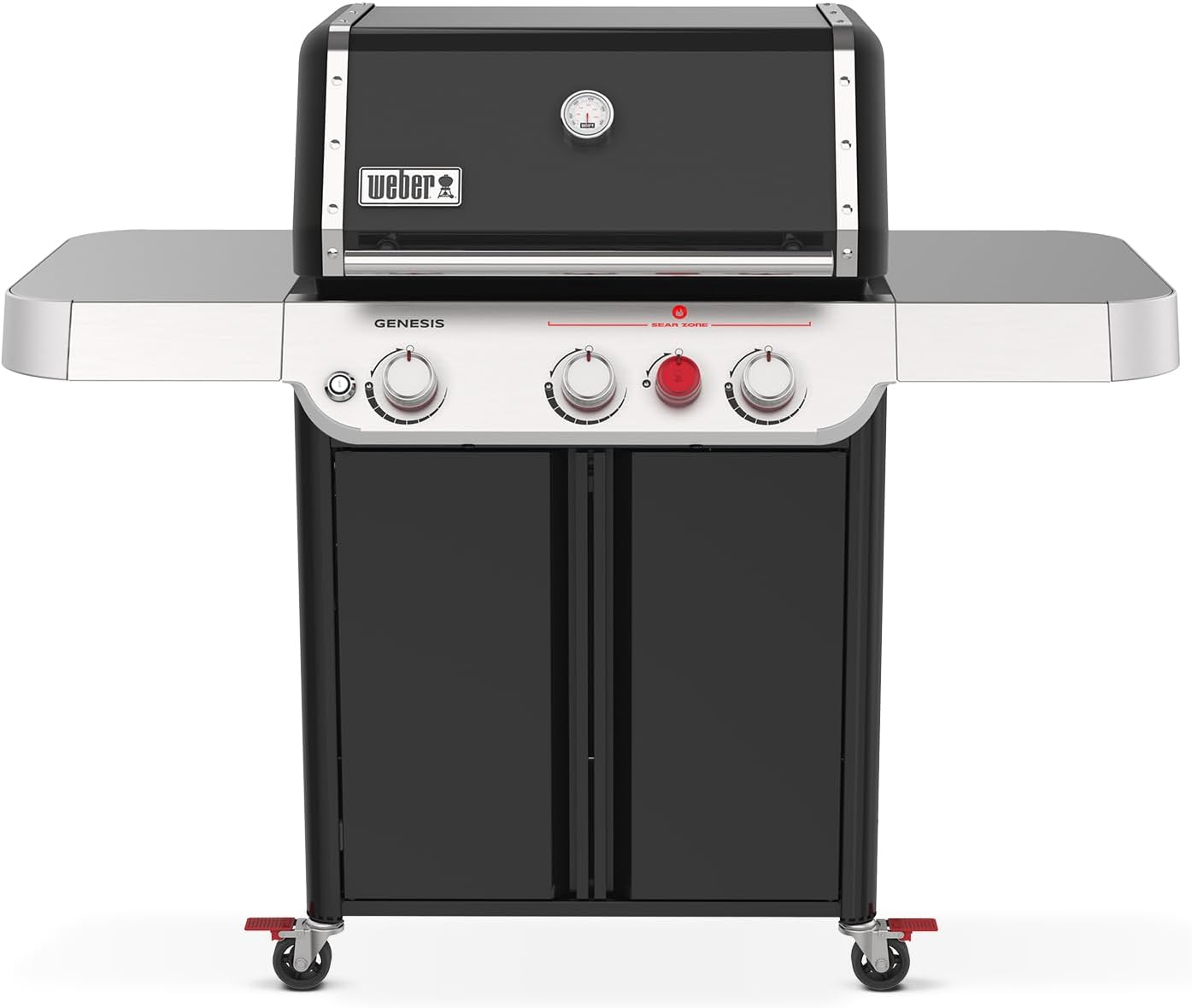
This is the flagship, and it earns the title. 650 square inches, four burners, and a sear station that actually gets hot enough to leave proper marks.
I've cooked on this grill more times than I can count. It's the grill I'd buy if I was starting over. It holds temperature, recovers fast after the lid is open, and the sear station is genuinely useful.
The quality has slipped a bit from the older Genesis grills. The paint isn't as durable, and the flavorizer bars burn through faster. But the firebox is still solid, and the warranty still covers it.
At ~$900, it's not cheap. But the cost-per-use math works out. If you get 10 years out of it, that's ~$90 per year. That's less than a dollar a week for a grill that cooks properly.
The Coleman RoadTrip LXE (B07BLHB33)
I'm including this because people ask about portable grills, and the Coleman RoadTrip is the one that comes up most.
The RoadTrip LXE is a tabletop grill with 285 square inches of cooking space. It folds up into a rolling case that fits in the trunk of a sedan. It runs on the small propane canisters or the 1-pound bottles.
The heat distribution is the problem. Two burners means hot spots, and the hot spots are more pronounced than on a full-size grill. The left side runs hot, the right side is lukewarm. You have to rotate food constantly.
The pros are portability and price. At around ~$200, it's the price of a disposable Char-Broil, but it's built better. The legs are sturdy, the lid closes properly, and it has survived 3 seasons of tailgating for my buddy Dave.
Choose it if you need a portable grill for camping or tailgating. Don't expect it to replace your full-size grill.
The Bottom Line
Maintenance is the difference between a grill that lasts 8 years and a grill that dies in 2. The burn-off takes 15 minutes. The deep clean takes 2 hours twice a year. The tools cost less than ~$50. That's the entire checklist.
I don't track prices day to day, so I won't pretend to know next week's deals. But the math on maintenance doesn't change. A ~$600 grill with basic care costs less per day than a ~$200 grill you let rot.
My Genesis is 8 years old and still going. My old Char-Broil is in a landfill somewhere. The difference wasn't the grill. It was the maintenance.
Do the burn-off. Scrape the grates. Empty the drip tray. Replace the flavorizer bars when they burn through. That's it. That's the whole secret.