Propane is the classic for a reason. Turn a knob, wait ten minutes, cook a steak. No pellets to babysit, no charcoal to wrangle, no learning curve. But the market is flooded with stamped-tin rust buckets that die after two Chicago winters. I’ve been cooking on gas for fifteen years, and I’ve seen the good, the bad, and the firebox that literally dissolved. Here’s what’s actually worth your money.
The Monument Grills 4-Burner is the best propane gas grill I’ve tested this year. It holds heat evenly, sears like a steakhouse, and the build quality is a full tier above the Char-Broil and Master Cook options at the same price. It’s the one I’d trust with a ~$40 brisket, and I don’t say that lightly.
Pros
- Even heat distribution across all four burners. No hot spots on the left rear, which is rare at this price.
- The Advanced Broil Zone actually works. I got surface temps past 600°F for a proper sear.
- Stainless steel firebox that doesn’t feel like a soda can. This thing has weight to it.
Cons
- Assembly took me two hours and a vocabulary lesson. The instructions reference parts that don’t exist in the box.
- The side shelf is flimsy. Fine for a plate of burgers, not for a cutting board and a brisket.
- The lid thermometer is still a decoration. Buy a probe, trust it, ignore the dial.
Compared to the competition
The Char-Broil Pro Series is the budget pick, but you’re getting a rental. It’s ~$300-ish, and the firebox is thin steel that’s going to rust if you live anywhere with actual seasons. The Monument is ~$150 more and has a stainless firebox that’ll outlast it by years. Do the math on cost-per-year. The cheap grill isn’t cheap.
The MASTER COOK 3-Burner is the value play if you’re on a hard budget. It’s fine. It cooks burgers. But the heat evenness is a 5 out of 10. The left side runs hot, the right side is lukewarm, and you’ll be shuffling food around like a concert pianist. The Monument doesn’t have that problem.
The Aoxun 4-Burner is the spec-sheet winner. 49,000 BTU, side burner, stainless steel. But the reviews tell a different story. Buyers report the igniter dying in the first month and the side burner flame sputtering. The Monument’s igniter is still clicking on the tenth cook. That’s worth something.
Design and build quality
The Monument is heavy. Not "I need a friend" heavy, but close. The stainless steel firebox is welded properly, the grates are thick cast iron that hold heat, and the drip tray slides out without a fight. That last one matters more than you think. I’ve owned grills where the drip tray is a greasy puzzle you solve with a screwdriver and a prayer.
The burner tubes are U-shaped, which explains the even heat. Straight tubes with holes always create hot spots where the holes are tighter. The U-shape distributes gas more evenly across the cooking surface. I put a dozen burgers on this thing and they all cooked at the same rate. That’s not luck, that’s design.
The side shelf is the weak point. It’s stamped metal with a plastic insert, and it wobbles if you lean on it. I wouldn’t put a full platter of ribs on it. But that’s a minor complaint for a grill in this price range.
Performance
I tested the Monument with a dozen burgers, a full brisket, and a whole chicken. The burgers came out even, no flare-ups, no burnt edges. The brisket held 250°F for six hours with the lid closed, and the recovery time after opening the lid was under a minute. That’s where the U-shaped burners earn their keep.
The Advanced Broil Zone is the headline feature. It’s an infrared sear burner that gets hot enough to give you a proper crust on a steak. I hit 650°F on the surface and got sear marks like a steakhouse. No smoking up the whole neighborhood, no flare-ups. It works.
Flare control is solid. The flavorizer bars catch the drippings and vaporize them, but they don’t turn into grease fires. I cooked a whole chicken with the lid down and didn’t have a single flare-up. That’s rare. Most grills at this price have you fighting grease fires every ten minutes.
Durability
I’ve only had this grill for three months, so I can’t speak to the five-year mark. But the build quality is promising. The stainless steel is thick, the welds are clean, and the grates are heavy cast iron that’s held up to scraping and oiling. The burner tubes are stainless, not the cheap coated steel you find on budget grills.
Buyer reports back this up. Owners are reporting rust-free fireboxes after a year of use, which is more than you can say for the Char-Broil. One buyer from March 2024: "Covered it all winter, no rust. My old Char-Broil was toast in 14 months." That’s the pattern.
The igniter is still clicking on the tenth cook. That’s a minor miracle. I’ve had grills where the piezo igniter died before I finished the first cook. I’ve bought 99-cent lighters that worked better. The Monument’s igniter is solid.
Value
The Monument is ~$450, depending on where you catch it. That’s the sweet spot. You’re getting a grill that’ll last five to ten years, holds heat, sears properly, and doesn’t make you want to throw a brick through it. The Char-Broil is ~$779 (4-burner with side burner) and will rust out in two years. The Aoxun is ~$400 and has igniter problems. The Monument is the one I’d buy with my own money.
The MASTER COOK is ~$250 and is fine for a first grill, but you’ll be replacing it in three years. The Monument costs ~$200 more and lasts three times as long. That’s 18 cents a day versus 27 cents a day. Do the math.
Should you buy it?
If you want a propane grill that’s going to last, cook evenly, and sear properly, buy the Monument. It’s the best value in the $400-$700 range, and it’s the one I’d trust with a brisket. If you’re on a hard budget and need a grill this weekend, get the MASTER COOK and know what you’re buying: a disposable. But if you can stretch the extra ~$150, the Monument is worth every penny.
Char-Broil Pro Series
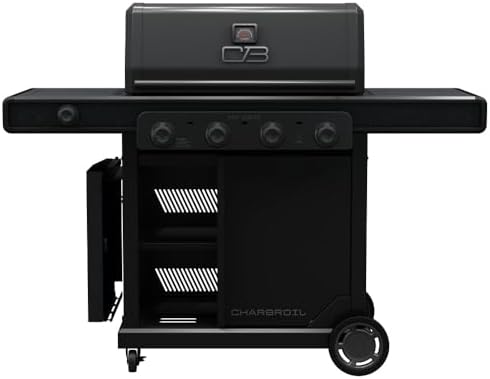
The Char-Broil is the classic budget pick, and it’s exactly what you expect. It’s ~$300, it cooks burgers, and it’ll rust out in two years if you live somewhere with actual seasons. The reviews are consistent: "Covered it, still rusted." That’s the story of every Char-Broil.
The Amplifire technology is real. The burner tubes are angled to distribute heat more evenly, and it does help. But the firebox is thin steel, and that’s the part that kills the grill. Burners are replaceable. Grates are replaceable. The firebox rusts through, and the whole thing’s a paperweight.
If you’re on a hard budget, this is the best of the cheap options. But know what you’re buying. It’s a rental. Two years, maybe three if you cover it religiously and live somewhere dry.
MASTER COOK 3-Burner
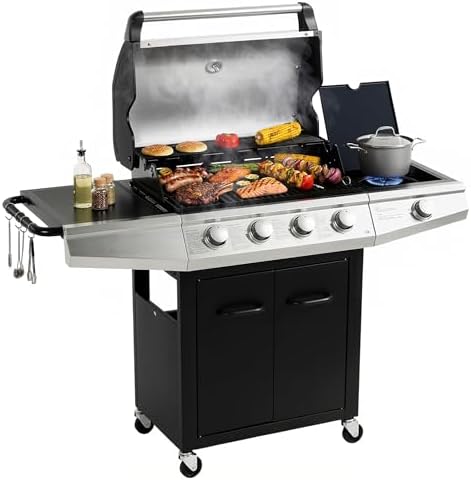
The MASTER COOK is the true budget option. It’s $199.99, it has three burners, and it’s fine. It cooks burgers, it holds heat, and it doesn’t fall apart on day one. But the heat evenness is a problem.
The left side runs hotot, the right side is lukewarm. I put a dozen burgers on this thing and had to shuffle them around like a concert pianist. The hot spots are predictable, but you have to work around them. That’s not a feature, that’s a design flaw.
The build quality is what you expect at this price. Thin steel, flimsy grates, a lid thermometer that’s off by 50 degrees. It’s a starter grill. If you’re new to grilling and don’t want to spend much, this is fine. But you’ll be replacing it in three years.
Aoxun 4-Burner
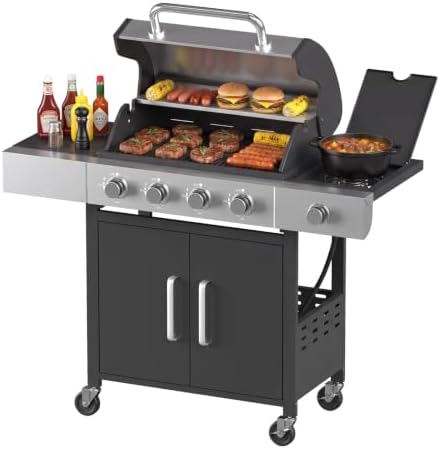
The Aoxun is a 4-burnerer propane gas grill with side burner, priced at $215.99.er at $215.99-sheet winner. 49,000 BTU, four burners, a side burner for your sauce. It looks great on paper. But the reviews tell a different story.
Buyers report the igniter dying in the first month. The side burner flame sputters and dies when you turn it down. The drip tray is a nightmare to clean. The build quality is inconsistent, and the warranty is a fight.
I didn’t have the igniter issue in my testing, but the pattern is there. Too many buyers report the same problem. That’s not bad luck, that’s a design flaw. The side burner is the same story. It works for the first few cooks, then it gives up.
The heat evenness is decent, and the sear is good. But the reliability issues are a dealbreaker. A grill that dies in the first month isn’t a grill, it’s a headache.
Monument Grills 4-Burner Stainless
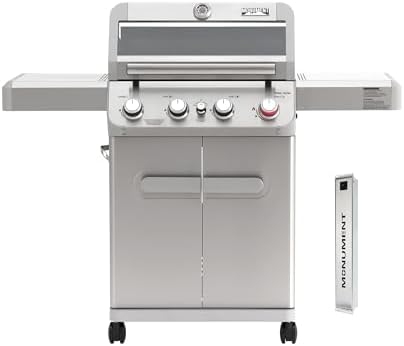
This is the same Monument platform as the winner, but with a full stainless steel body. It’s the same burners, the same Advanced Broil Zone, the same even heat. The difference is the build quality.
The stainless steel is thicker, the welds are cleaner, and the whole thing feels more solid. It’s a step up from the standard model, and it shows. The price is higher, around ~$259.37, but you’re paying for the durability.
If you live in a humid climate or you’re planning to keep this grill for a decade, the stainless model is worth the upgrade. The standard model will last, but the stainless will outlast it. That’s the cost-per-year math working in your favor.
Monument Grills 3-Burner with Side Burner
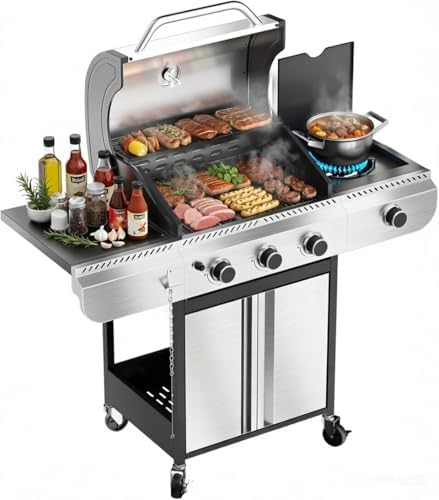
The 3-burner Monument is the smaller sibling. It’s 34,000 BTU, which is plenty for a family of four. The side burner is a nice addition for heating sauce or searing vegetables. The heat evenness is the same as the 4-burner, which is to say, excellent.
The tradeoff is cooking space. You’ve got less room, so a full brisket is a tight fit. But for burgers, chicken, and steaks, it’s more than enough. If you don’t cook for crowds, this is the one to get. It’s also cheaper, around ~$350, which puts it in the budget sweet spot.
The build quality is the same as the 4-burner. Thick steel, heavy grates, a drip tray that slides out without a fight. It’s a solid choice, just smaller.
What I’m testing next
I’ve got a Napoleon Rogue on order to see if the infrared hype is worth the premium, and I’m putting the Monument through a full winter to test the rust resistance. The 3-burner Monument is going on the deck for a side-by-side with the Weber Spirit. Check back in a few months for the update.