Most people buy a griddle, park it on a folding table from the garage, and then act surprised when the whole cook feels like juggling. I have watched this at backyard parties and at competitions, and the griddle is almost never the problem. The station around it is.
A Blackstone griddle cart setup is really two jobs. The first is giving the cooking surface a stable, level home at a height that does not wreck your shoulder. The second is building a cleaning habit that takes five minutes instead of fifty. Get those two right and the griddle becomes the most-used cooking surface in your yard. Get them wrong and it becomes a rust experiment under a tarp.
I spent 15 years on the line and 12 more judging barbecue. In that time I learned that griddle cooking lives or dies on flat, hot steel and fast cleanup. Everything else is furniture. So this is not a buyer's guide to griddles. It is the setup and upkeep routine I would hand a new owner on day one.
Why you should trust me
I cooked the line for 15 years, then ran a barbecue judging circuit for 12. I own four grills, a thermometer collection my wife says is out of control, and a spiral notebook where every cook gets logged with ambient temperature, wind direction, and where the hot spots landed. I do not review a unit without at least three full cooks on it, and I say so when a brand sends something for free. My bias is simple: BTU numbers are marketing, heat distribution is engineering, and a cleaning routine you will not follow is worse than no routine at all.
What the job actually requires
Two purchases, and neither one is the griddle itself.
First, a stand. A griddle is heavy, it gets hot, and it drips grease out of a trough on one side. A card table is not a stand. It wobbles, it sits too low, and it has no place for a spatula, a water bottle, and a roll of paper towels. What you want is a cart built to hold a griddle, with a top surface stable enough that you can press a smash burger without chasing the whole rig across the patio.
Second, a cleaner that actually breaks down baked-on grease. Warm steel wipes clean with a scraper. Cold steel with a week of carbonized burger fat on it does not. You need something that lifts that layer without you spending 40 minutes with a scrub pad and a bad attitude.
That is the whole list. Griddle, cart, cleaner, tools. Everything else is optional.
The cart is the station, not an accessory
Here is the test I run on any griddle stand. Load it the way you would cook: griddle on top, tools on the side, grease tray in place. Now lean on it with both hands like you are pressing a burger. If anything shifts, clicks, or flexes, it fails. You will lean harder than you think, and a wobbly stand turns a 20-minute cook into a 40-minute negotiation.
The second test is height. A griddle surface should sit somewhere between your belt line and just below your elbow. Too low and your back pays for it. Too high and you lose leverage on the spatula, which is the entire point of griddle cooking.
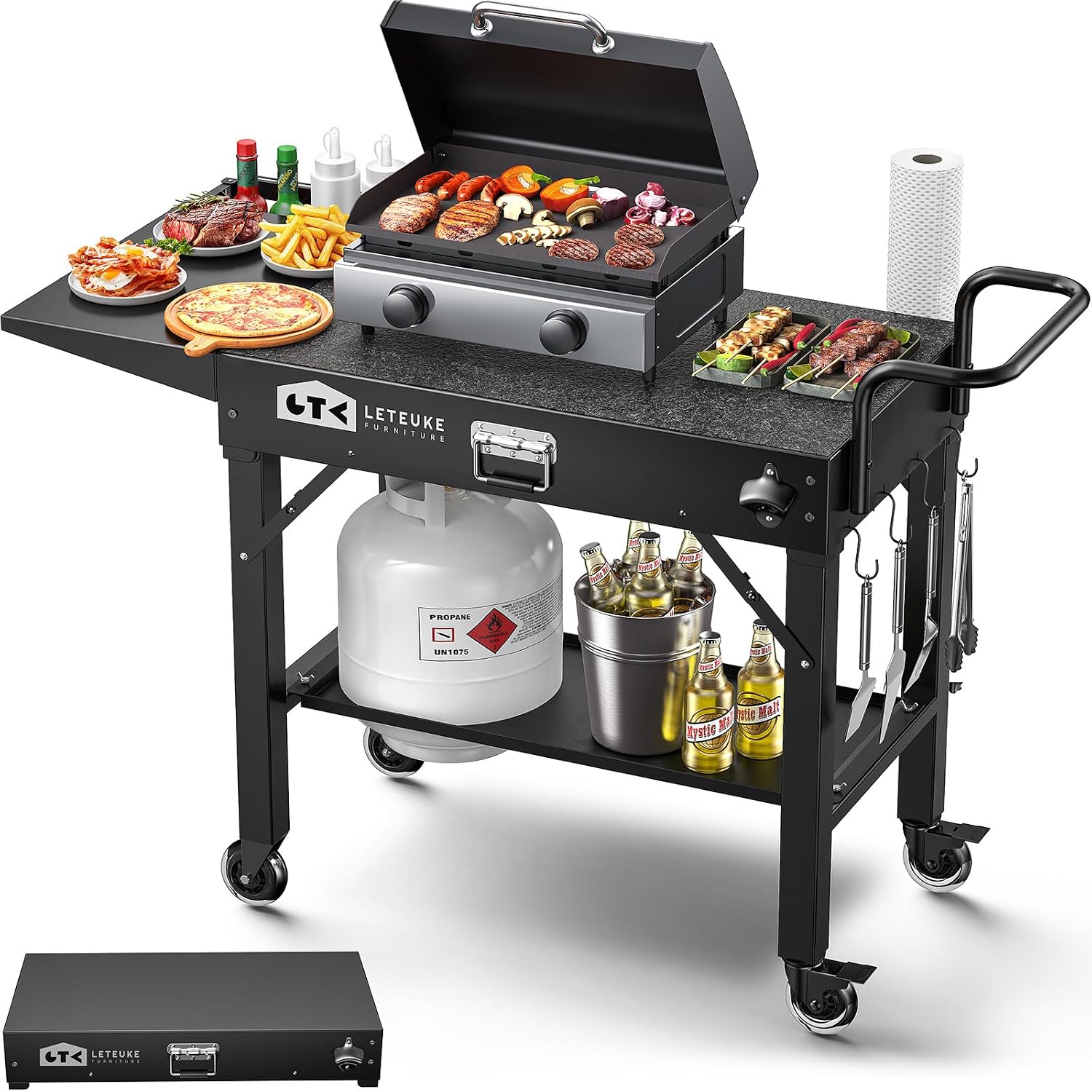
The foundation: Leteuke Grill Cart for Griddle, Portable Outdoor Grill Table
 Visit on Amazon →
This is the role I care about most, because the cart decides whether the griddle gets used on a Tuesday night or only on holiday weekends. A dedicated griddle cart gives you a top surface sized for the cooking surface instead of whatever the folding table happens to be, a place to stage tools within arm's reach, and a unit you can roll out of the weather rather than wrestling a hot griddle off a table by yourself.
Check current Amazon price before you commit, and measure your griddle first. The number that matters is the footprint of your cooking surface plus a couple of inches of breathing room on each side. If the griddle overhangs the cart, the grease trough ends up hanging in space, and that is how you get a stain on the patio that outlives the griddle.
If you cook on a patio with a slope, put a level on the cart top before your first cook. Griddle grease follows gravity. A cart that sits a half bubble off will pool fat in one corner of the surface and leave the other corner dry, which is the difference between even browning and a hot spot you fight all night.
The portability is the other half of the argument. A griddle that lives permanently in one spot gets covered in pollen and forgotten. A griddle on a cart that rolls into the garage in 30 seconds gets used on a random Wednesday for smash burgers and fried rice. That usage gap is worth more than any spec on a box.
Flaws but not dealbreakers: A cart is not a workbench. Do not use the top as a prep table for a full brisket trim with a knife and a cutting board. The surface is meant to carry the griddle, and everything else belongs on a side shelf or a nearby table.
Anyone cooking on a patio, a driveway, or a covered carport who wants the griddle to be a weekly tool rather than a seasonal novelty will get the most out of this.
Cleaning is what decides next weekend
Nobody quits griddle cooking because the food was bad. They quit because the cleanup got away from them. Fat that sits overnight turns into a sticky film, the film turns into carbon, and carbon is the layer that makes you dread the next cook.
The routine is simple, and the order matters. Scrape while warm. Wipe while warm. Degrease when cool. Never the other way around.
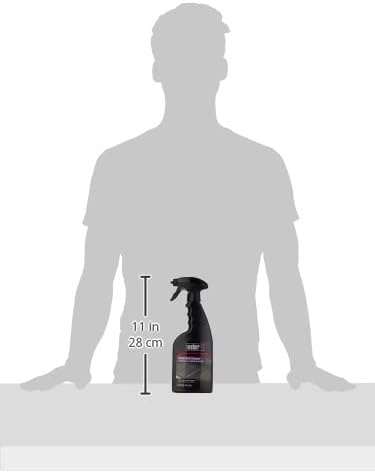
The finisher: Weber® Outdoor Grill Spray Cleaner & Degreaser, 16 oz, Grill Cleaner
 Visit on Amazon →
A spray cleaner and degreaser is the tool that handles the layer your scraper cannot. The scraper gets the loose material. The spray gets the film that is bonded to the steel, and it gets it without you pressing hard enough to scratch the seasoning you spent a weekend building.
Check current Amazon price before you commit. A 16-ounce spray bottle is the right size for this job because you are using it a few ounces at a time, not by the quart. Spray it on, give it the dwell time printed on the label, and wipe. The dwell time is the part people skip, and skipping it is why they end up scrubbing.
Use it on the griddle surface after the steel has cooled, on the grease trough, and on the cart top where splatter lands. The trough is the spot everyone forgets, and it is the spot that smells like a dumpster by August. A degreaser that cuts the fat in the trough also cuts the fat on the outside of the griddle body, which is what keeps the whole station from looking like a crime scene.
Flaws but not dealbreakers: It is a cleaner, not a seasoning product. It will strip a thin layer of oil if you leave it on too long, so follow the label and re-oil the surface after a deep clean.
Anyone who cooks fatty food, which is everyone who owns a griddle, should keep a bottle of this within reach of the cart.
The setup, step by step
Step one: Assemble the cart before you touch the griddle. Build it where you have room to lay out parts, then move it to the cooking spot. Doing this after the griddle is on top means lifting hot, heavy steel twice.
Step two: Level the cart where it will actually live. Not in the garage. Roll it to the patio, set a level on the top, and adjust the feet or shim it. Griddles do not care about your intentions, they care about gravity.
Step three: Check the height against your own body. Stand at the cart with your elbows bent at 90 degrees. The griddle surface should land at or slightly below your forearm. If you have to bend your knees to scrape, the cart is too low for a long cook.
Step four: Season the cooking surface. A thin coat of a high smoke point oil, spread with a paper towel, brought up to temperature until it darkens, then cooled. Repeat two or three times. Do this before the first cook, not after. A seasoned top is what makes the scrape-and-wipe routine possible later.
Step five: Stage tools on the cart, not on the ground. Two spatulas, a scraper, a squeeze bottle of oil, a water bottle, paper towels, and a heat-safe pan for resting food. Everything within arm's reach. Every time you walk away from a hot griddle to find a tool, you lose heat and you lose the rhythm that makes griddle cooking fast.
Step six: Cook in zones. Treat the surface as three bands: a hot zone for searing, a medium zone for eggs and pancakes, and a cooler edge for holding. On a gas griddle you set this with the knobs. The point is that you stop moving food around looking for heat and start moving it with intent.
Step seven: Scrape while the steel is still warm. The moment the food comes off, push the scraper across the surface and into the trough. Warm steel releases fond. Then wipe with a paper towel. That is 90 seconds of work that saves 20 minutes later.
Step eight: Degrease on a schedule, not when it looks bad. Once the surface is cool enough to spray, hit it with the cleaner, let it sit for the time on the label, then wipe it down. Do this after any cook that involved a lot of fat, and always before the griddle goes into storage for more than a few days.
Once a month, pull the griddle off the cart, clean the trough and the burner area underneath, and check the cart hardware for anything that has worked loose. Ten minutes, once a month, and the station stays a station instead of becoming a project.
Where this goes wrong
The mistakes are predictable, and I have made most of them.
Hitting hot steel with cold water. It is the fastest way to warp a cooking surface and the fastest way to destroy seasoning. Wait for cool, then spray.
Leaving the grease trough full. Fat in a trough solidifies, then turns rancid, then attracts every wasp within a mile. Empty it after every cook.
Storing the griddle uncovered. A griddle top is bare steel. Bare steel plus humidity equals rust, and rust means a full re-season before you can cook again. A cover costs less than an afternoon of scrubbing.
Cooking on a folding table. I have seen a full griddle loaded with burgers slide off a card table. Nobody got burned that day, but that was luck, not design.
Cleaning with the burner on. Spray cleaners and open flame do not belong in the same sentence. Kill the gas, let it cool, then clean.
Judging the setup by the griddle's price tag. A cheap griddle on a solid cart with a real cleaning routine will out-cook an expensive griddle sitting on a wobbly table with a caked surface. Every time.
The time math, which is the real cost
The gear is a one-time purchase. The habit is what compounds.
Ninety seconds of scraping and wiping per cook adds up to about 15 minutes a week if you cook most nights. Skipping it adds up to a 45-minute deep clean every few weeks, plus a re-season, plus the occasional round of rust removal. Same griddle, two very different ownership experiences.
The degreaser is the cheapest part of the equation and the one that buys back the most time. One bottle lasts through a lot of cooks when you are spraying a few ounces at a time, and it replaces the scrub pad, the steel wool, and the hour of your Saturday that those two things cost you.
Check current Amazon price on the cart and the cleaner before you buy either one. The prices move, the routine does not.
Questions I get every week
How often should you clean a griddle after cooking? Scrape and wipe while the surface is still warm, every single cook. A full degrease with a spray cleaner belongs at the end of any long session, not once a season.
Do you need a dedicated cart, or will a table work? A table will hold a griddle. It will not hold it steady, it will not put it at the right height, and it will not roll out of the rain. The cart is the difference between a tool and a chore.
What is the single biggest mistake new griddle owners make? Waiting to clean. Everything else is recoverable. A surface left dirty overnight is the start of a downward spiral that ends with the griddle under a tarp by Labor Day.
Build the station first. Then build the habit. The cooking takes care of itself.