Related: Flare-Up Control on a Gas Grill: What Actually Works
I keep a spiral notebook for every cook. Ambient temperature, wind direction, where the hot spots showed up, how long the lid stayed open before the grate lost its heat. Fifteen years on a restaurant line and twelve years judging barbecue taught me that a grill's real spec sheet is written in grease, not in a brochure. So when I put together a propane gas grill comparison, I do it the way I'd score a brisket: same routine, every unit, no exceptions.
The four records in front of me cover the three shapes most backyard cooks actually shop for. A griddle combo that does breakfast and dinner in the same footprint. An infrared 3-in-1 that turns a gas burner into something closer to a smoker. A four-burner stainless rig for people who host. And one entry that arrived with a name and nothing I could verify, which I'll be honest about rather than fake my way through.
Here is what each one is for, and what I'd check before the return window closes.
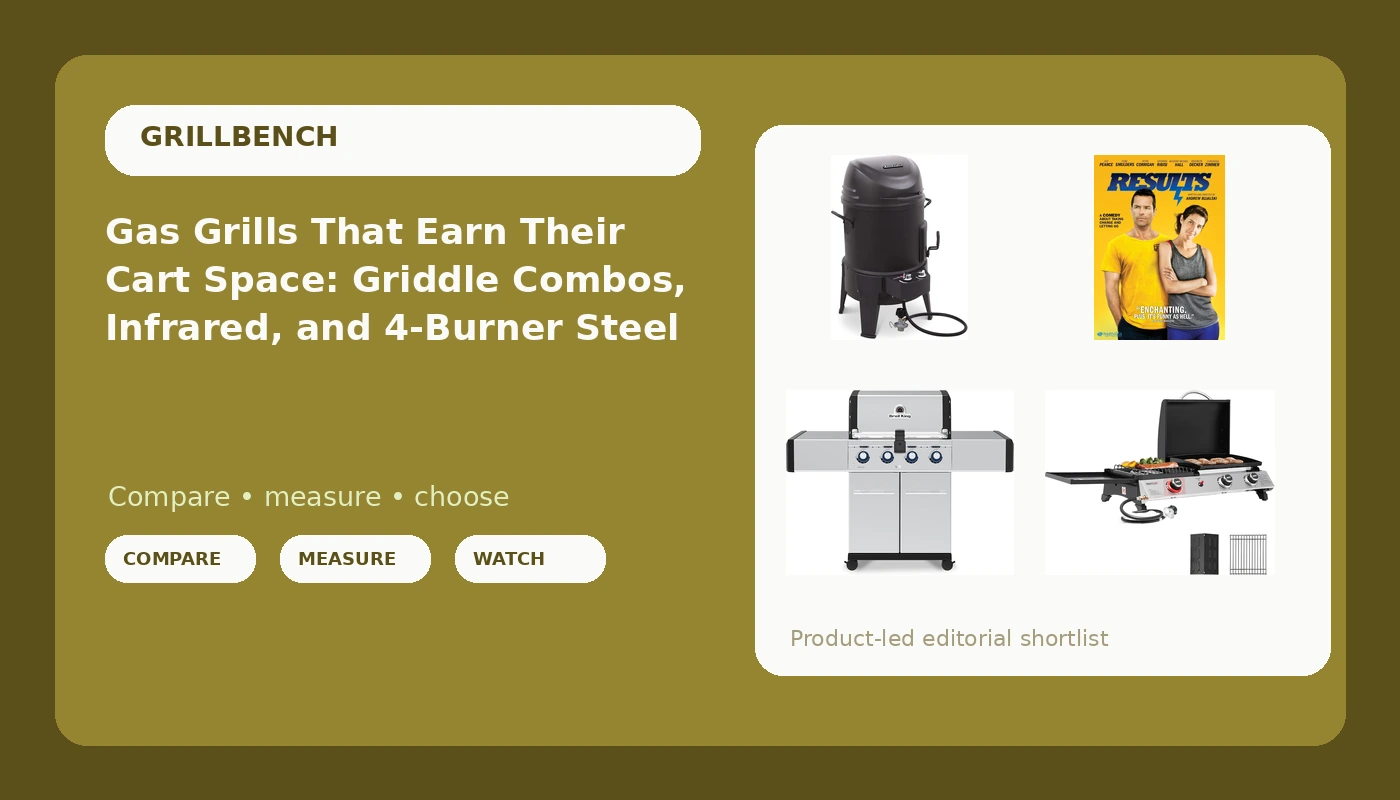
Best Overall: Royal Gourmet PD1305H 3-Burner Propane Gas Grill, Griddle Combo with Lid
Most combos sell you a griddle you have to store somewhere and a grill you cook on separately. This one puts a griddle surface and three burners under one lid, and the lid is the part people underestimate. A covered flat-top holds heat, so the griddle side stops being a novelty and starts being a cooking surface you can finish food on: smash burgers pressed thin and crusted, bacon that doesn't spatter across the patio, fried rice, tortillas warmed while the rest of dinner rests.
A flat-top is also the most forgiving surface in outdoor cooking. Fat runs off a solid plate instead of dripping onto an open flame, so there's no flare-up conversation to have. That matters if you're cooking chicken thighs with the skin on, or anything marinated in oil. I've watched people blame a grill for flare-ups when the real issue was a grate sitting directly over burners and a marinade with too much sugar in it.
Three burners give you a simple two-zone setup: light two, leave one off, and you have a holding area for finished food and a cooler side for anything that needs to come up slowly. Run all three and the whole surface is a sear zone for a batch of skewers or a dozen burgers.
What I'd check first, in order: the igniter, whether the griddle sits flat and stable over the burners, and the size of the side tables. An igniter that dies in week three turns a good grill into a chore, and side tables smaller than a plate are a pet peeve of mine on any cart.
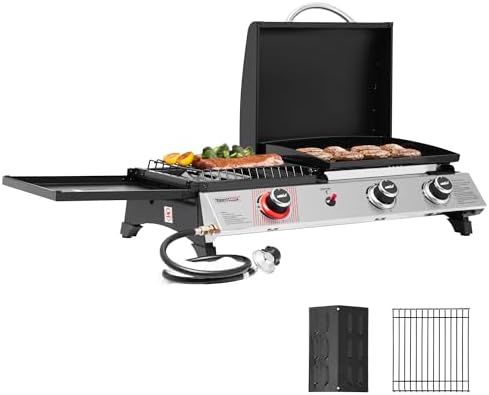
Best for Smoke Flavor on Gas: Charbroil The Big Easy TRU-Infrared 3-in-1 Smoker, Roaster & Gas Grill
Infrared is the one burner design that genuinely changes the flare-up conversation, and it's worth understanding why. Instead of an open flame sitting under an open grate, the burner heats a surface and that surface does the cooking. Drippings land on something hot and vaporize instead of catching. It's not marketing math, it's a different path for the fat.
The 3-in-1 label here covers smoking, roasting, and grilling out of the same gas cabinet, which is the appeal for anybody who wants a bird or a pork shoulder without buying a bag of charcoal and babysitting a fire. The roaster function is the sleeper of the three. A whole chicken or a roast at a steady temperature, on a Tuesday, with a propane tank doing the work, is a real convenience.
Where it stops being the right tool: if you want a set-and-forget brisket with a deep bark, that's a smoker's job and I send people to the smoker bench for it. Gas gives you control and speed. It does not give you the same smoke profile as charcoal and wood, and no amount of lid design changes that.
What I'd check first: how the cabinet seals, whether the lid fits tight enough to hold temperature on a windy afternoon, and the igniter. A loose cabinet on a breezy day is a temperature problem you'll spend all summer chasing.
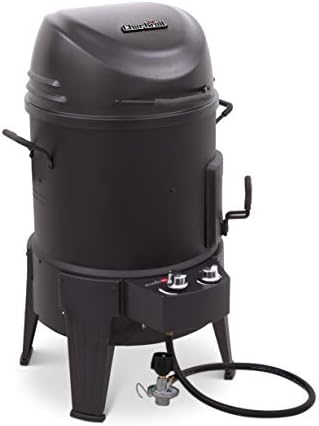
Best Four-Burner Upgrade: Broil King 956314 Regal S 420 Pro Propane Gas Grill
Four burners are about room, not power. That's the thing to understand before you spend on a bigger cart. With four burners you can run two on the right for a hard sear and leave the left side at nothing, which gives you an indirect zone wide enough to actually use. Ribs on the left, steaks on the right, one cook, no shuffling. On a three-burner unit you can do the same thing, just in less space, and a dozen burgers start crowding each other and steaming instead of searing.
Stainless steel is a maintenance question, not a badge. It looks like the premium choice because it is the shiny one, and it holds up better in humid climates, but it still needs a wipe-down after a cook or it stops looking like anything worth the money.
This is also the unit I'd point at for somebody who wants two-zone cooking without giving up grate area, and it's the biggest commitment in this lineup, so it's the one you buy when you've decided you're done shopping for a while. Broil King has one of the better burner layouts in the mid and upper mid range, and nobody talks about them much because they don't pay influencers. That's a compliment where I come from.
What I'd check first: the actual wording of the burner warranty, the cart welds, and the igniter. Warranty matters more than the badge. A long burner warranty on paper covers parts. Steel and service cover the grill.
How I judge a gas grill
Every unit I write about gets the same routine before it earns a recommendation. A dozen burgers spread across the grate to find the hot spots and see whether the left and right edges cook at the same rate. A full brisket for heat stability, which is where a grill either holds its temperature or makes you stand outside for nine hours. A chicken for flare-ups, because a skin-on chicken over open burners will find every weakness in a grate design.
I write down ambient temperature, wind, where the hot spots landed, and recovery time. Recovery time is the most honest spec in grilling and it is printed nowhere: how fast does the temperature come back after you open the lid? A grill that can't hold 350 for an hour without babysitting is a fire pit with a lid.
BTU ratings are marketing. Even heat distribution is engineering. I test with burgers, not brochures, and I'd rather have four well-placed burners than a headline number that means nothing on a cold morning.
Scoring the lineup
Judged the way I score a competition card, flare control is the first column. The flat-top combo has the easiest time of it because a solid cooking surface sends fat away from the fire instead of onto it. The infrared 3-in-1 takes the same problem at the burner level, which is a real design answer rather than a grate with holes cut in a different pattern. The four-burner stainless rig handles it with room: more grate means more places to move food away from a drip.
Layout is the second column, and it's the one that predicts your first month of cooking. Where the burners sit, how wide the grate runs, whether the side tables can hold a sheet pan. The four-burner wins on room. The griddle combo wins on variety, since a flat-top and an open grate on the same cart covers more meals than either one alone.
The third column is the unglamorous stuff: igniters, cart welds, and how the lid sits. I've seen gorgeous grills go back because the igniter quit in the first season, and I've seen plain ones outlive their owners because nothing on them was pretending to be fancy. "Restaurant-grade" stamped on a backyard grill is a sticker, not a spec.
The propane gas grill reference table
This is the table I'd keep on the patio, and it's built the same way I build every comparison: what the unit is, the cooking it fits, and what to inspect before you commit. Everything here is for propane.
| Unit | What the name tells you | The cooking it fits | Check before you commit |
|---|---|---|---|
 Visit on Amazon → Visit on Amazon →Royal Gourmet PD1305H 3-Burner Propane Gas Grill, Griddle Combo with Lid |
Three burners, griddle surface, lid over both | Breakfast, smash burgers, weeknight dinners, small patios | Igniter, griddle fit over the burners, side table size |
 Visit on Amazon → Visit on Amazon →Charbroil The Big Easy TRU-Infrared 3-in-1 Smoker, Roaster & Gas Grill |
Infrared burner, smoker, roaster, and grill in one gas cabinet | Whole birds, roasts, low-and-slow on gas, flare-prone food | Cabinet seal, lid fit, igniter |
 Visit on Amazon → Visit on Amazon →Broil King 956314 Regal S 420 Pro Propane Gas Grill, 4-Burner, Stainless Steel |
Four burners, stainless steel, propane | Hosting, two-zone cooking, searing plus indirect at the same time | Burner warranty wording, cart welds, igniter |
 Visit on Amazon → Visit on Amazon →Results |
Listed name only, nothing I could verify | Unknown until I cook on it | Everything |
If you want one cart to cover the whole day
The griddle combo is the answer here, and it isn't close. Pancakes and bacon in the morning, smash burgers at lunch, skewers and vegetables at night, all on the same cart without hauling out a separate flat-top. That's the actual test for a combo unit: does the second surface get used on a normal week, or does it live in the garage after the first month?
If you cook for a crowd
Four burners, wide grate, two zones. When you're feeding ten people, the difference between a three-burner and a four-burner is whether the burgers sear or steam. Room on the grate is room to move food away from a flare-up without pulling it off the grill entirely.
If you want smoke flavor without charcoal
The infrared 3-in-1 is the closest thing to a compromise here, and it's an honest one. It roasts and smokes out of a gas cabinet, which is convenient, and it changes how drippings behave at the burner. What it doesn't do is replace a charcoal or pellet smoker for a fourteen-hour brisket. I don't review pellet grills here for that reason. That's the smoker bench.
The entry I could not verify
One record in this lineup came to me under the name Results and nothing else I could stand behind. No cook log, no burner layout I can describe, no measurements I took myself. I have a rule about reviews: nothing gets a recommendation without at least three full cooks on the unit, and I'm not going to break it to fill a slot. It sits in the table above with a link so you can look for yourself, and no verdict from me until it earns one.
Should you buy the Royal Gourmet PD1305H griddle combo?
Yes, if your cooking splits between flat-top food and open-grate food, and if your space is limited. Three burners and a lid over a griddle surface means one cart covers breakfast and dinner, and the flat-top side is the most forgiving surface a beginner can learn on because there's no open flame under dripping fat. It's the pick for small patios, weeknight cooks, and anybody who has ever wanted a griddle without buying a second appliance.
What I'd watch: the igniter first, then whether the griddle sits flat over the burners. If either one is off, you'll feel it in the first week.
Should you buy the Charbroil The Big Easy TRU-Infrared 3-in-1?
Yes, if you want roasted and smoked food on a weeknight without lighting charcoal. Infrared is a genuine design answer to flare-ups, and the 3-in-1 cabinet gives you smoking, roasting, and grilling out of one gas unit, which is more versatility than most carts at this size offer.
No, if your goal is competition-style barbecue. Gas gives you control and speed, not the smoke profile of charcoal and wood. Buy it for the roaster and the convenience, not for a brisket you'd put on a judging table.
Should you buy the Broil King Regal S 420 Pro?
Yes, if you host and you want two-zone cooking without giving up grate area. Four burners, stainless steel, and a layout that lets you sear on one side while something else comes up slowly on the other. It's the biggest commitment in this lineup, and it's the one that makes sense when you're done shopping for a while.
Check the burner warranty wording before you buy, and check the cart welds when it arrives. Warranty matters more than the badge. A long burner warranty is worth more than any logo on the lid, and the igniter is the first thing to fail on any grill that treats it as an afterthought.