I cooked on gas lines for fifteen years before I started judging barbecue, and I still keep a spiral notebook next to the grill. Every cook gets logged: ambient temp, wind direction, where the hot spots showed up, and how long the chamber took to recover after I opened the lid. That notebook is the reason I don't trust a spec sheet. BTU numbers are marketing. Even heat distribution is engineering.
So this gas grill setup comparison isn't about which box carries the biggest number. It's about four pieces that solve four different problems: a wide grill for feeding a crowd, a premium natural gas grill for people who have the hookup, a rebuild kit for the Spirit that's already sitting on your patio, and a backup ignition source so a dead igniter stops ruining your Saturday.
The short version: buy the grill for the cooking you do every week, not the party you host twice a year. A wide eight-burner earns its footprint only if you fill it. A natural gas Napoleon is the better machine if you have the line and care about sear. And a parts kit will outlast the urge to buy a new grill.
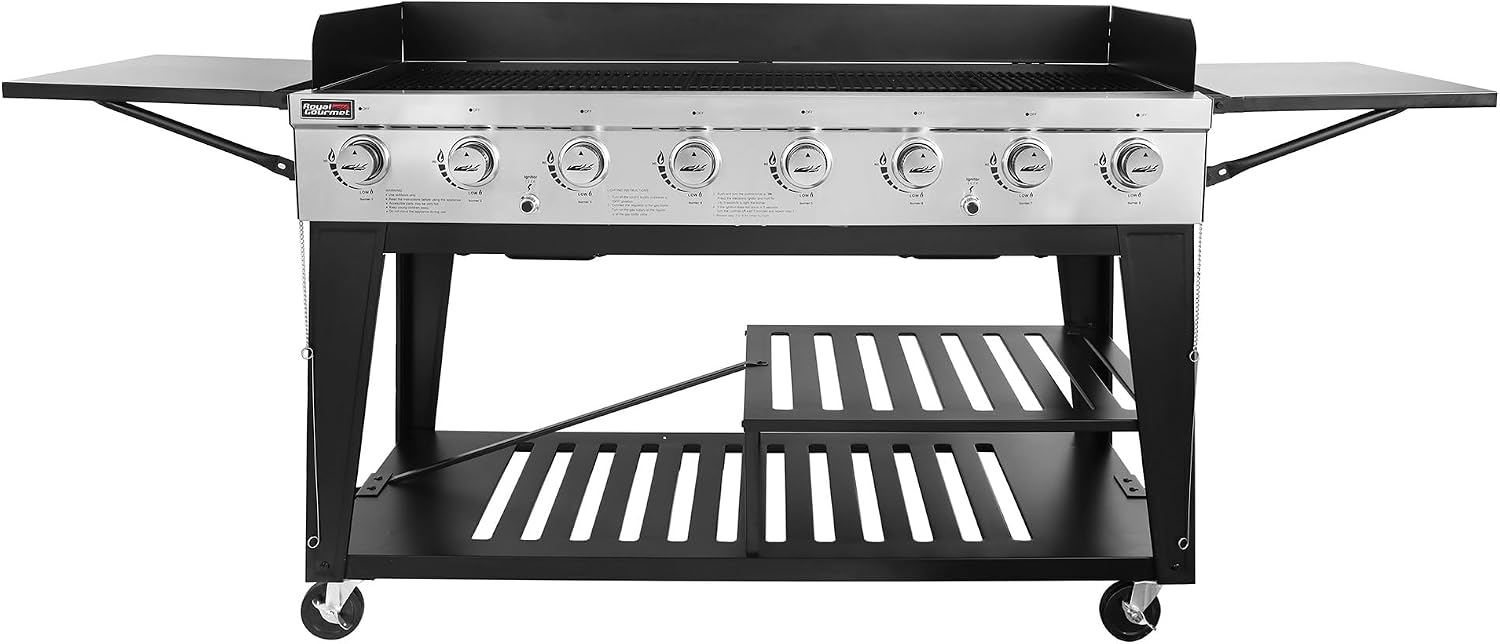
Royal Gourmet 8-Burner Gas Grill, 104,000 BTUs Liquid Propane Grill
Enormous cooking surface, high total output, strong value per square inch of grate
Propane only, thirsty at full output, wide lid costs you recovery time
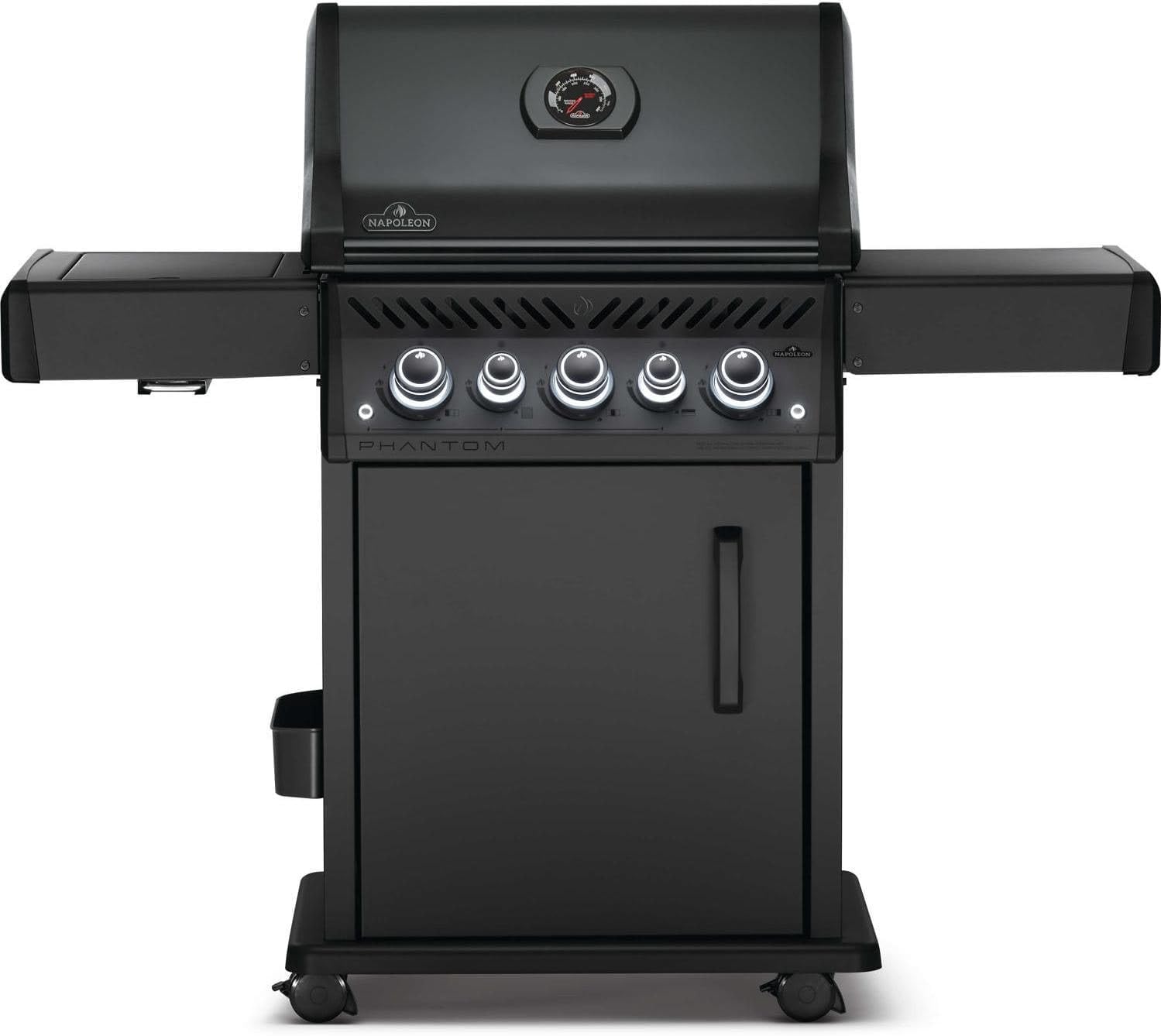
Napoleon Phantom Rogue SE 425 Natural Gas Grill w/Infrared Rear Burner & Infrared Side Burner
Infrared rear and side burners that genuinely work, natural gas convenience, real sear zone
Needs a gas line, premium money, smaller grate than the eight-burner
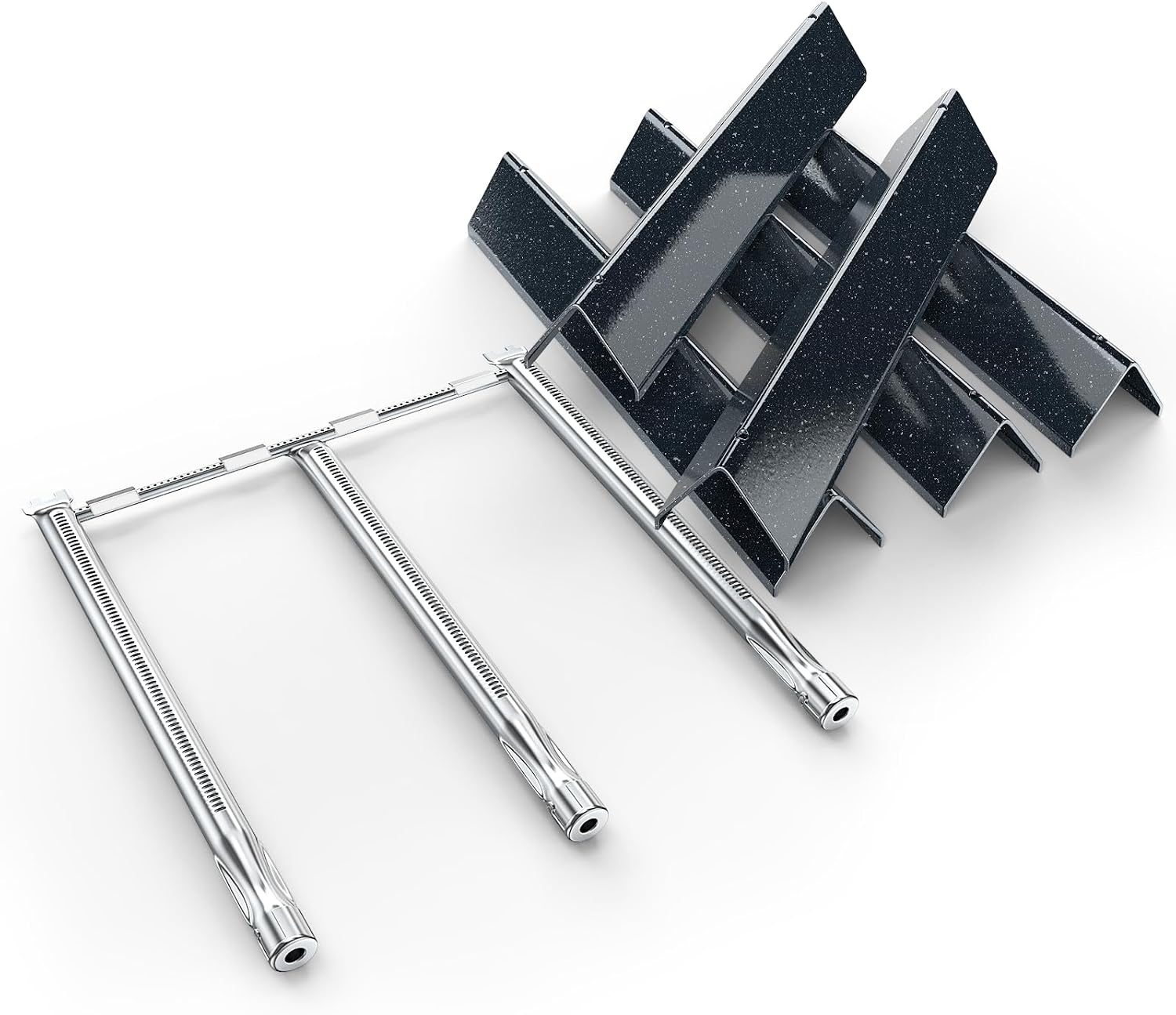
Spirit E310 Grill Parts Replacement Kit, Flavorizer Bars & Burner Tubes for Weber Spirit & Spirit II 300 Series (Front Control)
Brings a tired Spirit 300 back to working order for a fraction of a new grill
Front-control fit only, and you must match your exact model
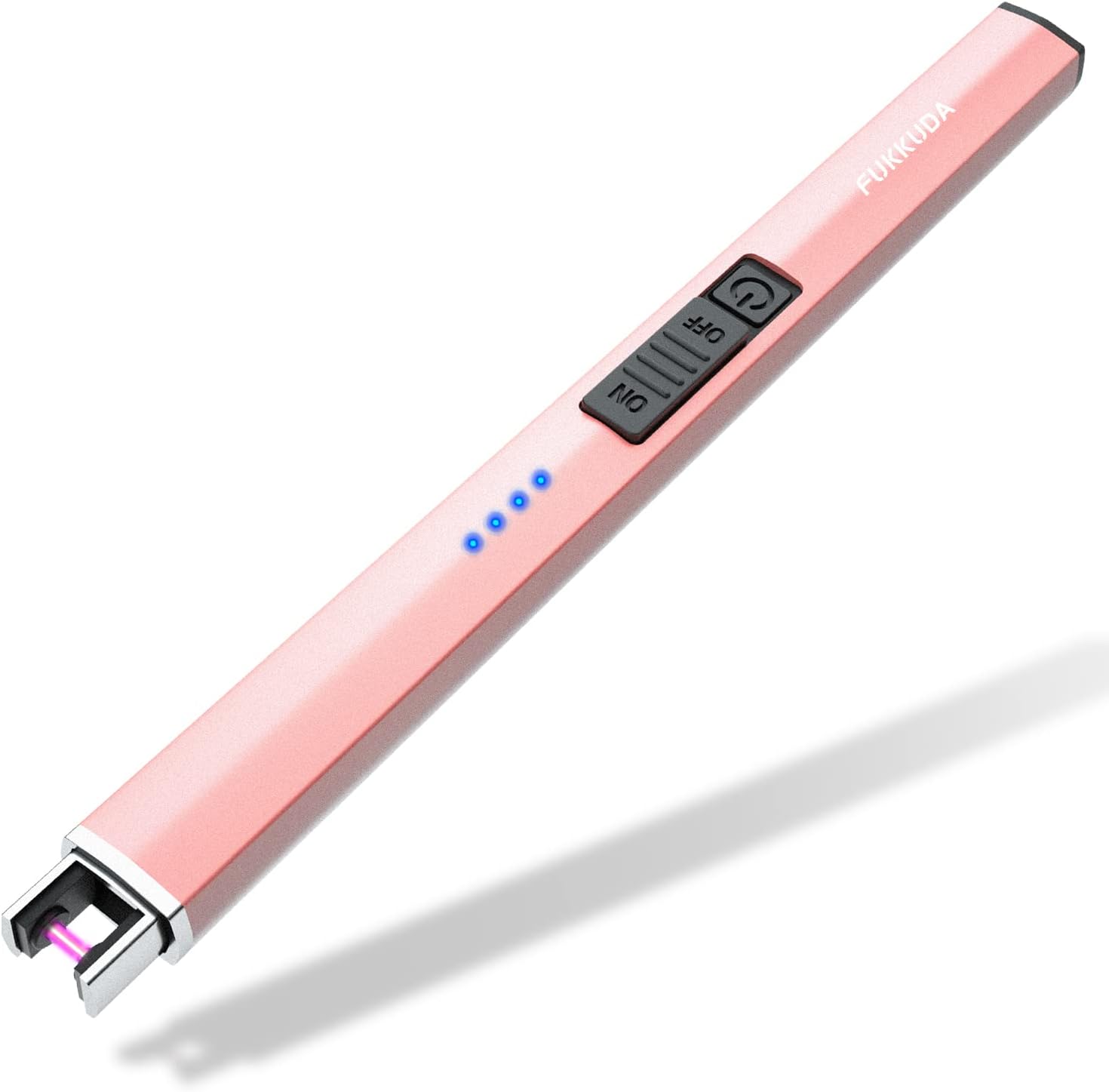
FUKKUDA Electric Candle Lighter with Safety Switch, USB Rechargeable Windproof & Flameless Plasma Arc Lighter (Rose Gold)
Rechargeable, windproof, no butane to buy, cheap insurance
Not a fix for a dead igniter, and reach into burner tubes varies by grill
Prices and availability were captured from Amazon Creators API and may change.
How I score a gas grill
I run the same three cooks on anything I evaluate. A dozen burgers spread left to right across the grate, because that maps hot spots faster than any infrared photo. A full packer brisket, because heat stability over six hours is where cheap fireboxes show themselves. And a whole chicken, skin side down, because that's where flare-ups announce themselves first.
Recovery time is the spec nobody prints. It's how fast the chamber climbs back to 350 after you open the lid to flip. A wide lid with eight burners holds a lot of heat, but it also dumps a lot of heat the second you open it, and in a Texas northerly that difference is the gap between a good cook and a frustrating one.
I'll be straight about what this article is. These picks come from the specs, the build class, and years of cooking on grills in each category. I haven't run three full cooks on every unit here, and my own rule is no verdict without them. Where I'm judging from the spec sheet instead of from a cook, I say so.
The case for a wide eight-burner
The Royal Gourmet runs 104,000 BTUs across eight burners on liquid propane. That's a lot of grill, and the point of it is area. If you host, if you cook for a team, if your Saturday is forty burgers plus a tray of peppers and a griddle of onions, this is the class of machine that makes it possible without shuffling trays in and out of the same hot corner.
Output per dollar is where a grill like this wins, and it's not close. You're buying grate real estate and burner count at a price that a premium mid-size grill can't touch.
The trade-offs are just as real. Eight burners means eight valves to manage, and on any wide chamber the outer zones run cooler when wind crosses the lid. I'd expect the far ends to be the last place you'd want to sear, and I'd plan my cook around the middle. Propane consumption at that output is not small. A big lid takes longer to recover after you open it. And it's a footprint decision: this is not a grill you tuck into the corner of a small patio.
Buy it if your normal cook is a crowd. Skip it if your normal cook is four burgers and a chicken, because you'll spend the evening heating empty grate. Visit on Amazon →
The premium route: infrared and natural gas
The Napoleon Phantom Rogue SE 425 is a natural gas grill with an infrared rear burner and an infrared side burner, and it's the one in this group that I'd hand to somebody who cares about crust. I've said for years that Napoleon builds the best sear zone under $1,500, and that the infrared rear burner actually works, which is rare in a category full of decorative burners that look impressive in photos and do very little over a steak.
The infrared side burner is the sleeper. It gets hot fast and puts a steakhouse crust on a ribeye that a standard side burner can't manage, and it does it without turning your main chamber into a grease fire.
Natural gas is a luxury, and I mean that as a compliment. You never swap a tank, you never run dry halfway through a brisket, and your fuel cost per cook drops. The catch is the hookup: no gas line, no grill. It's also a fixed installation in spirit, so you're not wheeling this to a tailgate.
The other catch is size. A 425-class grill with a rear infrared burner is a cook's grill, not a caterer's grill. If you need forty burgers at once, the eight-burner is the answer. If you need two steaks seared hard and a chicken roasted indirect with the rear burner doing the work, this is the better machine. Visit on Amazon →
The parts kit that beats a new grill
The Spirit E310 replacement kit covers flavorizer bars and burner tubes for Weber Spirit and Spirit II 300 series grills with front controls, including the 15.3 inch heat plates and 18 inch burner tubes. I restore old kettles for fun, and the reason I keep pointing people at Weber isn't the badge. It's the parts pipeline. A grill you can rebuild is a grill you keep, and that's worth more than any logo.
Here's what usually fails on a Spirit after a few seasons. The flavorizer bars rust through and start dripping fat straight onto the burners, which turns a controlled cook into a flare-up festival. The burner tubes clog or burn uneven, which puts a permanent hot spot on one side of the grate that you'll chase forever with tongs. Replacing both at once is the right call, because you don't want to open that firebox twice in one season.
The fit note matters more than anything else here. This kit is for front-control 300 series Spirit and Spirit II grills. If your knobs are on the front, check your model against the listing. If they're on the side, this is the wrong kit and no amount of optimism will change that. Measure your old bars before you order, and hit the firebox bolts with penetrating oil the night before, because rusted screws are the real boss fight. Visit on Amazon →
Ignition: the small failure that ends a cook
Igniters die. It's my number one pet peeve in this whole category, and it's why I keep a backup on the shelf next to the tongs. The FUKKUDA electric candle lighter is a plasma arc lighter: USB rechargeable, windproof, flameless, with a safety switch. No butane to refill, no flint to replace, and a Hill Country gust won't blow it out the way it kills a paper match.
What it is not: a repair. It's a workaround. The arc sits at the tip of a flexible neck, and on some grills you can reach the burner through the tube openings and light it cleanly; on others the geometry doesn't cooperate and you end up lighting through a gap in the grate. It also won't tell you why the igniter died, which is usually a corroded contact or a cracked ceramic, both of which are cheap to fix once you know to look.
Still, for the price of a couple of propane refills, it's the cheapest insurance in this entire setup, and it's the one item here that applies no matter which grill you own. Visit on Amazon →
What I'd actually buy
Match the grill to the cook you already do. That's the whole game, and it's the mistake I see most often: people buy for the party they imagine and then resent the grill on a Tuesday.
If you feed a crowd and you're on propane, the Royal Gourmet is the pick, and you should budget for fuel and accept that the ends of the grate run cooler than the middle. If you have a natural gas line and your weeknights involve steak, the Napoleon is the better tool and the infrared burners earn their keep. If there's a Spirit 300 on your patio with rusted flavorizer bars, the kit is the highest-value purchase in this article by a wide margin, and it's not close.
The lighter goes in the drawer regardless. Everyone who owns a gas grill should own a backup ignition source, because the igniter is the first thing to go and the last thing you think about.
Trade-offs the brochures skip
BTU totals are the least useful number on the box. A big number with a bad burner layout gives you a hot spot and a story about how your grill "runs hot." Layout and grate height predict more than output ever will.
Warranty coverage matters more than the badge. A long burner warranty tells you what the company thinks of its own steel. Read what's actually covered, because "lifetime" on a part nobody replaces isn't worth much.
Side tables smaller than a plate are a design insult, and you'll notice it every single cook when your tray is balanced on the lid.
Propane is a utility, natural gas is a luxury, and neither one is a flavor decision at grilling temperatures. Anyone telling you otherwise is selling something.
And a grill cover costs less than the rust it prevents. That's not a product pitch, it's a habit.
What I'm testing next
I'm in the middle of a flare-up control test on four new brands, all of them claiming flare-free grates. So far, one out of four is telling the truth, and I'll name names when the cooks are done. The eight-burner class is on my list for a full brisket run this fall, because wide chambers behave differently when you load them, and I want numbers instead of theory.
Until then, the notebook stays open, the burgers go on the left and the right, and I watch which one burns first. That's still the most honest test in this business.