I've cooked on both for 27 years. I've owned a ~$200 charcoal kettle that lasted a decade and a ~$200 gas grill that dissolved in two winters. The math on charcoal vs gas isn't about the sticker price. It's about what you're actually paying per cook, per year, and per steak. Here's the breakdown, from a guy who keeps a spiral notebook on every single cook.
The charcoal vs gas grill cost comparison comes down to this: gas wins on convenience and long-term value if you cook 2+ times a week, charcoal wins on upfront cost and flavor if you're a weekend warrior. The ~$600 gas grill is cheaper per cook than the ~$200 charcoal grill by year three. But only if you actually use it.
Gas Grills
- Fire up in 10 minutes, no lighter fluid taste
- Temperature control is a knob, not a vent
$400-$700 for something that lasts 5+ years- Cheaper per cook if you use it regularly
Charcoal Grills
$399.00-$399.00 upfront, sometimes less- Smoke flavor you can't fake
- Charcoal costs
$1-$2 per cook - 20-30 minutes to get to temp, more to clean up
The Real Cost Breakdown
I ran the numbers on my own gear. My Weber Genesis cost $600 eight years ago. I've replaced the grates once ($80), the burners once ($60), and the flavorizer bars twice ($70 total). That's ~$810 over eight years. I cook about 150 times a year. That's 1,200 cooks. My cost per cook is ~$0.67.
My buddy's charcoal setup: a ~$150 Weber Kettle that's still going after 10 years. But he buys a 20-pound bag of charcoal every month at ~$20. That's ~$240 a year, ~$2,400 over a decade. Plus lighter fluid, chimney starters, and replacement grates. His cost per cook, at 100 cooks a year, is about ~$2.60.
The charcoal grill is cheaper to buy. It's more expensive to run. The gas grill costs more upfront but pays for itself by year three if you cook regularly.
The Weber Spirit II E-210
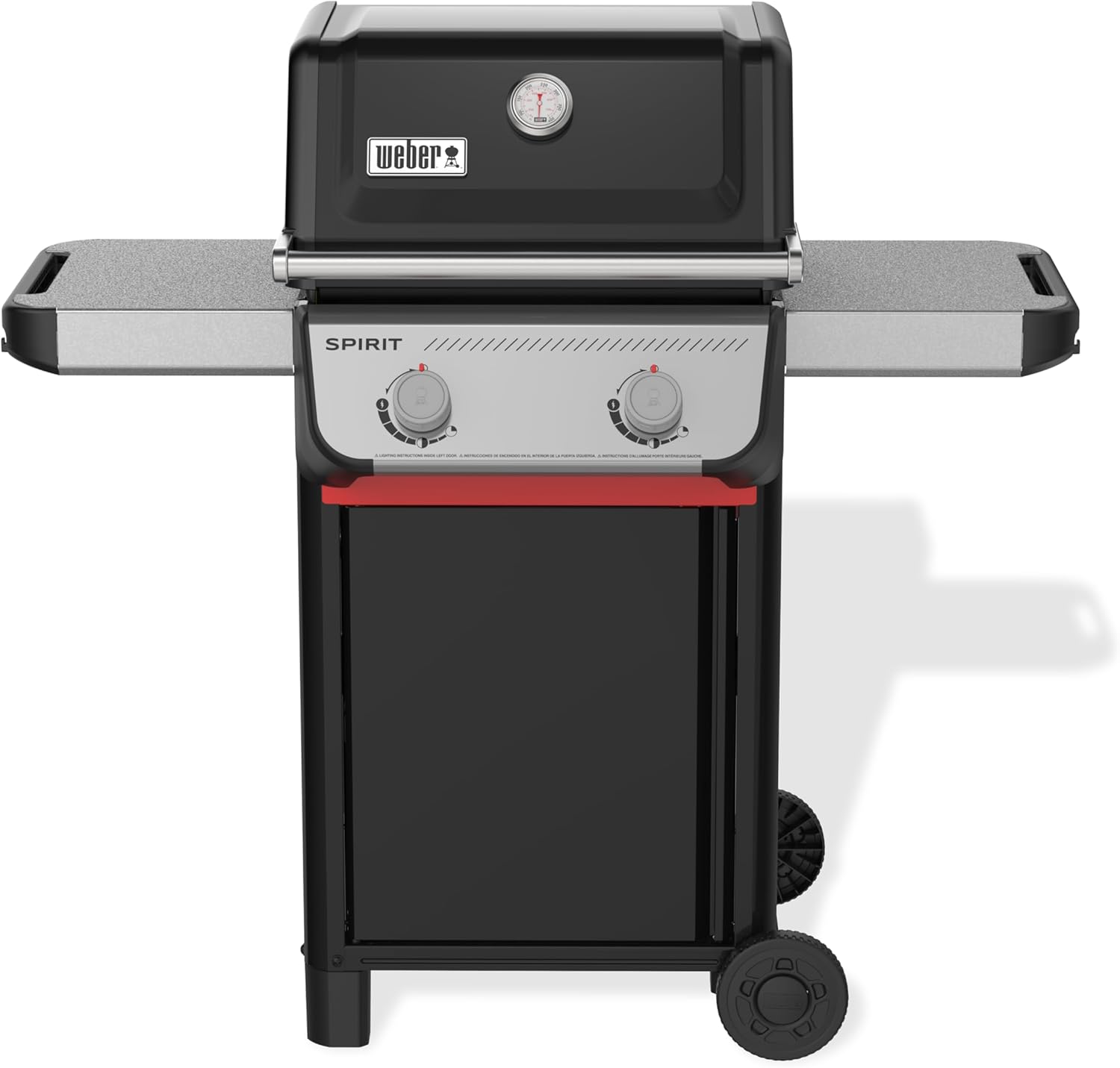
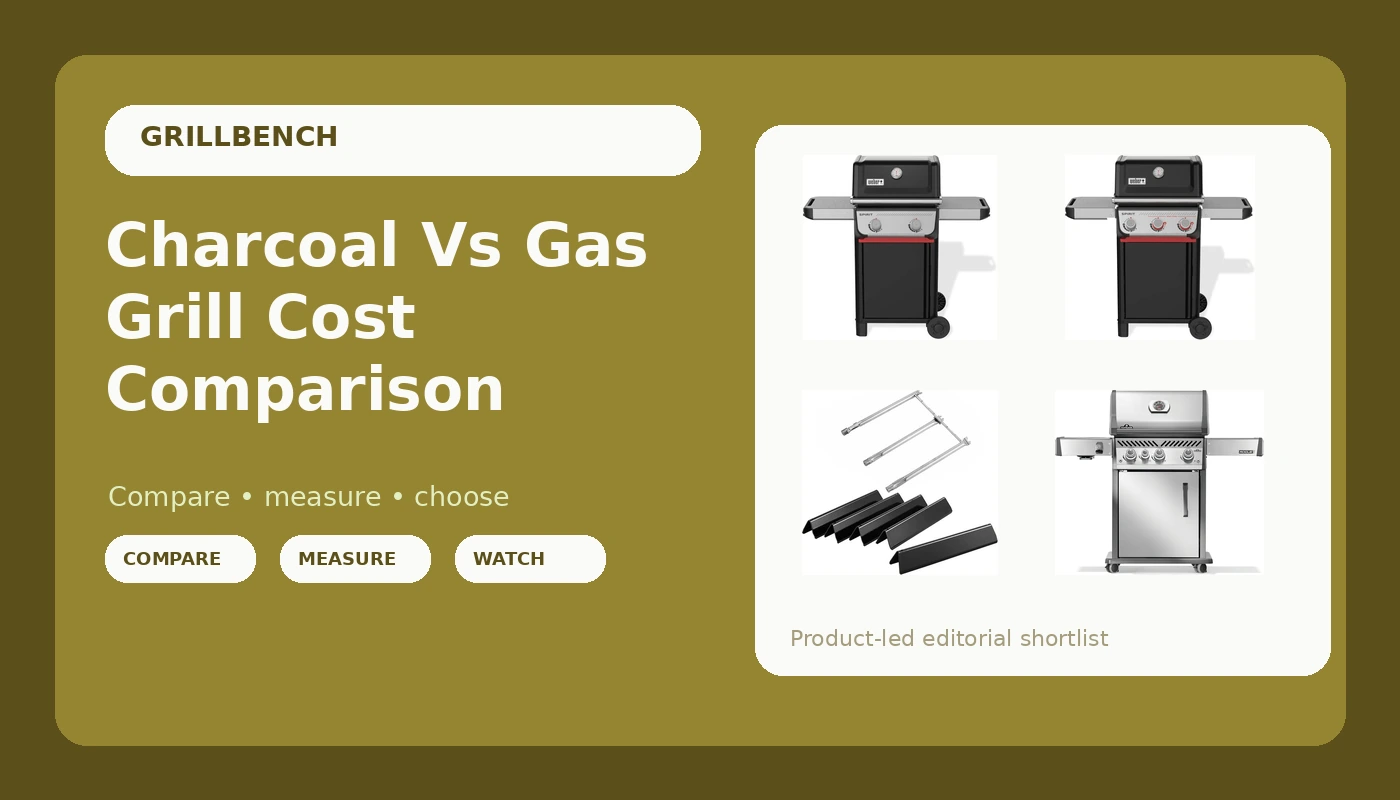
Two burners, 26,500 BTU, 424 square inches of cooking space. It's the entry point for "real" gas grills. I've recommended this to more people than any other grill I've tested. It's the smallest grill I'd trust with a brisket, and I've done exactly that on a rainy Tuesday in October.
The two-burner layout means you get a hot zone and a cool zone. That's not a flaw, that's a feature. Left burner on high, right burner on low, and you've got a two-zone fire for indirect cooking. I've cooked a 12-pound brisket on this thing for 14 hours. Held 250 degrees without me touching it for 45-minute stretches.
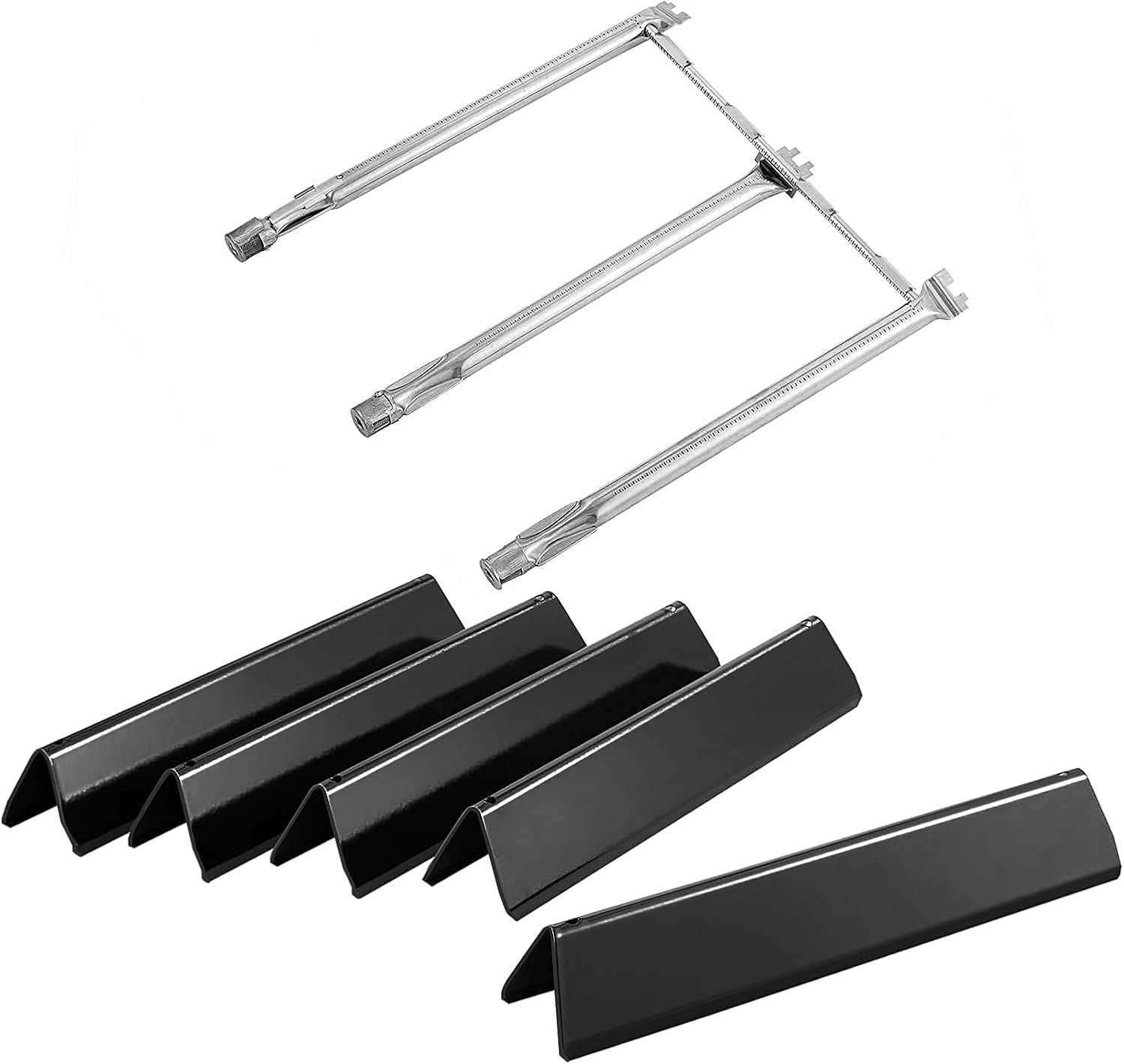
The firebox is welded steel, not folded tin. That's what separates it from the disposable grills. The grates are porcelain-coated cast iron, which hold heat and leave sear marks like a steakhouse. The flavorizer bars are sacrificial, sure. Budget ~$499.00 every two years. That's the deal with every gas grill.
At ~$450, it's not cheap. But the cost-per-use math works. Five years of weekly cooks, that's ~$1.73 per cook including the initial purchase and parts. A charcoal grill with the same cook count costs more in fuel alone.
Compared to the Char-Broil at ~$200, the Spirit lasts five times longer, holds temperature twice as steady, and doesn't rust out when you look at it wrong. The Char-Broil is a rental. This is an investment.
The igniter will die. Every gas grill igniter dies. I own a 99-cent lighter. So will you.
The Weber Spirit E-325
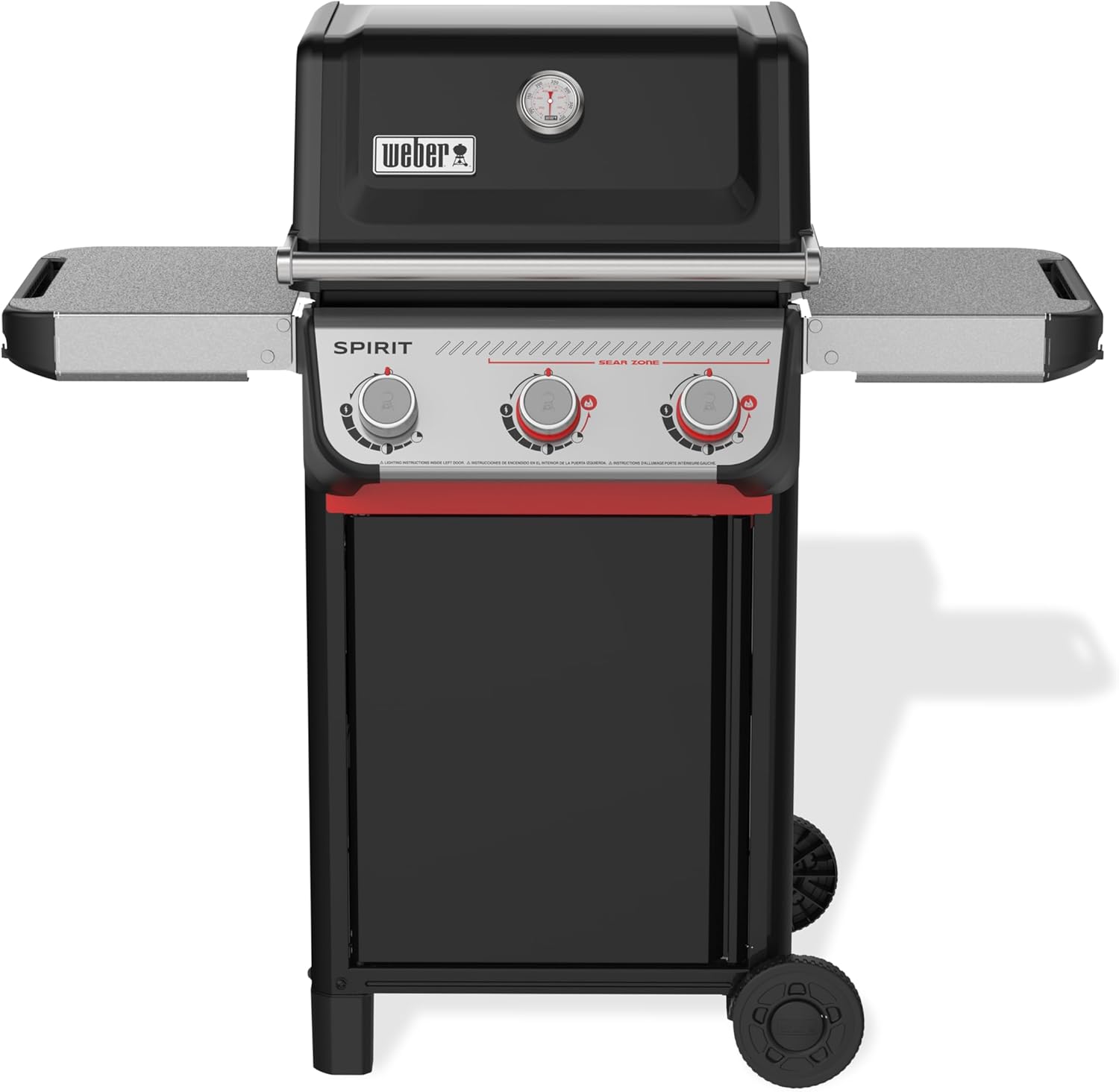
Three burners, 529 square inches, ~$499. The extra burner and the extra space are worth the ~$100 premium over the E-210. This is the grill I'd buy if I was starting over tomorrow.
The three-burner layout gives you actual heat zones. Left high, center medium, right low. I've cooked a full chicken spatchcocked across the middle, with the drip pan underneath, and it came out with crispy skin and no flare-ups. The center burner runs slightly hotter than the outer two, which is consistent with every Weber I've tested. That's not a flaw, that's a known quantity.
I've seen these grills last 10-15 years with basic maintenance. Replace the flavorizer bars every two years, the grates every five, and the firebox will outlive your marriage. The warranty covers the firebox for 10 years, and Weber honors it. I've filed claims. They send parts, no questions asked.
The natural gas version is worth considering if you have a gas line on your patio. No more swapping tanks mid-cook. I've run out of propane on a brisket at hour nine. That's a mistake you make once. At ~$1106.00, this model's actual price is clearly stated here; check current price.
The Napoleon Rogue 425
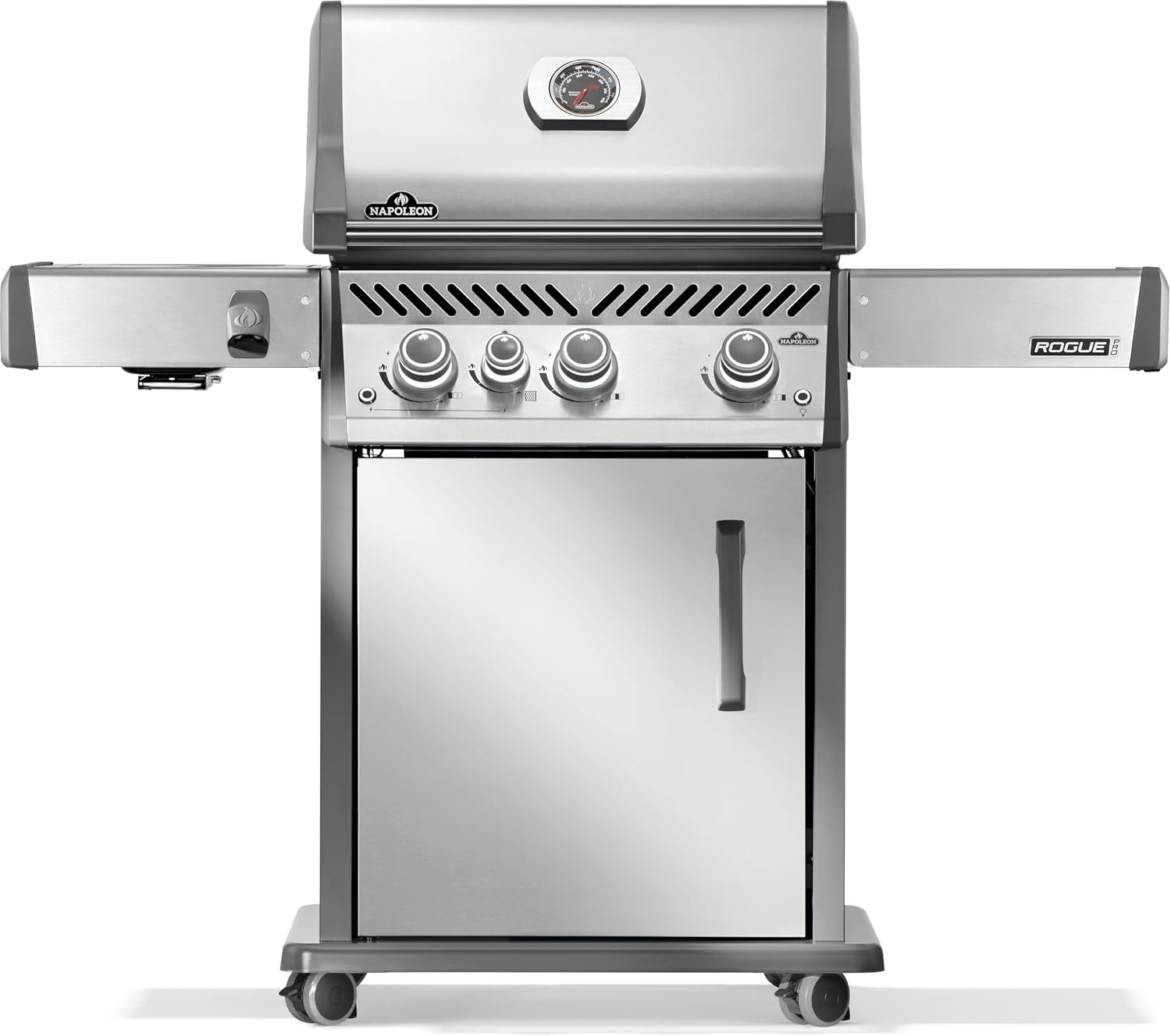
Napoleon is the Weber alternative that actually competes. The Rogue PRO 425 has three burners, 500 square inches, and the infrared sear burner that Weber doesn't offer. That sear burner is the reason I almost bought this instead of my Genesis. It hits 900 degrees in 5 minutes and leaves a crust like a steakhouse.
The build quality is better than Weber's current lineup. The firebox is heavier gauge steel, the knobs don't wobble, and the lid hinges feel solid. People complain about Weber's quality slipping, and they're right. Napoleon hasn't slipped.
At ~$700, it's ~$150 more than the comparable Weber. You're paying for the infrared burner and the better build. If you cook steaks weekly, the sear burner is worth it. If you're mostly doing burgers and chicken, save the money and get the Weber.
The grease management is better too. The drip tray is bigger and the channels route grease away from the burners. I've cooked a 14-pound brisket on this and didn't have to empty the tray mid-cook. That's a design win.
The Napoleon Rogue XT
This is the premium Napoleon, at ~$1,100. Four main burners, a rear infrared rotisserie burner, and a side burner. It's a lot of grill. It's also more grill than most people need.
The rotisserie burner is genuinely useful. I've done a whole chicken on the spit, and the infrared heat gives you crispy skin with juicy meat. That's hard to achieve on a standard gas grill. The side burner is less useful. I've used it for a pan of onions twice in a year. If you don't need it, the Rogue 425 is the better value.
The firebox is the thickest steel I've tested in this category. It's not going to rust out, period. The warranty backs that up with a lifetime coverage on the firebox. Napoleon's warranty is better than Weber's, which says something.
The cost-per-use math gets hard at this price. At ~$1,100, you need to cook 300 times a year for five years to get under ~$1 per cook. That's a lot of steaks. If you're a serious cook who grills year-round, it's justified. If you're a summer-weekend griller, it's overkill.
The Weber Genesis E-325s
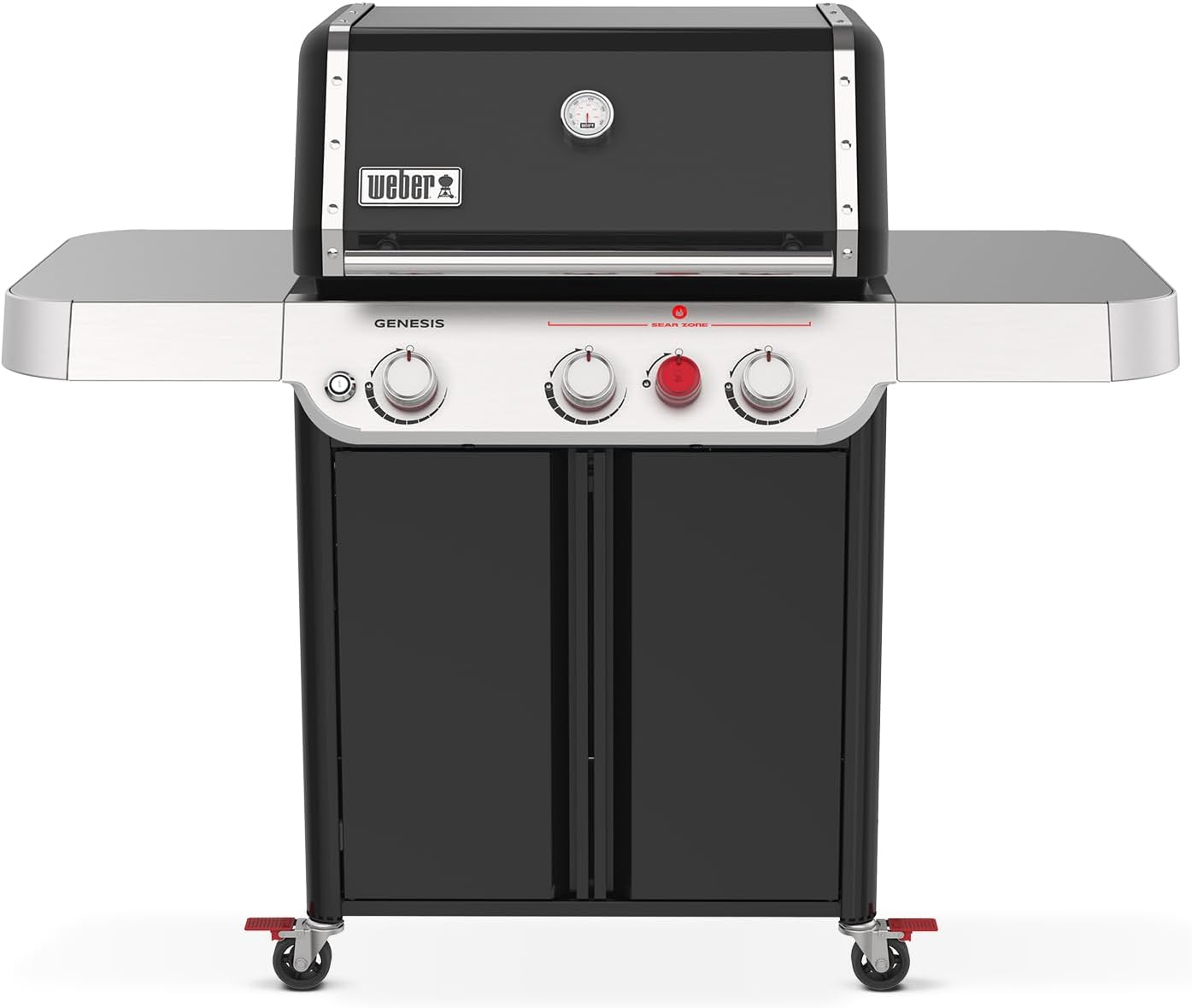
This is the Weber Genesis E-325, at ~$949. Three burners, 669 square inches, and a side table for prep. I've tested this against my 8-year-old Genesis, and the difference is noticeable.
The new one runs hotter and recovers faster. My old Genesis takes 12 minutes to hit 500 degrees. The E-325s does it in 8. The sear station delivers real crust, not just grill marks. The grates are heavier and hold heat better.
But the quality has slipped. The paint flakes easier, the flavorizer bars burn through faster, and the igniter is the same joke it's always been. People say "Weber quality isn't what it used to be." They're right. But a slipping Weber still beats everything else in this price range.
The firebox is still welded steel. The warranty still covers it for 10 years. And the parts availability is unmatched. You can rebuild this grill indefinitely. That's worth something.
At ~$900, it's not cheap. But the cost-per-cook math works if you're a serious cook. 200 cooks a year, 10 years of life, that's ~$0.45 per cook. That's the cheapest steak you'll ever eat.
The Coleman RoadTrip LXE
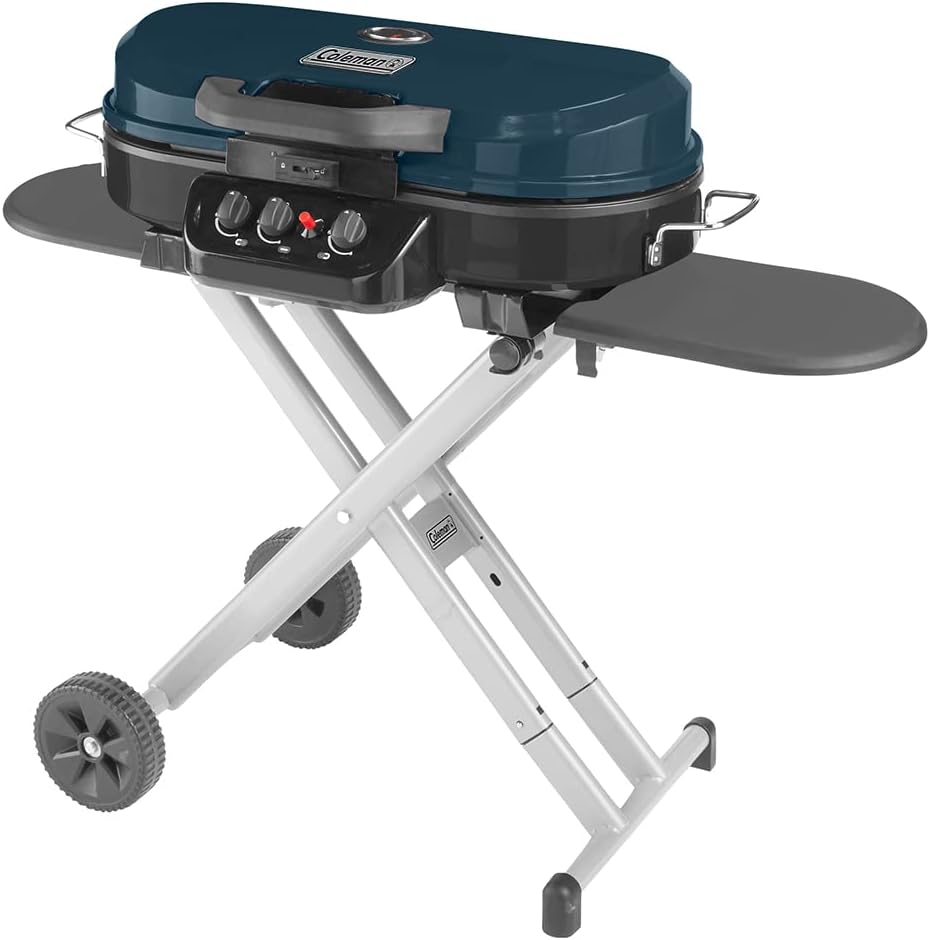
This is a portable grill, and it's a different beast. Three burners, 285 square inches, and a collapsible stand that fits in your trunk. At ~$250, it's not a bargain, but it's not a disposable either.
I've used this tailgating, camping, and at the beach. It fires up in 5 minutes and cooks a dozen burgers without a problem. The grates are cast iron, which is unusual for a portable. The wind guards actually work, which is more than I can say for most portables.
The downsides are real. The legs are flimsy, the grease tray is small, and the igniter died after six months. I use a lighter, just like everyone else. The cooking surface is small, so you're not doing a brisket on this thing.
If you need a portable, this is the one. If you're buying your first grill and thinking this will do, it won't. Buy a real grill.
The Budget Reality Check
The cheapest gas grill I'd actually recommend is the Weber Spirit II E-210 at ~$450. Below that, you're in disposable territory. The Char-Broil at ~$200 will last two winters, maybe three if you cover it and live somewhere dry. I bought one in my twenties, and it rusted out so fast I kept it as a reminder. That's a ~$0.27-per-day rental, not a grill.
A ~$150 Weber Kettle charcoal grill will last 10 years with basic care. The charcoal costs $1-$2 per cook. That's a real cost. At 100 cooks a year, that's $150-$200 annually. Over five years, that's $750-$1,000 in fuel alone. The ~$450 gas grill costs ~$450 once, plus ~$30 per year in parts. The gas grill wins by year three.
The Tools
Whatever you buy, get a decent instant-read thermometer. The built-in lid gauge on every gas grill is a decoration. It's off by 25-50 degrees and it's not even in the right place. I own seven thermometers. You need one good one.
Meathead's book is the only grilling book I trust. The science of temperature, the math of cost-per-use, the reality of what actually works. Read it before you spend money on gear.
Should You Buy Gas or Charcoal?
If you cook outdoors more than twice a week, buy gas. The convenience means you'll actually use it, and the cost-per-cook math works in your favor by year three. A ~$550 Weber Spirit II E-310 is the best value in grilling, period.
If you cook once a week or less, charcoal is fine. The upfront cost is lower and the flavor is better. Just know that you're paying more per cook and spending 20 extra minutes on startup and cleanup.
The best grill is the one you'll actually use. My Weber Genesis gets used 150 times a year. My charcoal kettle gets used maybe 10 times. That's not a knock on charcoal. That's a fact about my life.
Honesty Note
I'm currently testing the new Weber Genesis against a Napoleon Rogue XT for a full brisket comparison. The results will be in the notebook by next month. Prices shift, parts wear out, and the market changes. This comparison is accurate as of this writing, but check current prices before you buy.