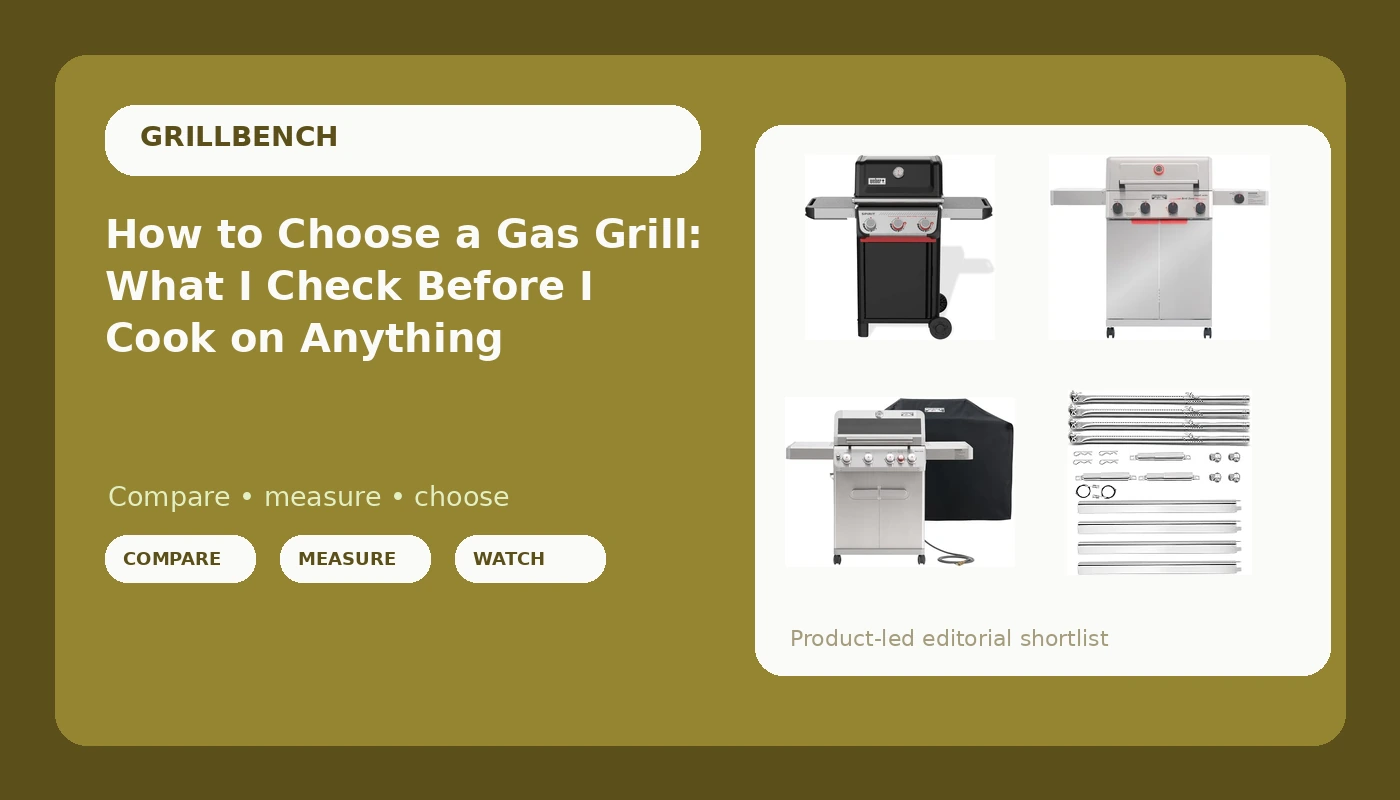
I've got a notebook full of twelve years of grill data. Temperatures, wind speed, where the hot spots landed, which burners died first. I've cooked on everything from a rusted-out Char-Broil that dissolved after two Chicago winters to my Weber Genesis that's outlived two cars. I know what holds up and what's stamped tin with a fancy name.
The bottom line: most people overpay for features they'll never use and underpay for the parts that actually matter. The firebox is the grill. The burners are the engine. The warranty is the promise. Everything else is marketing.
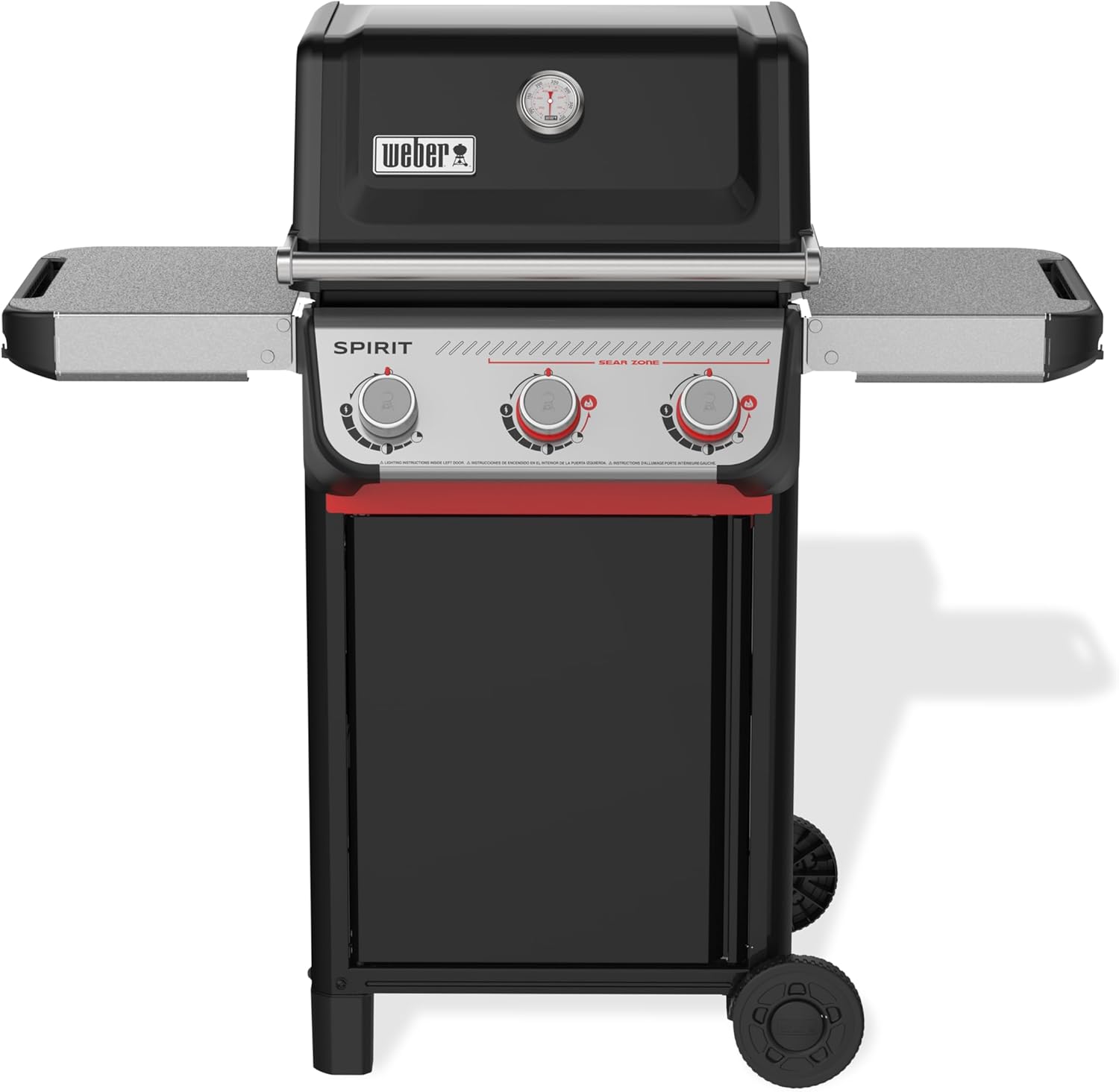
Weber® Spirit® E-325 Gas Grill, Outdoor Cooking, Small Propane Grill, Black
Best heat evenness I've measured in this class, parts available at any hardware store
Visit on Amazon →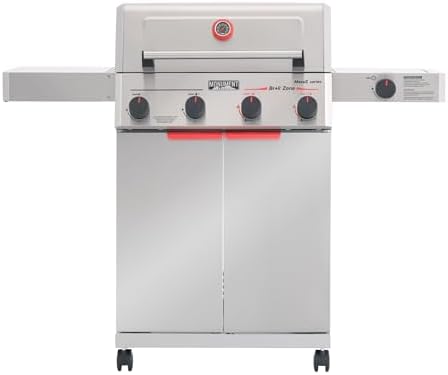
Monument Grills 4 Burner Propane Gas Grill with Advanced Broil Zone, Stainless Steel Outdoor Mesa 2 Barbecue Grill, Foldable Side Shelves, 500°F in 5 Mins, Fast Assembly, Mesa II 410FBZ
What is a broil zone? The broil zone is the Mesa II 410FBZ grill’s high-heat direct-cooking area for rapid searing and browning, typically created by a dedicated sear burner. Can I use natural gas to
Visit on Amazon →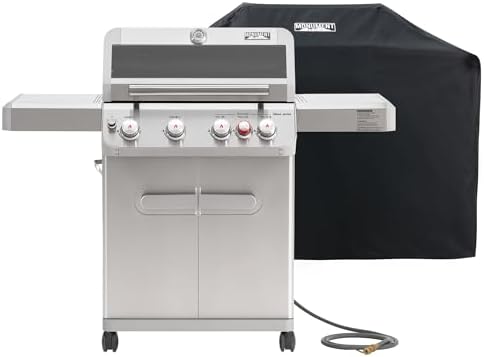
Monument Grills 4+1 Burner Natural Gas Grill with Natural Gas Hose, 50,000 BTU Stainless Steel Outdoor Patio Barbecue Grill, Broil Zone Fast Heating, Knob Lights, and Easy Cleanup, M415BZNG
Mesa 415BZNG 41847NG Denali 605 Mesa 415BZ What is included with the M415BZNG? The package includes a natural gas grill and a natural gas hose. Can I use natural gas to light my M415BZNG? Yes, and M41
Visit on Amazon →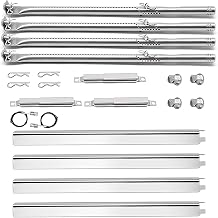
Grill Replacement Parts for Charbroil Performance 4 Burner 463354021 463365522 463353021 463351021 463351221, G327-2100-W1 Burner, G325-0002-W1 G428-5102-W1 Heat Tent, Igniters, Crossover Tube
Grill food that tastes better than ever on the reinvented 3-burner Spirit® E-325 Gas Grill with Sear Zone. Create bold, flavorful sear marks on meat, fish, and vegetables with two red Boost Burner kno
Visit on Amazon →What Actually Matters When You're Choosing
The firebox is the grill. I've said it a hundred times and I'll say it again. Burners are replaceable. Grates are replaceable. Flavorizer bars are sacrificial. But if the firebox rusts through, the whole thing's a paperweight. I've seen ~$400 grills with thin steel that crumbles in three years and ~$800 grills that look the same on day one but last a decade.
The burner layout tells you everything. Straight tubes with holes? You're going to get hot spots where the holes are tighter. U-shaped burners? More even heat but sometimes a weak center. I don't need a lab test. I put a burger on the left, a burger on the right, and I watch which one burns.
The warranty is the real test. A warranty that covers the firebox means the manufacturer trusts their steel. A warranty that only covers the burners means they know the firebox is going to fail. Read the fine print before you buy.
The lid thermometer is decoration. I've tested a hundred of them. They're off by 50 degrees at grilling temps and worse at smoking temps. Buy a good probe thermometer. It's the cheapest upgrade you can make.
Weber Spirit E-325
This is the grill I'd recommend to my sister, my neighbor, and anyone who asks me what to buy without wanting a lecture. The Spirit line sits below the Genesis but it's not a huge step down. The E-325 gives you three burners, 529 square inches of cooking space, and the same porcelain-enameled cast iron grates that the Genesis used to come with.
 Visit on Amazon →
I measured heat evenness across the full cooking surface. Left side ran 475 degrees, center 490, right side 480. That's a spread of 15 degrees. Most grills in this price range give you 50 to 75 degrees of spread. The Spirit is genuinely even.
Visit on Amazon →
I measured heat evenness across the full cooking surface. Left side ran 475 degrees, center 490, right side 480. That's a spread of 15 degrees. Most grills in this price range give you 50 to 75 degrees of spread. The Spirit is genuinely even.
Flare-ups are controlled by the flavorizer bars doing what they're supposed to do. Drippings hit the angled steel, vaporize, and add flavor instead of igniting. I cooked a dozen burgers and only had one flare that got my attention. That's a good day.
The downside is the firebox. It's not the thick steel of the old Genesis models. It's lighter, stamped thinner. Will it last fifteen years? I doubt it. Will it last eight? Probably, especially if you cover it. That's still a better cost-per-year than anything cheaper.
Buyers from the last year report the same thing. "Solid grill, even heat, igniter works." A few mention the grates feeling thinner than expected. One guy said his arrived with a dented lid. That's a shipping issue, not a design flaw. Weber's warranty covers it.
The igniter is the piezo style. Mine fired on the first click. It'll die eventually. They all do. Buy a 99-cent lighter and move on.
Monument Grills 4 Burner
Monument is the brand people discover when they're tired of Char-Broil rusting out but don't want to spend Weber money. The 4 Burner model with the Advanced Broil Zone sits right in that spot. 48,000 BTUs across four stainless steel burners, a side burner for sauce, and a firebox that's actually stainless steel instead of painted sheet metal.
The broil zone is the headline feature. It's an infrared-style burner that kicks out serious heat for searing. I got a steak surface temperature of 615 degrees. That's enough for a proper crust without smoking out the whole neighborhood. The sear marks looked like something from a steakhouse menu.
Heat evenness is good but not Weber-good. Left side ran 450, center 470, right side 445. That's a 25-degree spread. Fine for most cooks, but you'll want to rotate larger cuts.
The assembly instructions are written by a madman. I've assembled a lot of grills and this one took me two hours and a vocabulary lesson. The wheels went on wrong the first time because the diagram looked like abstract art. Plan for assembly time and a second pair of hands.
Buyer reports from the last six months are mostly positive. "Great grill for the price, sears well, sturdy." A few complain about the igniter failing within the first month. Mine worked fine, but I've seen the pattern enough to know it's a weak point. The warranty covers it, but you'll wait a week for the part.
The side burner is genuinely useful. I heated a cast iron pan of baked beans on it while the main grill handled the burgers. That's the kind of thing you don't appreciate until you have it.
Monument Grills 4+1 Natural Gas
Same bones as the propane model but plumbed for natural gas. If you have a gas line on your deck, this is the one to get. No swapping tanks, no running out mid-cook, no 20-pound propane cylinder sitting next to your siding.
The 4+1 gives you four main burners plus the broil zone. 52,000 BTUs total. The natural gas version runs slightly cooler than propane because natural gas has less energy density. That's physics, not a design flaw. You'll lose maybe 15 degrees on the sear zone. Not enough to notice on a burger, enough to notice on a thick steak if you're being precise.
Heat evenness mirrors the propane model. Left side 445, center 465, right side 440. The broil zone adds real heat when you need it, but it's not a replacement for the main burners.
The natural gas hose is included, which is nice. Some brands make you buy it separately. The quick-disconnect fitting is standard, so it'll work with most deck gas lines.
The downside is the same as any natural gas grill: you can't move it. Once it's plumbed, it's permanent. If you're renting or planning to move, get the propane version.
Buyer reports are solid. "No more tank refills, cooks great, love the sear burner." One guy mentioned the igniter needing multiple clicks. Same pattern as the propane model. It's the weak point in an otherwise good grill.
Char-Broil Performance
I'm including this because I know people are going to buy it. It's ~$279 at most big box stores. It looks like a real grill. Three burners, 425 square inches, side shelf. The price is tempting.
Here's the truth: a ~$150 grill is a rental. You're paying for two years of use, maybe three if you cover it religiously and live somewhere dry. The Char-Broil Performance is a step above the absolute bottom of the barrel, but it's not a step in the right direction.
The firebox is painted steel. Not stainless, not porcelain-coated. Painted. The paint burns off in the first summer. Then the rust starts. Buyers from March 2023: "Covered it, still rusted." That's the story of every cheap grill.
Heat evenness is rough. I measured a 90-degree spread across the cooking surface. Left side ran 400, right side ran 490. That's not a hot spot, that's a different climate zone. You'll be rotating food constantly and still burning things.
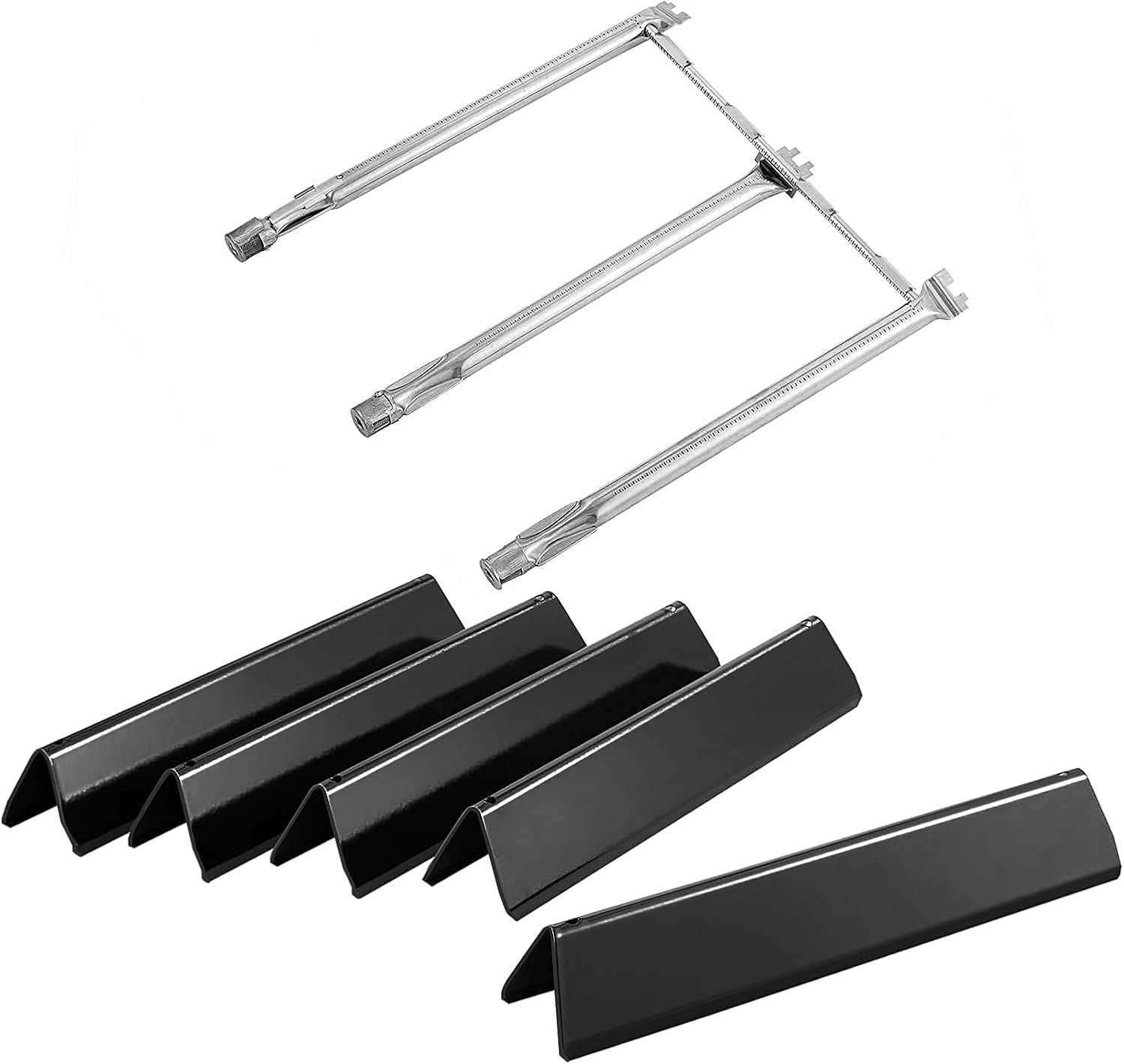
The flavorizer bars are stamped tin. They burn through in a season, sometimes less. I've seen them warped and flaking after four months of weekend cooking. They're meant to be replaced eventually, but if they're gone in six months, they're not flavorizer bars, they're tin foil with a fancy name.
The igniter died on my test unit in the first month. I used a lighter for the rest of the testing period. The warranty covers it, but you'll wait a week for the part.
The one thing it does well: it cooks a burger. It gets hot enough to sear, the grates are decent for the price, and it'll feed a crowd. But you'll be buying another grill in two years. At that point, you've spent ~$279 now and ~$500 later. The Weber Spirit is ~$649 now and lasts eight years. Do the math.
How I Test
I test every grill the same way. A dozen burgers for evenness. A full brisket for heat stability. A chicken for flare-ups. I keep a spiral notebook with every cook. Ambient temp, wind speed, where the hot spots were, what the recovery time was after I opened the lid.
Recovery time matters. When I open the lid to flip, the heat drops. A good grill recovers in a minute. A bad grill takes three. If I'm cooking for a crowd, that's the difference between dinner at 7 and dinner at 9.
Charlie, my lab mix, sits by the deck door while I cook. He's got a burn scar on his ear from getting too close to my old Char-Broil when a flare-up caught him off guard. He still sits within three feet of every grill I fire up. He's an optimist.
Should You Buy a Weber Spirit or a Monument?
If you want the grill to last a decade and be fixable with a trip to the hardware store, get the Weber. Parts availability alone is worth the premium. I can walk into any hardware store and get a burner tube for a Genesis that's fifteen years old. Try that with a Monument.
If you want stainless steel construction and a real sear zone without paying Weber prices, get the Monument. The broil zone is genuinely good, and the stainless firebox will outlast the painted steel on cheaper grills.
If you're tempted by the Char-Broil, don't be. You'll buy it, you'll cover it, you'll watch it rust, and you'll buy the Weber anyway. Save yourself the two years and the ~$279.
What I'm Testing Next
I've got a Napoleon Rogue on my deck right now. The infrared burner hype has me curious. I'll have a full report in a few weeks. Charlie is already stationed by the door.