Related: Grill Flare-Up Control: What Actually Works
Most people shopping for a propane gas grill start at the wrong end of the brochure. They read BTU numbers, count burners, and buy the biggest box the budget allows. Then they get it home, cook a dozen burgers, and learn that the left side runs hot while the right side never catches up. That is not bad luck. That is burner layout, and it was decided before the grill ever shipped.
I spent 15 years on a line and 12 more judging barbecue, and I judge grills the same way I judge brisket: on the card, not on the sales pitch. A propane gas grill has to do four things. It has to light without a torch. It has to hold a temperature without babysitting. It has to put heat where you point it. And it has to still be worth fixing in year five.
Below are four pieces of gear that answer those questions in four different ways: a mid-size three burner, a small portable, a rebuild kit for the grill you already own, and one travel rig I am making an exception for.
Best Overall: Monument Grills Mesa Series Mesa305
This is the one I would put in most backyards. Three main burners plus a side burner, stainless steel throughout, 48,000 BTU across the whole unit, and knob controls instead of a touch panel. That last part matters more than people think. Knobs are mechanical. They survive grease, weather, and a decade of hands. Digital panels on a grill are a solution to a problem nobody had.
Three burners is the number where grilling starts working. One burner is a heat zone, singular. Three burners is a sear zone on the left, a holding zone in the middle, and a finish zone on the right. That is how you cook a steak and a chicken breast at the same time without pretending they want the same heat.
The side burner is the sleeper feature. It is not for searing. It is for a pot of beans, a pan of onions, or a sauce that needs to reduce while the main grate is occupied. Anyone who has run back and forth to the kitchen mid-cook understands why that is worth having.
What I would check on arrival: how the burners sit in the firebox, and whether the grate has enough mass to hold heat after you open the lid. Thin grates drop temperature fast and take their time coming back. That recovery time is the most honest spec on any grill, and you will not find it on the box.
Best for Small Spaces: Charbroil Portable Convective 465133010
A single-burner portable is the grill most people should buy first and usually buy last. It runs on a small propane cylinder, it sets up on a table or a tailgate, and it stores in a closet. The convective lid is the interesting part: the shape is designed to move hot air around the food instead of just radiating at it from below, which is why a small unit like this can brown a chicken thigh better than its size suggests.
Here is the honest limit. One burner means one temperature. You cannot sear on one side and hold on the other, because there is no other side. You cook in batches, you move food to a cooler corner of the grate if you are lucky enough to have one, and you accept that this is a two-person grill at best.
For a balcony, a campsite, or a parking lot before a game, that trade is worth it. It lights easily, it is light enough to move alone, and it costs less than a tank refill and a bag of charcoal over a season. Just do not buy it expecting it to replace a full-size grill. Buy it because you do not have room for one, or because you want a second grill for the road.
Best Value: The Charbroil Performance Rebuild Kit
The best grill deal in America is the one sitting in your backyard with a dead igniter. This kit covers the parts that fail first on a Charbroil Performance four-burner: the burner tubes, the heat tents, the igniters, and the crossover tube that carries flame from one burner to the next.
The crossover tube is the tell. When a grill only lights on the far side, or when you have to hold a lighter to burner three every single time, the crossover has failed. That is a five-dollar part and an hour of work, and most people scrap a perfectly good grill over it.
Before you buy parts, check the bones. Press on the firebox with your thumb. If it flexes or flakes rust, walk away and buy a new grill. If it is solid, if the lid still seats, if the cart still rolls, then new burners and heat tents will give you years more cooking for the cost of a dinner out. Heat tents are also worth replacing on their own merit. They catch drippings and vaporize them, which is what keeps flare-ups from turning dinner into a fire drill. Grease-caked, warped tents do that job badly.
The Travel Rig: Pit Boss 150
My usual rule is that pellet rigs go to the smoker bench, not the grill bench, because a pellet unit is a different animal with a different job. I am making an exception for this one because it is built for the road: 256 square inches of cooking space, a 180 to 500 degree range, a 7 pound hopper, and a flame broiler for direct heat.
That temperature range is the whole story. At the low end it smokes. At the high end it sears over the broiler. In between it behaves like an oven you can plug into a truck bed. For tailgating, camping, or a small patio where a full smoker will not fit, that flexibility is hard to argue with.
Understand the trade. Pellets mean fuel you have to carry, an auger that needs to be kept clean, and a unit that wants power. It is not as fast as propane and it is not as simple as charcoal. What it gives you is smoke flavor without tending a fire all afternoon, which is exactly what a travel rig should offer.
How I test
Every grill gets the same routine. A dozen burgers, half on the left and half on the right, to find out where the hot spot lives. A full brisket, to see whether the unit holds temperature for hours without me standing over it. A chicken, to see what happens when fat hits heat, because that is where flare-ups show themselves.
I keep a spiral notebook with ambient temperature, wind, and where the hot spots landed. Wind matters more than most people admit. A grill that holds temperature on a still evening in Austin can lose it on a breezy afternoon, and the note in the margin is usually the reason.
I also judge the igniter every single cook. An igniter that works on day one means nothing. An igniter that works in month eight is a design decision, and it is the fastest way to tell whether the rest of the grill got the same attention.
Analysis and notes
BTU ratings are marketing. A 48,000 BTU grill with bad burner spacing cooks worse than a 30,000 BTU grill with good spacing, because heat distribution is engineering and total heat output is arithmetic. When I see a big number on the box and thin grates under the lid, I know which one they spent money on.
Burner shape predicts hot spots. Long straight tubes put heat in bands. Burners with more surface area and better placement even things out. You can read a grill's personality from the firebox before you ever light it.
Warranty is the spec nobody reads and everybody should. Ten years on burners means the company expects the burners to last ten years. One year on everything means they expect you to be back in the store. Parts availability is the other half of that promise, which is why a rebuild kit matters as much as a new grill.
And keep the propane conversation honest. Propane is a utility. It lights fast, it holds a temperature, and it does not care what you think about charcoal. That is the point of it.
The reference table
| Product | Role | What matters | Who it is for | Price |
|---|---|---|---|---|
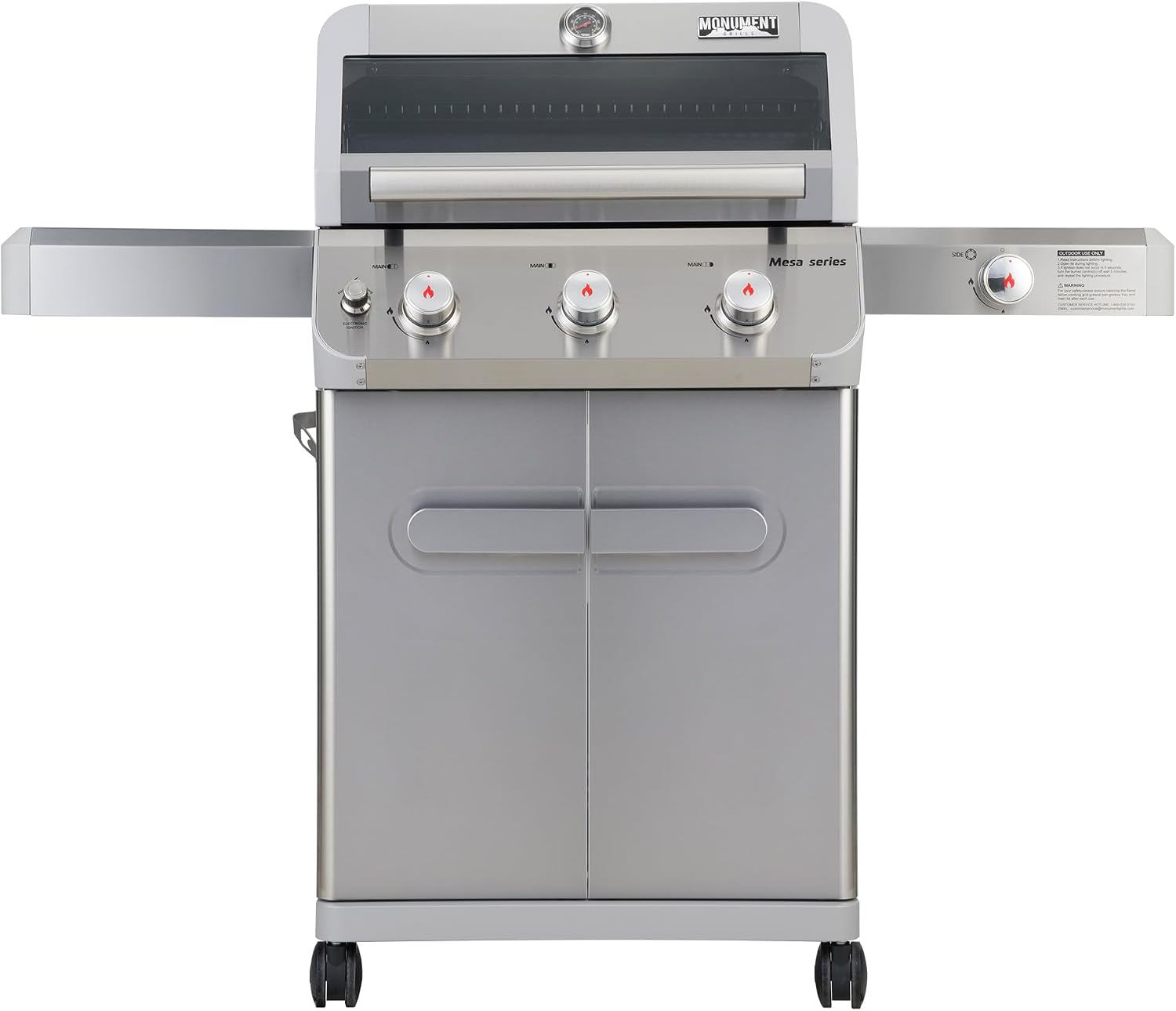 Visit on Amazon → Monument Grills Mesa305 |
Primary backyard grill | 3 main burners plus a side burner, 48,000 BTU, knob controls, stainless body | Four-plus cooks a week, two-zone and three-zone cooking | $398.91 |
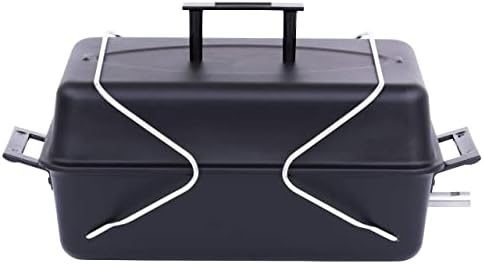 Visit on Amazon → Charbroil Portable Convective |
Balcony, tailgate, campsite | Single burner, convective lid, runs on a small cylinder | Small spaces and second-grill duty | $54.99 |
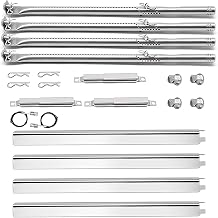 Visit on Amazon → Charbroil Performance rebuild kit |
Repair over replace | Burners, heat tents, igniters, crossover tube | Anyone with a solid firebox and a dead igniter | $28.99 |
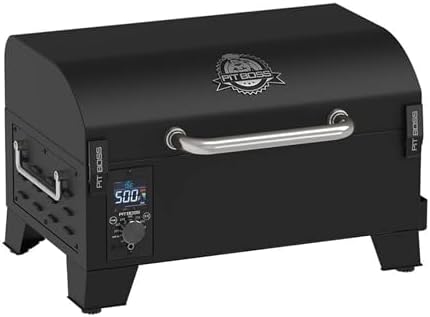 Visit on Amazon → Pit Boss 150 |
Travel smoker and grill | 256 sq in, 180 to 500 degrees, 7 lb hopper, flame broiler | Tailgating, camping, small patios that want smoke | $243.76 |
Should you buy the Monument Grills Mesa305?
Yes, if you have the room. Three burners plus a side burner gives you actual heat zones, the knob controls keep working after the weather gets to them, and the stainless body is built to outlast the cart. This is the grill I would hand someone who cooks most nights and wants one machine to cover all of it.
Should you buy the Charbroil Portable Convective?
Yes, with clear eyes. One burner is one heat zone, so there is no two-zone cooking here and no pretending otherwise. But it lights, it holds a lid, and it turns a balcony or a tailgate into a place where dinner happens. Buy it as a starter or a second grill, not as a replacement for a full-size one.
Should you buy the Charbroil Performance replacement parts kit?
Only after you check the bones. Rusted-through firebox, walk away. Solid firebox, solid lid, solid cart, and an igniter that quit in season two, then yes. Burners, heat tents, igniters, and a crossover tube will keep a good grill cooking for years, and it costs a fraction of a new unit.
Should you buy the Pit Boss 150?
For travel, yes. A 180 to 500 degree range, a 7 pound hopper, and a flame broiler cover smoking, roasting, and searing in one portable box. Just go in knowing that pellets mean carrying fuel and cleaning an auger, and that a small pellet rig is a smoker first. If that trade sounds right, it earns its spot in the truck.