Related: Gas Grill Recovery Time: The Spec Sheet Number Nobody Prints
Every spring my phone fills up with the same question, and it is never about BTUs. A neighbor, a guy from the judging circuit, a friend who just bought a house with a deck, all of them asking the same thing in different words: which grill do I actually buy? The Weber Genesis vs Spirit vs Charbroil conversation happens on my back porch in Austin every year, usually with a cold drink and somebody's phone open to a spec sheet that is not going to help them.
I spent 15 years on a restaurant line and 12 more judging barbecue competitions, and the number I trust least on any box is the BTU rating. BTU is marketing. Burner layout, grate mass, and recovery time are engineering. A grill that cannot hold 350°F for an hour without babysitting is a fire pit with a lid, and no badge on the lid changes that.
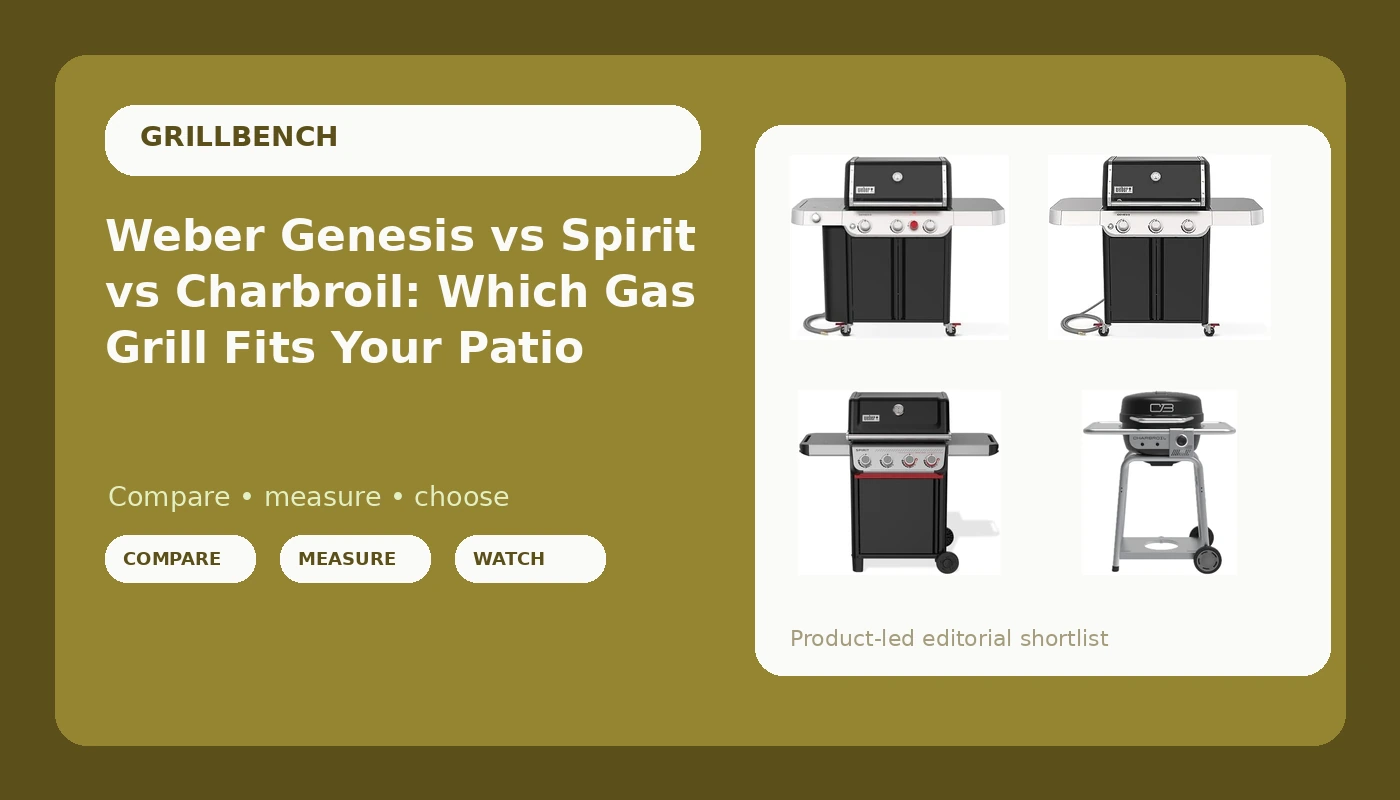
So this is a fit guide, not a scoreboard. Four grills, four different jobs, and the real question is not which one is best. It is which one matches the cooking you actually do, on the patio you actually have.
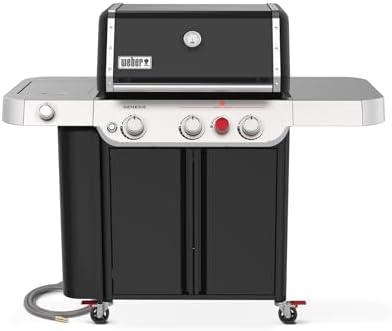
The Long-Haul Pick: Weber Genesis S-335
The Genesis line is the Corolla of grills. Boring, reliable, and the burner warranty tends to outlive the car in the driveway. The S-335 is the full-size expression of that idea: stainless steel, a cart built to live outdoors in weather, and a cooking surface that does not force you to cook in shifts when four hungry people show up at once.
What matters to me here is not the badge. It is that this class of grill is built around a firebox people keep for a decade, and Weber's reputation on burner coverage is the reason the resale value holds up on marketplace listings. If you are the kind of cook who fires the grill on a Tuesday in January because the afternoon is decent, this is the one that disappears into your routine instead of demanding attention every time you open the lid.
The higher model number in the Genesis line generally means more hardware bolted to the cart. That is a question about your cooking style, not about quality. If you know you will use a side burner for sauce or a dedicated hot zone for steaks, you already know who you are. If you will not, you are paying for shelves and knobs you will dust twice a year.
One more thing before you commit to any Genesis: put your hand on the igniter and ask how it is serviced. An igniter that dies in season one turns a $1,000 grill into a chore, and I have watched it happen on grills that cost more than this one.
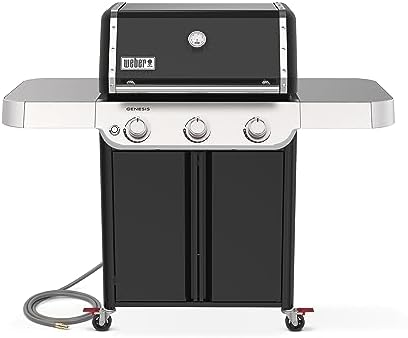
The Same Fire, Fewer Extras: Weber Genesis S-315
When two Genesis grills sit side by side, the difference between them is almost never in the food. It is in what comes attached to the cart. The S-315 is the version for the cook who wants the Genesis body, the stainless build, and the Weber parts network, and who does not want to pay for hardware that folds out twice a summer.
My rule for this decision is short. Write down the last five things you cooked. If none of them needed a side burner, a rotisserie, or a second heat zone, buy the simpler grill and put the difference into a good instant-read thermometer and a cover. You will cook better food with that trade than with any trim package, because the thermometer is what saves the brisket and the trim package is what impresses the neighbor.
The people who regret the smaller model are the ones who host often. The people who regret the bigger one are the ones who bought for a party that happens twice a year and then stored a cart they did not need. Be honest about which person you are, because the grill you buy is the grill you own for the next decade.
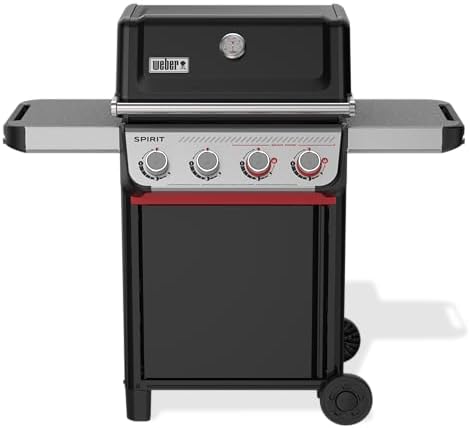
The Entry Weber: Spirit E-425
The Spirit line is where most people meet Weber, and the E-425 is the model that gives you more room than the base Spirit without jumping into Genesis money. Black lid, simpler cart, and the same basic promise: it lights when you turn the knob, it holds temperature, and parts are easy to find when something wears out five years in.
Where the Spirit earns its place is on a first-time buyer's patio. If you have never owned a gas grill, this is the least risky way to find out whether you are a gas cook or a charcoal person who bought the wrong fuel. The layout is straightforward, the learning curve is short, and you are not paying for a stainless cart that will sit under a cover eleven months out of twelve.
What you give up is refinement. The cart is lighter, the side tables are smaller than a plate if you set a platter down, and the whole thing feels like what it is: a working grill, not a piece of outdoor furniture. That is fine. Some of us want a tool, not a showpiece.
If you want the grill that outlives the patio furniture, look one tier up. If you want to cook tonight, this one is ready, and the warranty still carries the Weber name on it.
The Small-Space Wildcard: Charbroil Bistro Pro 2-in-1
Two hundred and forty square inches. That is the number to sit with, because it defines everything about this grill. It is a compact black unit that runs on propane and charcoal, built for a balcony, a small patio, or the strip of concrete behind an apartment building.
The gas side is your weeknight tool: fast, predictable, no waiting for coals. The charcoal side is your weekend mood, and the fact that both live in one footprint is the entire pitch. In a small outdoor space, one grill that does two jobs beats two grills that each do one and fight for the same three feet of railing.
Be honest about the grate size, though. This is a grill for two to four people eating burgers, sausages, chicken thighs, and vegetables. It is not a brisket grill and it is not a family reunion grill. If you have ever cooked for eight on a small grate, you know the drill: everything comes off in waves and somebody eats cold.
For the right buyer, the trade is worth it. For the wrong one, it is an expensive lesson in reading square footage before reading a spec sheet.
How I judge a gas grill
Four things, in this order.
First, burner layout. Where the burners run and what shape they make predicts the hot spots before you ever light the thing. A grill with tubes running front to back cooks differently from one with tubes running side to side, and no BTU number tells you which one suits the way you move food around the grate.
Second, recovery time. This is the most honest spec in grilling and almost nobody prints it. It is how fast the temperature climbs back after you open the lid and drop a cold steak on the grate. A grill with great recovery lets you cook with the lid up for a minute without losing the cook. A grill with bad recovery makes you a lid-down cook whether you like it or not.
Third, the igniter. If the igniter is an afterthought, the whole grill is an afterthought. I have watched expensive grills get lit with a long-nose lighter by week three, and that is the point where a patio toy becomes a chore.
Fourth, warranty. Read what it covers, not how many years the headline says. Coverage on the burners is worth more than coverage on the paint, because the burners are the part that actually fails. Paper covers parts. Steel covers the grill.
And then there is the test that is not a spec at all: would I trust this grill with a $40 brisket? That is a question about holding temperature for hours without babysitting, and it is the question I ask before I recommend anything to anybody.
The four grills, side by side
Same four grills, same order, with the job each one is built for. Every row links to the listing so you can check dimensions, current pricing, and the fine print yourself. I do not print prices here, because they move, and a stale number is worse than no number.
| Grill | The job it is built for | What it asks of you | Where it lands |
|---|---|---|---|
 Visit on Amazon → Visit on Amazon →Weber Genesis S-335 |
Full-size cooks, year-round grilling, hosting | Patio space and a cover | The long-haul pick. Visit on Amazon → |
 Visit on Amazon → Visit on Amazon →Weber Genesis S-315 |
The same Genesis cooking without the cart extras | Deciding what you will actually use | The value Genesis. Visit on Amazon → |
 Visit on Amazon → Visit on Amazon →Weber Spirit E-425 |
First gas grill, weeknight cooking with room to grow | Accepting a simpler cart | The entry Weber. Visit on Amazon → |
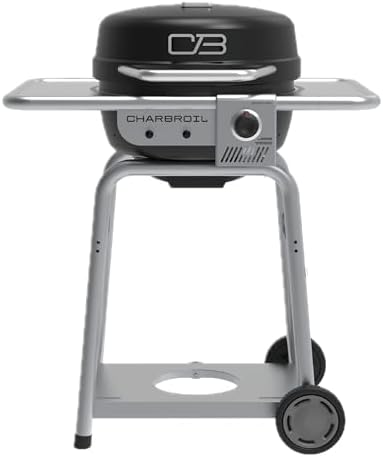 Visit on Amazon → Visit on Amazon →Charbroil Bistro Pro 2-in-1 |
Balconies, small patios, gas weeknights and charcoal weekends | Cooking in small batches | The compact wildcard. Visit on Amazon → |
Should you buy the Weber Genesis S-335?
If you cook outside more than twice a week and you want a grill you will not think about for ten years, yes. It is the Corolla of grills, and I mean that as a compliment. Buy it for the firebox and the parts network, not for the trim.
Should you buy the Weber Genesis S-315?
If you want the Genesis body without the cart extras, yes. Decide by writing down your last five cooks, not by imagining your next party. Nobody has ever regretted a grill that was honest about their habits.
Should you buy the Weber Spirit E-425?
If this is your first gas grill, or you want a working grill without paying furniture money, yes. Just know what you are buying: simplicity, not refinement. The trade is fair, and the name on the warranty is the same one on the grills two tiers up.
Should you buy the Charbroil Bistro Pro 2-in-1?
If you have a balcony and you want gas speed on Tuesday and charcoal flavor on Saturday, yes. If you need to feed a crowd, no, and 240 square inches will tell you that before your guests do. Measure your space and count your usual head count before you buy, not after.