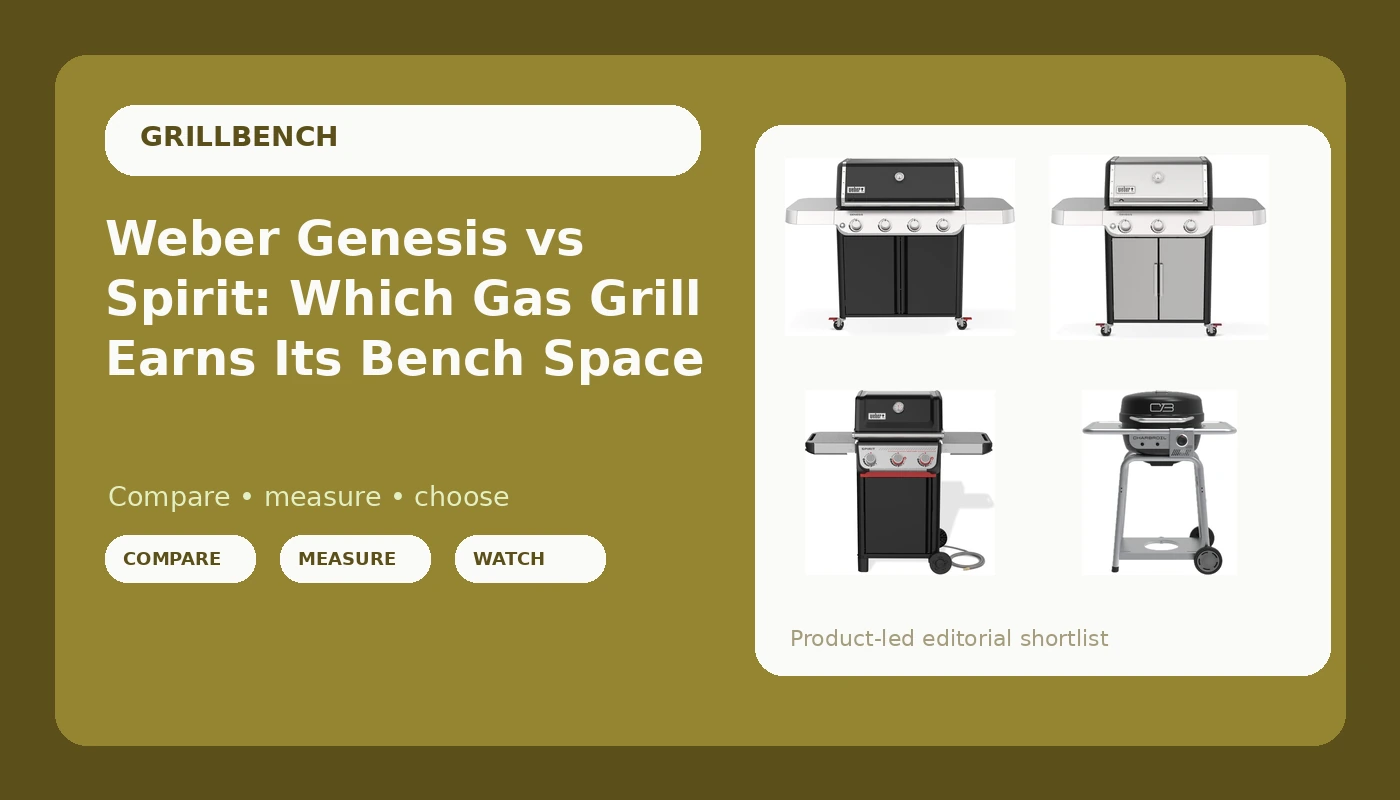
I spent 15 years on a restaurant line and 12 more judging barbecue competitions, and I still keep a spiral notebook of every cook: ambient temperature, wind direction, and which corner of the grate burned first. The question I get every spring is never "which grill is best." It is "which Weber." This Weber Genesis vs Spirit comparison exists because those two names cover three genuinely different grills, and the fourth product in the group is not a Weber at all. For a balcony or a narrow patio, that fourth one is the only honest answer here.
The short version: the Weber Genesis E-415 is the grill most people with a real patio should buy. The Genesis S-315 is the pick if stainless steel matters more to you than cooking surface. The Spirit E-325 is the one to buy if you already have a natural gas stub on the wall. And the Charbroil Bistro Pro 2-in-1 is the balcony grill, which I mean as both a compliment to its design and a warning about its size.
One thing before the table: BTU ratings are marketing. Even heat distribution is engineering. A grill that cannot hold 350 degrees for an hour without babysitting is a fire pit with a lid, no matter what the box claims.
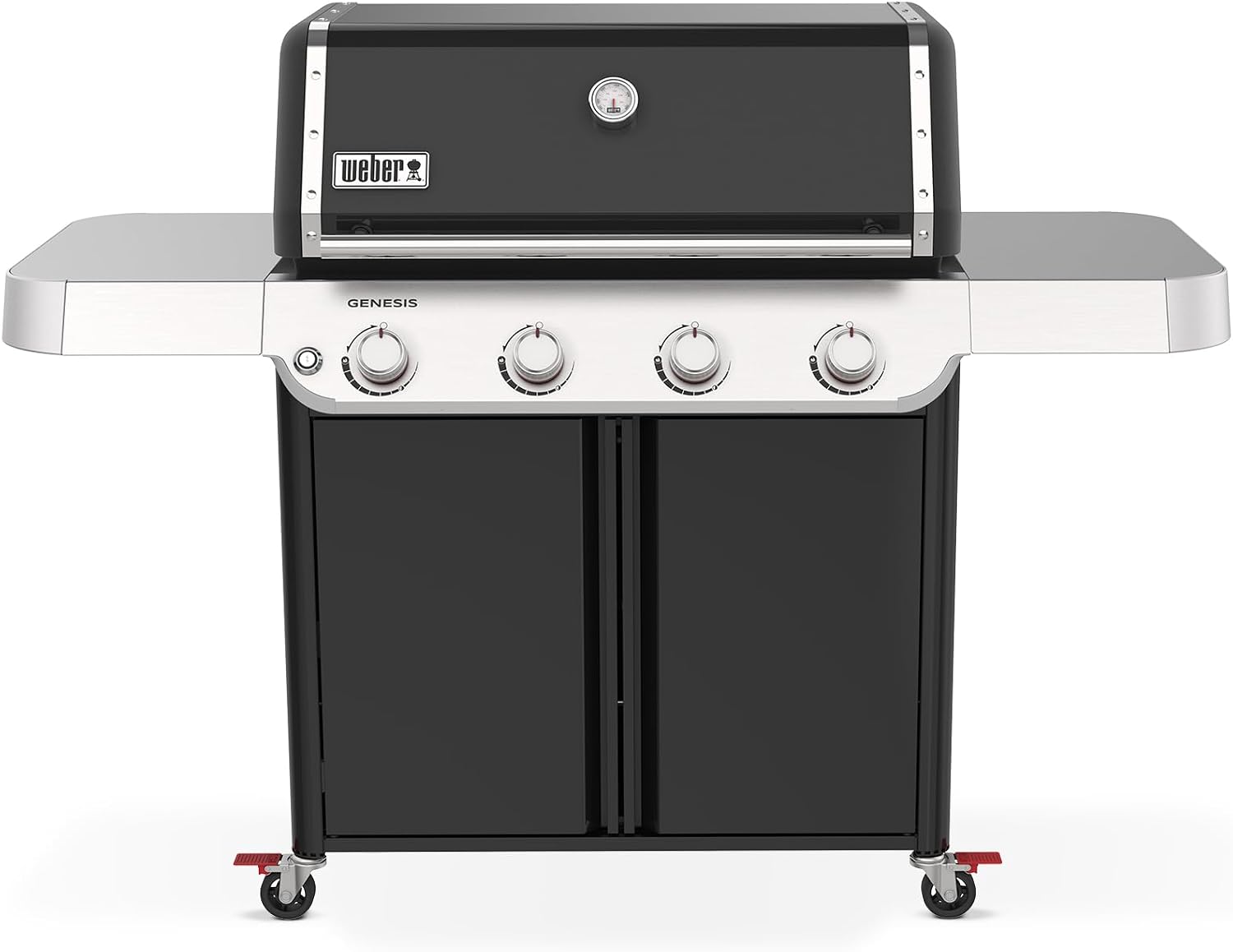
Weber Genesis E-415 Gas Grill
Biggest cooking surface here, propane convenience, full Genesis frame and warranty
Wants a permanent patio spot and a strong back to move
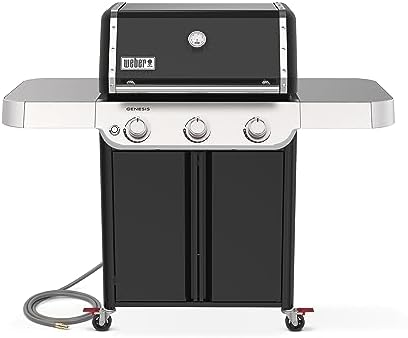
Weber Genesis S-315 Gas Grill
Stainless body that shrugs off weather, same Genesis bones
Less grate area than the E-415, and stainless shows every fingerprint
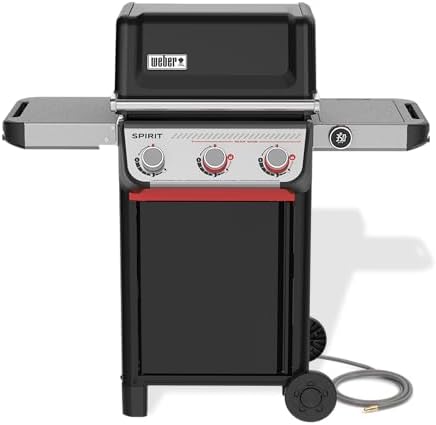
Weber Spirit E-325 Gas Grill
Natural gas means never running out mid-brisket
Needs a stub and a plumber, and it is the entry-level Weber build
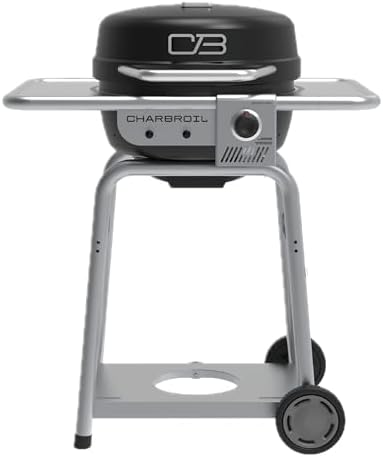
Charbroil Bistro Pro 2-in-1 Gas and Charcoal Grill
Gas and charcoal in one compact body, built for small spaces
240 square inches is a two-person surface, and heat zones are limited
Prices and availability were captured from Amazon Creators API and may change.
How I judge a gas grill
Four things, in this order.
Burner layout. Where the burners sit and which direction they run predicts where your hot spots will land before you ever light the thing. Front-to-back burners give you a left-to-right temperature gradient you can actually cook on: steak over the hot side, chicken finishing on the cool side. Left-to-right burners give you front-to-back zones, which are harder to use because the front of the grate is where you stand while you work. If you remember one thing from this article, remember to look at the burner tubes under the grate before you buy.
Recovery time. This is the most honest spec in grilling and almost nobody publishes it. It is how fast the temperature comes back after you open the lid. A grill with a thin firebox and a lot of grate area will drop hard when you flip a dozen burgers and take ten minutes to climb back. A heavier firebox recovers faster because the metal itself is storing heat, not just the flame.
The igniter. If I have to light a grill with a torch in week three, it goes back. Igniters are among the cheapest parts on the machine and the first to fail, which tells you exactly how much the brand thought about the person using it.
The warranty, read line by line. Paper covers parts. Steel covers the grill. Weber's burner coverage is one of the few in this class measured in double-digit years, and that matters more than any badge on the lid. When you compare these four, compare what happens in year six, not what happens on day one.
My routine on any grill that comes through the garage is always the same: a dozen burgers for evenness, a full brisket for heat stability, and a whole chicken for flare-ups. That is how you find the hot corner of the grate, and it is how you learn whether "flare-free" is a feature or a slogan.
Weber Genesis E-415: the full-size propane pick
The E-415 is the largest grill in this comparison and the one I would point a first-time gas buyer toward if they have the patio for it. It runs on propane, which means a tank you refill rather than a line you plumb, and it carries the Genesis name, which is the part of the Weber lineup where the frame, the firebox, and the cart stop feeling like compromises.
What you are paying for at this level is not a bigger number on the box. It is the things you notice in year three: a cart that does not wobble when you roll it across a patio seam, a lid that seals, a grease system you can clean without disassembling half the grill. The Genesis line has historically run its burners front to back, which is the layout I prefer because it gives you a real two-zone setup instead of a pretend one.
The trade-off is space and weight. This is a grill that wants a permanent home. If your plan is to wheel it out of the garage every single time you cook, you will slowly stop cooking on it.
Weber Genesis S-315: stainless, and the smart downgrade
Stainless steel does two things in this context: it shrugs off weather, and it shows every fingerprint. What it does not do is cook better. Anyone who tells you stainless changes the flavor of the food is selling you something.
What the S-315 gives up against the E-415 is cooking surface. What it keeps is the Genesis frame, the burner layout, and the warranty family. If your household is two to four people, a smaller grate is not a compromise, it is a better fit. Less area for the firebox to cover means more even heat across the surface you actually use, and less fuel burned to hold temperature.
The honest criticism is that stainless is a maintenance and looks decision, not a performance decision. If you live somewhere with salt in the air, or you just like the way it reads on a patio, buy it. If you are buying it because you believe it sears harder, you are buying a story.
Weber Spirit E-325: the natural gas case
The E-325 is the only natural gas grill in this group, and that single fact should drive your decision more than anything else on this page.
Natural gas is a luxury. It is also the best quality-of-life upgrade in outdoor cooking. You never run out mid-brisket, you never drive to a tank exchange on a Sunday afternoon, and you never discover the spare tank is empty because someone borrowed it for a patio heater. If your house already has a stub and a shutoff, the E-325 is the grill that makes weeknight cooking actually happen.
The catch is that natural gas grills are jetted for the fuel they burn. You cannot buy this one, decide later that you want propane, and swap a hose. You also need a plumber, or a long enough quick-disconnect line, if the stub is on the wrong side of the patio. Natural gas also generally burns a little cooler than propane, which means a grill designed for it needs to be designed well rather than just big.
The Spirit is Weber's entry line, so you give up some of the cart and firebox heft that the Genesis models carry. What you keep is the brand's approach to burners and its warranty posture. For a lot of buyers, that trade is the right one, and the fuel supply is the reason.
Charbroil Bistro Pro 2-in-1: the balcony answer
Two hundred forty square inches of cooking space is not a party grill. It is a grill for two people, a couple of steaks, a few burgers, or a whole chicken cooked indirect on the cooler side. Anyone who buys this expecting to feed eight will be disappointed, and that disappointment will be their own fault, not the grill's.
What makes it interesting is the 2-in-1 layout. Gas for the Tuesday night burgers, charcoal for the Saturday cook when you want actual smoke on the food. That kind of flexibility in a footprint small enough for a patio or balcony is genuinely rare, and it is the only reason this grill belongs in a comparison with three Webers.
The trade-offs are the obvious ones. A compact body means fewer heat zones, so you are cooking with one hotter side and one cooler side rather than a true two-zone setup. Charcoal means ash, a longer preheat, and somewhere to park a chimney starter. And at this size, the side tables are going to be small, which is a pet peeve of mine on nearly every compact grill I have used. Small side tables turn a one-trip cook into a three-trip cook.
The trade-offs nobody prints on the box
Propane is a utility. Natural gas is a luxury. Charcoal is a religion. I respect all three, differently, and the mistake I see most often is people buying the grill that matches the cook they imagine at the showroom rather than the cook they actually have on a Wednesday.
If you cook four nights a week and you want it done in twenty minutes, the two propane Webers are your answer, and the natural gas Spirit is a better answer still if you have the stub. If you cook twice a month and you want the ritual, the charcoal side of the Charbroil earns its place, and the small surface will not bother you because you were never feeding a crowd anyway.
The second trade-off is size versus evenness. Every grill in this group gets more even as it gets smaller, because there is less surface for the firebox to cover. That is why the S-315 can outperform the E-415 on a four-burger cook and lose to it on a twelve-burger cook. Buy the surface area you will use on your biggest cook of the year, and accept that you are paying for headroom the other 51 weeks.
The third trade-off is the one nobody talks about: cleaning. A grill you dread cleaning becomes a grill you stop using. Stainless wipes down. Porcelain enamel wipes down. Charcoal leaves ash. Factor that into your decision honestly.
What I would buy, and who should buy something else
If you have a patio, a propane tank, and a household of four or more, buy the Weber Genesis E-415. It is the grill in this group with the most room to grow into, and the Genesis frame is the part that will still feel solid when everything else on the patio has been replaced.
If you have a smaller household, or you live somewhere that punishes metal, buy the Genesis S-315. You are trading grate area for a body that will look the same in five years, and for most two-to-four person households that is the better deal.
If you have a natural gas stub, buy the Spirit E-325 and stop reading. The fuel supply is worth more than the extra surface area of the bigger Genesis, because the grill you use on a Tuesday beats the grill you use on a holiday.
And if your outdoor space is a balcony, buy the Charbroil Bistro Pro 2-in-1. It is the only grill here designed for that reality, and it gives you charcoal when you want it without asking you to give up the convenience of gas. Just measure your space, and measure your expectations along with it.