Related: How to Find the Hot Spots on a New Gas Grill
BTU ratings are marketing. Even heat distribution is engineering. I spent 15 years on a restaurant line and another 12 running a barbecue judging circuit, and I still test every gas grill the same way: a dozen burgers for evenness, a whole brisket for heat stability, and a chicken for flare-ups. This gas grill buying guide is what that routine taught me about the four grills worth your attention this season, and about the questions worth asking before any of them lands on your patio.
A grill that cannot hold 350 degrees for an hour without babysitting is a fire pit with a lid. That sentence is my whole review process in miniature. The number I care about most is recovery time, which is how fast the temperature climbs back after you open the lid, and it is the most honest spec in the category because no marketing department publishes it. Restaurants live and die on recovery time. Backyards should too.
Hot spots show up on cook one. You put a burger on the left, a burger on the right, and you watch which one burns. Every grill has one. The difference between a good grill and a frustrating one is whether the hot spot is a corner you can work around or a whole section of the grate that ruins dinner. Buy the grill for the cooking style you actually have, not the one you imagine at the showroom.
Best Overall: Weber Genesis E-325
The Weber Genesis is the Corolla of grills: boring, reliable, and the burner warranty outlives the marriage. That is a compliment. Nobody buys a Corolla to impress the neighbors, and nobody buys a Genesis to win an argument on the internet. You buy it because you want to walk outside on a Tuesday, turn a knob, and cook.
This one runs on propane, in black, with Weber's lid and cart layout that has been refined for decades rather than reinvented for a trade show. When a manufacturer stops redesigning the thing that works, that is usually a signal. The burner layout under this lid is the reason the Genesis keeps showing up in my notebook as the grill I recommend to people who do not want a hobby, they want dinner.
Where it earns the top spot in this guide is the boring stuff. Weber's burner warranty is worth more than any logo, and the company tends to keep parts available for a long time, which matters on year six when something rattles. I have watched people replace entire budget grills three times in the life of one Genesis. That math does not favor the cheap grill.
The trade-off is personality. This grill will not teach you anything dramatic. It will not flare up at you for sport, and it will not reward tinkering. If you want a project, look at the Napoleon below. If you want a tool, this is the one.
Best Small Propane Grill: Weber Spirit E-325
The Spirit is the smaller Weber, and small is a feature, not a compromise. Less grate means fewer hot spots to memorize. Less lid means less heat lost every time you peek. For two to four people on a deck or a balcony, the Spirit is the propane grill I would actually put my money on, and it is the one I recommend to people buying their first gas grill who do not want to learn the hard way.
Weber names this one as a small propane grill, and that is exactly how to shop it. Measure your space, then measure it again. A grill that technically fits but leaves you no room to set a sheet pan is a grill you will resent by July.
My one warning is the one I give about every grill in this price band: avoid any grill where the igniter is an afterthought. If you have to light it with a torch on week three, it goes back. Before you buy the Spirit, look at how the ignition is built and read how owners describe it after a full season. An igniter is a two dollar part that decides whether you cook or you fight the grill.
The Spirit also inherits the Weber parts and warranty story, which is the real argument for spending a little more here instead of rolling the dice on a no name cart with the same footprint.
Best Sear Zone: Napoleon Rogue PRO 425
Napoleon builds the best sear zone in this group, and this Rogue PRO 425 is the clearest expression of it. Three burners, natural gas, plus an infrared side burner that is the reason to pick this grill over the Genesis. Infrared burners are usually gimmicks. This is the rare one that earns its place on the cart, because a sear zone is the area that actually gets hot enough to crust a steak, and most side burners never come close.
The natural gas part deserves its own paragraph. Propane is a utility, natural gas is a luxury. With a natural gas grill you stop hauling tanks, you stop watching the gauge during a long cook, and you stop making the Tuesday night run for a refill. If your house already has a gas stub on the patio, this is the grill that turns that stub into an advantage. If it does not, price out the line before you fall in love.
Three burners on a 425 frame gives you a real two zone setup: a hot side for the sear and a cooler side to finish, which is how you cook a thick ribeye without turning it into a hockey puck. This is a cook's grill, not a convenience grill. It rewards attention and it punishes laziness, which is exactly the trade I want at this level.
Best Budget Pick: Feasto 2 Burner Propane Grill
The Feasto is the budget end of this list, and two burners is the smartest thing about it. Two burners is all you need for the one heat zone trick that actually matters: pile the coals, or in this case the flame, on one side, leave the other side low, and move food back and forth. Hot side for the crust, cool side to finish. That is 90 percent of grilling, and you can do it on a two burner propane grill on a small patio.
This is the grill I would point at for a first apartment with a balcony, a rental where you are not investing in a permanent gas line, or a tailgate setup where the grill has to move. It is black, it is propane, and it is small. That combination is not exciting, and it does not need to be.
Here is what to inspect before you buy. First, the igniter, because a budget grill is exactly where an afterthought ignition shows up. Second, the side tables, because a side table smaller than a plate is a pet peeve of mine and it is common at this price. Third, the lid fit, since a lid that does not sit tight leaks heat and turns your recovery time into a rumor.
Buy this one with clear expectations. It is the grill for burgers, dogs, chicken thighs, and weeknight vegetables. It is not the grill for a $40 brisket, because I would not trust a two burner cart at this level with a cook that long. Match the tool to the cook.
How I test a gas grill
Every grill gets the same three cooks, and the routine has not changed in years. A dozen burgers for evenness: same thickness, same start time, and I watch which ones finish first. A whole brisket for heat stability, because a long cook exposes every drift in the firebox. And a chicken for flare-ups, because chicken skin drips fat and a marketing team's "flare-free" grate meets real fat eventually.
I keep a spiral notebook for every cook: ambient temperature, wind direction, and where the hot spots were. Wind matters more than people admit. A grill that holds temperature in a calm backyard and falls apart in a ten mile an hour crosswind is a grill that will frustrate you in October.
The layout tells you most of it before you ever light a burner. Where the burners sit and what shape they are predicts where the hot spots will land. Round burners under a rectangular grate always leave cold corners. Long burners running front to back give you a clean hot side and cool side, which is why the three burner layouts in this guide are the ones worth owning.
And the last question I ask about any grill: would I trust it with a $40 brisket? That is the real test, and it has nothing to do with the badge on the lid.
The gas grill reference table
This is the table I keep for the four grills in this guide. Fuel and burner layout come straight from how each grill is sold, and the "best for" column is the honest answer to who should actually buy it. Nothing here is a ranking of quality. It is a ranking of fit.
| Grill | Fuel | Burner layout | Best for | Price |
|---|---|---|---|---|
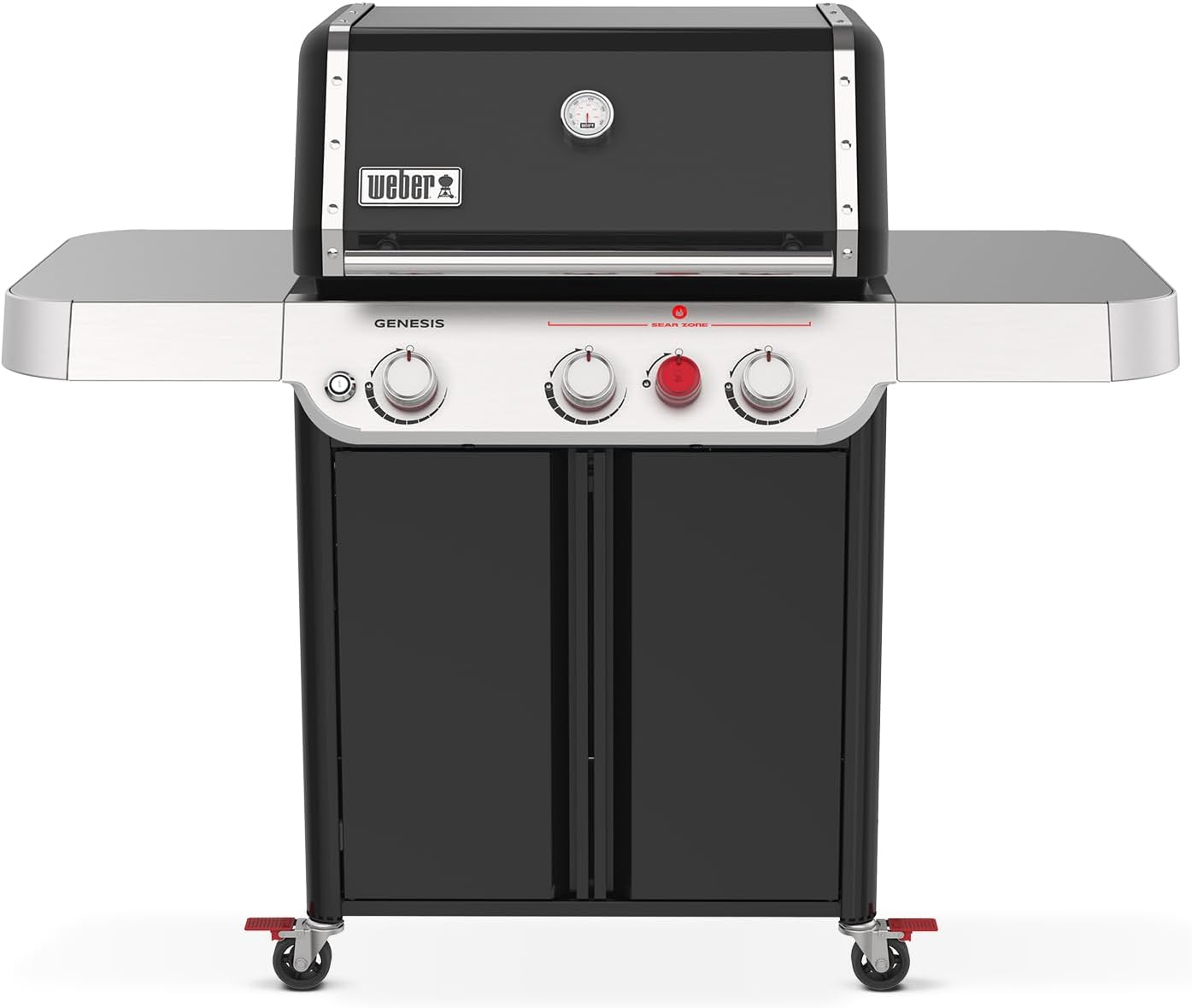 Visit on Amazon → Visit on Amazon →Weber Genesis E-325 |
Propane tank | Full size, see listing | The do everything grill for a family | $849.00 |
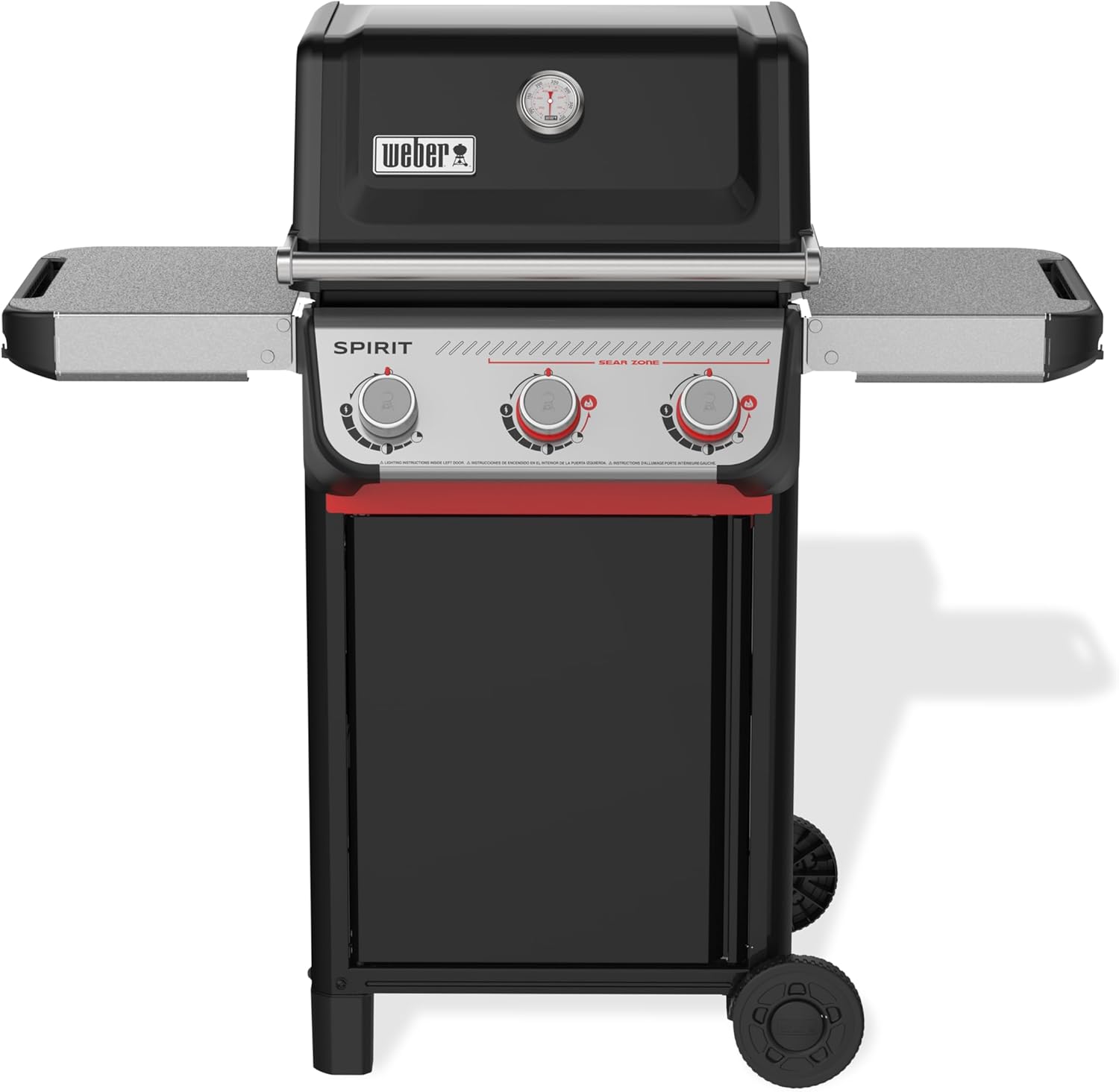 Visit on Amazon → Visit on Amazon →Weber Spirit E-325 |
Propane tank | Small, see listing | Decks and balconies, two to four people | $499.00 |
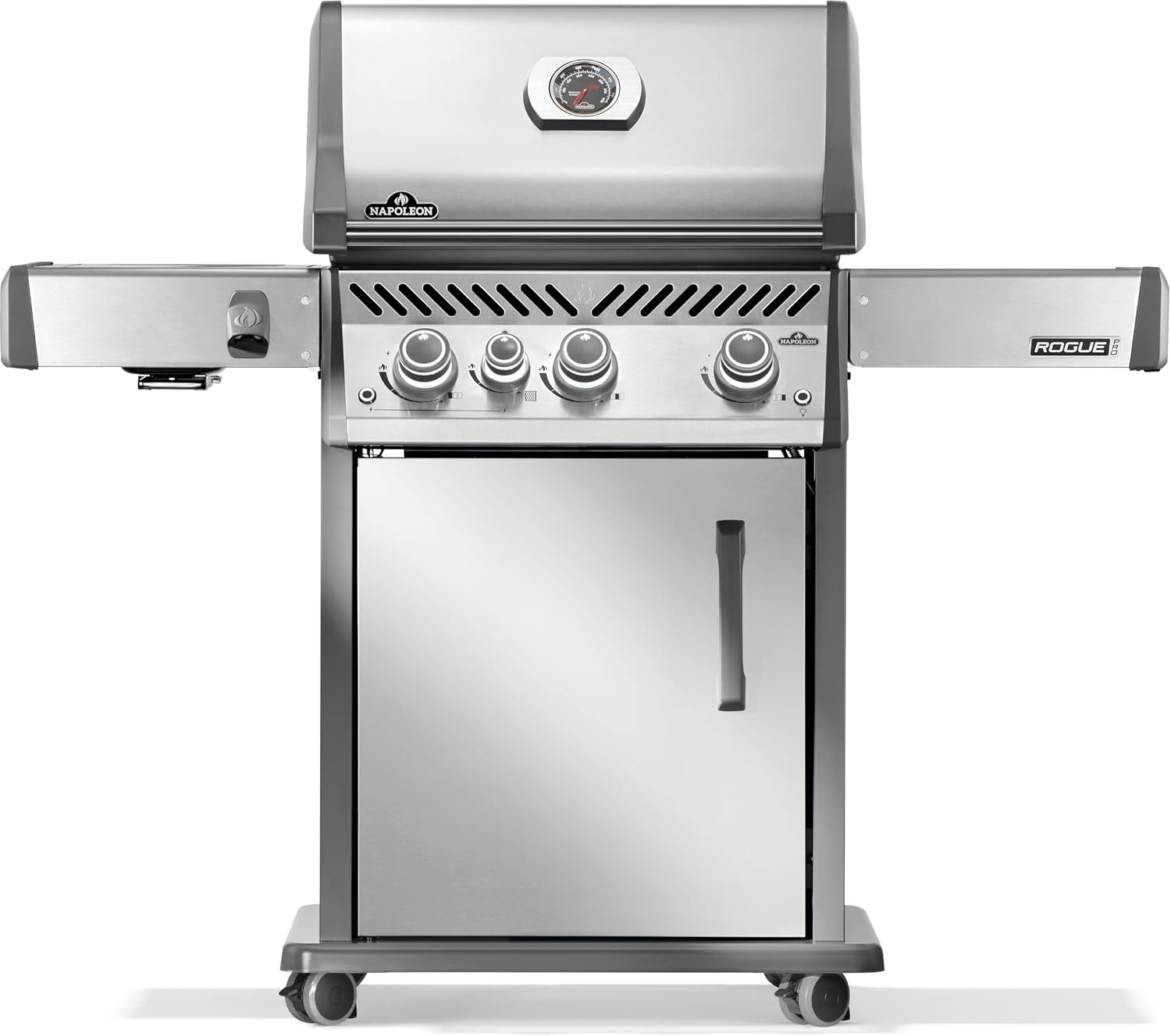 Visit on Amazon → Visit on Amazon →Napoleon Rogue PRO 425 |
Natural gas | 3 burners plus infrared side burner | Steaks, searing, anyone with a gas line | $1,177.99 |
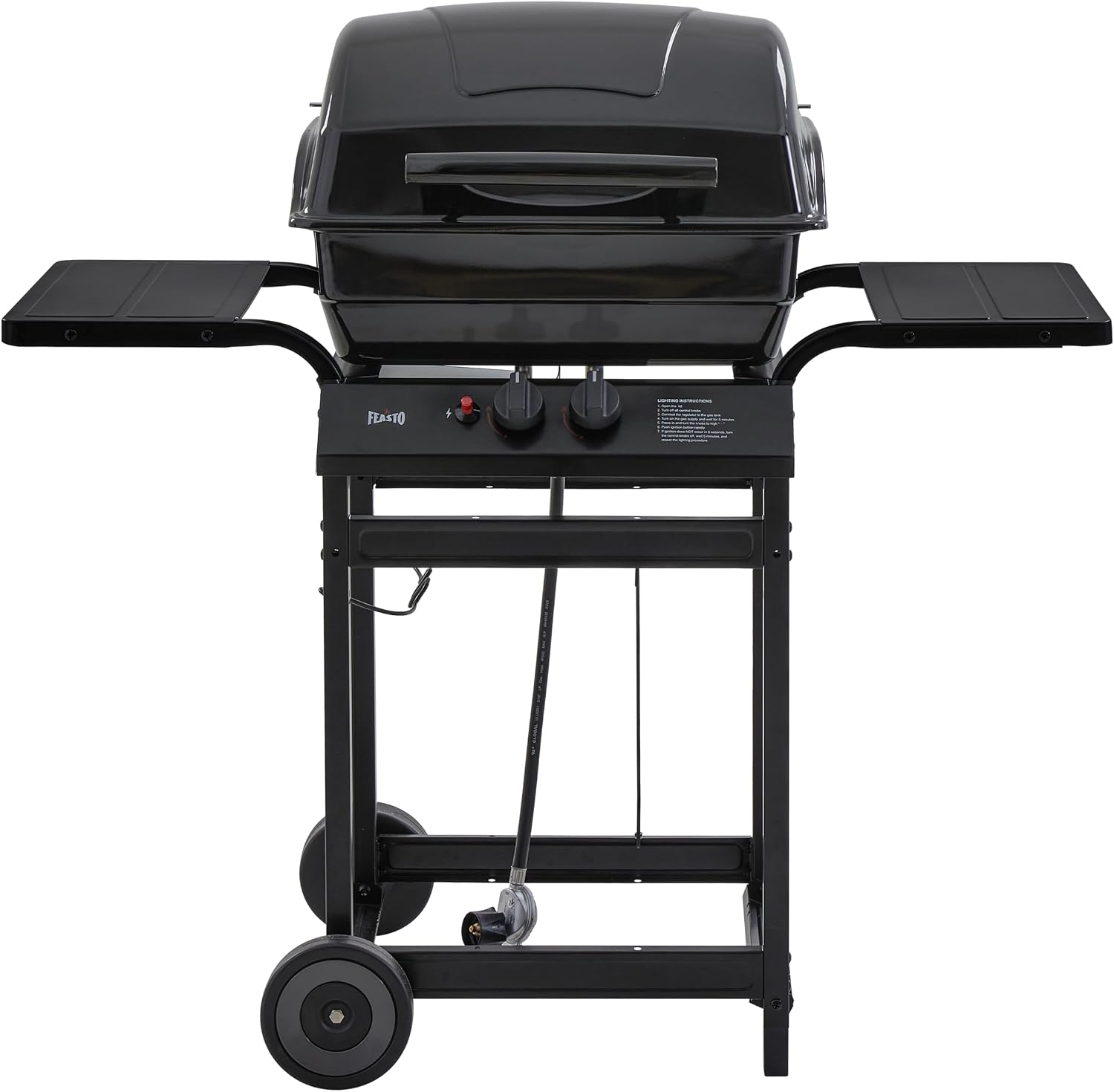 Visit on Amazon → Visit on Amazon →Feasto 2 Burner |
Propane tank | 2 burners | Small patios, first grills, tight budgets | $149.99 |
The fuel decision comes before the brand decision, every time. Propane is a utility. Natural gas is a luxury. Charcoal is a religion. I respect all three, differently, but you have to pick yours before you shop, because the Napoleon is a natural gas grill and the other three are propane grills. That single line narrows this table from four options to three in about ten seconds.
Should you buy the Weber Genesis E-325?
Yes, if you want the grill you stop thinking about. Boring, reliable, and backed by a burner warranty worth more than any logo on the lid. It is a propane grill, it is the one I would hand to someone who wants to cook rather than tinker, and it is the safest money in this guide.
The catch is that you pay for that reliability up front, and you do not get a party trick. No infrared sear zone, no conversation piece. Just a grill that holds temperature and takes a beating.
Should you buy the Weber Spirit E-325?
Yes, for a small propane grill on a deck, a balcony, or a first patio. Less grate, fewer hot spots to learn, less fuel burned to feed two to four people. It is the same Weber logic in a smaller cart, and that is a good trade for a lot of households.
Check the igniter before you buy. Read how owners describe it after a full season, because that is where the money goes at this size.
Should you buy the Napoleon Rogue PRO 425?
Yes, if you have a natural gas line and you crust steaks more often than you slow cook. Three burners plus an infrared side burner is the best sear zone in this group, and infrared burners rarely earn that sentence.
If you do not have a gas stub, factor in the cost of running one. Without it, this is a propane conversation and the math changes.
Should you buy the Feasto 2 Burner?
Yes, if the budget decides and the patio is small. Two burners gives you a hot side and a warm side, which is the only heat zone trick you actually need, and it is the least intimidating grill here for someone who has never lit one.
Look hard at the igniter and the side tables before you commit, and keep the long cooks on a grill built for them. Burgers and thighs, all summer long.