Propane gas grills are a utility, not a personality, and I mean that as a compliment. I spent 15 years on the line and 12 more judging barbecue on a circuit, and somewhere in there I ended up with four grills in the yard and a spiral notebook logging every cook: ambient temp, wind direction, and which corner of the grate burned first. That notebook is why I stopped trusting spec sheets and started reading burner layouts. This comparison puts four propane gas grills side by side, from a two-burner stainless unit to a name-brand three-burner, and scores them the way I score a competition box: layout, heat control, and whether the thing would survive a brisket.
Related: How to Find the Hot Spots on a New Gas Grill
The best propane gas grill for most people in this group is the Broil King Gem 310 Shadow, because three burners across a wide firebox is the layout that actually gives you a two-zone cook without a rotisserie kit and a prayer. The value pick is the 4-burner portable with the cast iron grate and griddle pan, since the griddle is the accessory most people end up using more than the main grate. The COWSAR 2-burner is the balcony and tailgate pick. The 34,000 BTU three-burner with the side burner sits in the middle, and the side burner is the reason to look at it.
One warning before the table: BTU ratings are marketing. Even heat distribution is engineering. A 40,000 BTU grill with burners spaced for looks will burn the middle of a burger and leave the edges pink, and a lower-rated grill with a sane layout will run circles around it.
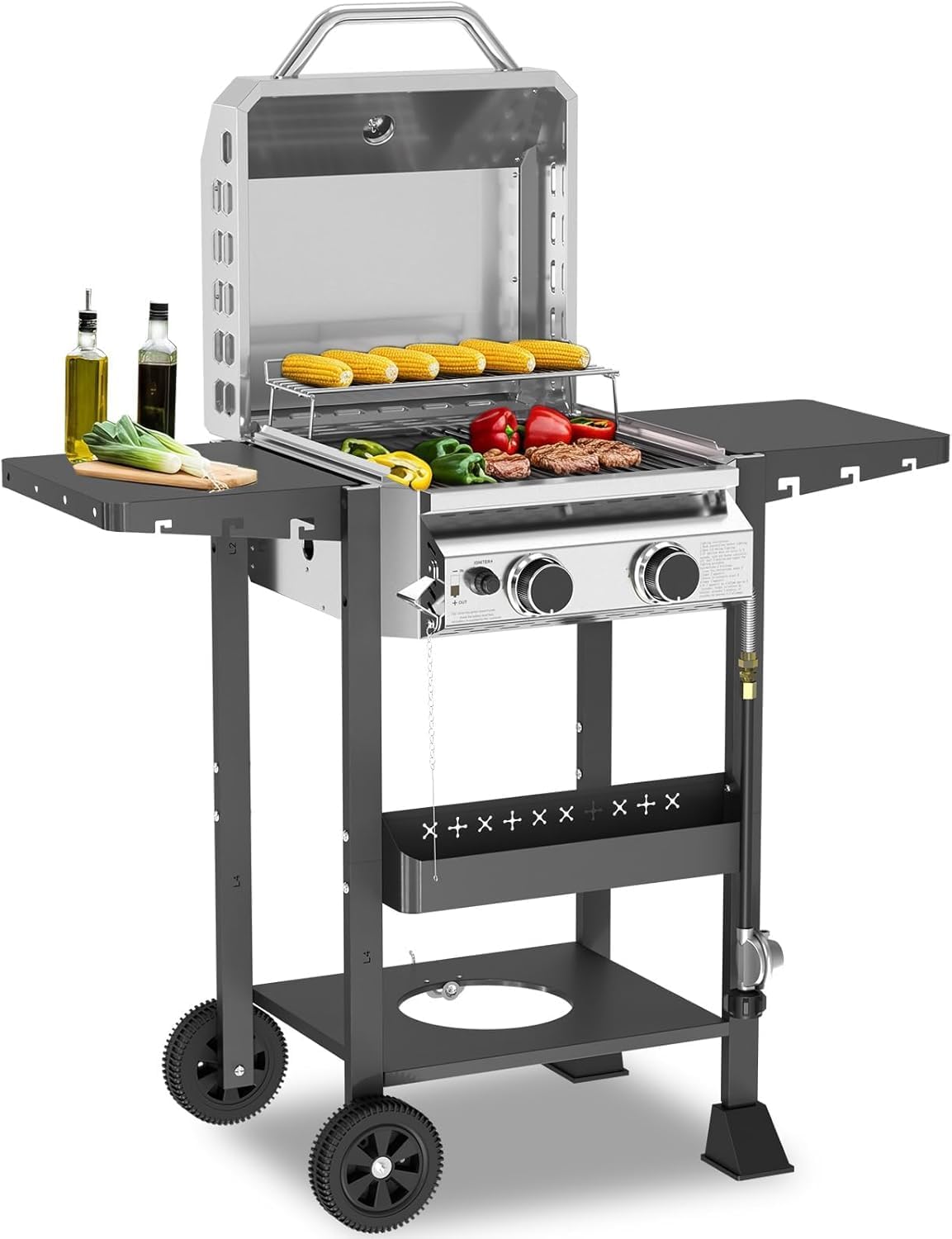
COWSAR 2-Burner Propane BBQ Grill 16000 BTU Stainless Steel Gas Grill
Smallest footprint here, stainless body, easy to move and store
Two burners at 16,000 BTU leaves no room for a real two-zone setup
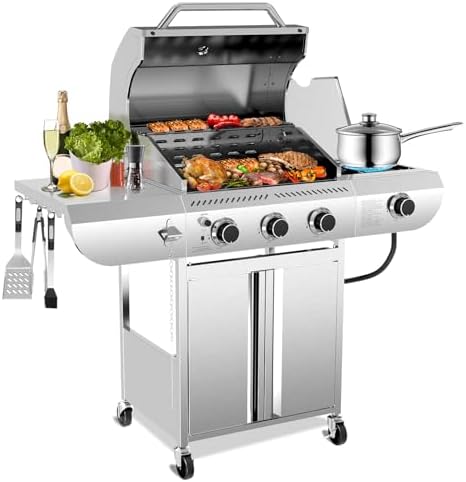
34,000 BTU 3-Burner Propane Gas Grill with Side Burner
Three burners plus a side burner covers the whole cook in one unit
Side burner eats space that could have gone to grate area
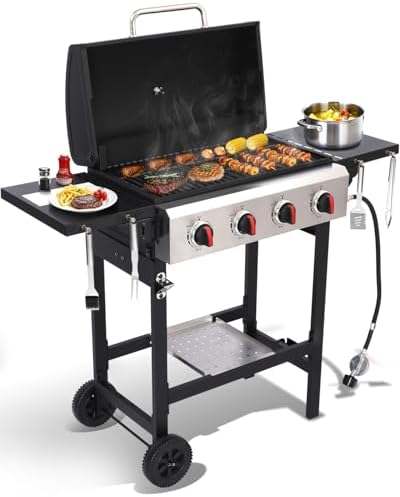
4 Burner Propane Gas Grill, Portable BBQ Grill with Cast Iron Grate & Griddle Pan, Folding Side Table for Camping Backyard, 40000 BTU Easy-Clean Outdoor Cooking
Most burners and the most useful included accessory for the money
Portable four-burner units usually mean thin firebox metal
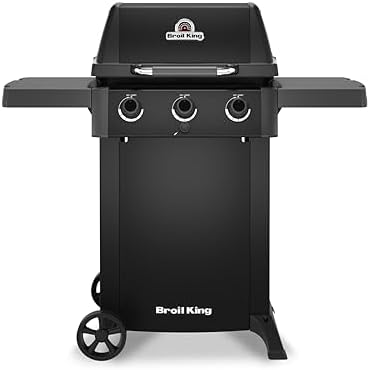
Broil King 814954 Gem 310 Shadow 3-Burner Propane Gas Grill in Black
Best burner layout of the group, brand with real parts support
Highest price here and it does not shout about it
Prices and availability were captured from Amazon Creators API and may change.
What this comparison is and is not
My rule is no review without at least three full cooks on a unit, and I have not cooked on these four. So treat this as a layout and value comparison, not a verdict from the grate. What I can judge from a spec sheet is the stuff that predicts the first cook: how many burners, how they are arranged, what the grate is made of, how big the side tables are, and whether the warranty covers the parts that fail. That is enough to tell you which of these four you should be shopping for, and which one you should walk past.
The routine I run on any grill that does land in my yard never changes. A dozen burgers, four on the left, four in the middle, four on the right, and I watch which one burns first. Then a full brisket overnight to see whether it holds 225 without me babysitting the dial. Then a whole chicken, skin side down, to find out what the flare-up situation really is. If a grill fails the burger test, nothing after that matters.
The balcony pick: COWSAR 2-Burner
The COWSAR 2-Burner Propane BBQ Grill is a 16,000 BTU stainless steel unit, and it is the one here I would put on a condo balcony, a small patio, or the back of a truck before a game. Two burners at that total output means each burner is doing modest work. The honest expectation is a hot side and a warm side, not a sear zone and a holding zone. For burgers, dogs, chicken thighs, and a foil packet of peppers, that is plenty of grill. It is not the grill for a brisket, and no amount of technique fixes grate real estate that small.
Stainless matters more than people admit in central Texas, where a painted lid left uncovered will show rust at the hinge within a couple of seasons. My concern with any two-burner at this size is the igniter, because that is where budget builds cut corners, and an igniter that dies in week three turns a grill into a chore. Check the burner tubes and the heat tent above them when it arrives.
The middle three-burner with a side burner
Three burners and a side burner at 34,000 BTU is the classic suburban configuration, and it is the configuration I recommend to most people who cook for a family. Three straight burners across the firebox give you a true two-zone setup: burners on the right for the sear, burners off on the left for the rest, lid down, no spinning. The side burner is the underrated part. A cast iron skillet of onions, a pot of beans, a saucepan of sauce that finishes while the meat rests, all of it happens outside instead of in the kitchen.
What I would check before buying: the side table dimensions, because a side table smaller than a plate is a pet peeve of mine and it is common on grills in this range. Also look at where the igniter sits relative to the burner tubes. A protected igniter lasts. An exposed one gets greasy and quits.
The value pick: 4-burner portable with griddle pan
Four burners at 40,000 BTU, a cast iron grate, a griddle pan, and a folding side table. On paper that is the most cooking surface per dollar in this group, and the griddle is why. I have said for years that the griddle accessory is the best thing in outdoor cooking, because it does smash burgers, breakfast, fajita vegetables, and fried rice, none of which a rod grate does well. A grill that ships with one has already solved the problem most people spend a season trying to fix.
The cast iron grate is the second win. Cast iron holds heat and gives you a crust that thin stainless rods do not, especially on a grill with modest per-burner output. The trade-off is maintenance, since cast iron wants oil and a scrape, not a dishwasher.
The word "portable" is doing a lot of work in that name, though. A four-burner grill with a folding side table is portable the way a loaded cooler is portable. Check the folded dimensions and whether the legs lock before you plan on hauling it to a campsite. And portable builds usually mean thinner firebox metal, which means more hot spots in the corners and more flex in the lid. For a backyard grill that occasionally travels, that is a fair trade. For a grill that travels every weekend, it is a countdown.
The pick for most people: Broil King Gem 310 Shadow
Broil King has the best burner layout in the mid-range, and nobody talks about them because they do not pay influencers. That is the whole story with the Gem 310 Shadow. It is a three-burner propane grill in black, priced above everything else in this comparison, and it does not shout about its BTU number the way the budget brands do. That restraint is usually a good sign. The brands that print the biggest number on the box are talking to the shopper, not the cook.
What you are paying for with a name brand is not the badge. It is parts. Burners, heat tents, igniters, and grates that you can still order five years from now, and a warranty that covers the parts that actually fail rather than the parts that never do. I have watched people replace a $250 grill twice in six years because a $40 burner was unavailable. The math on that never works out.
The criticism: it is the most expensive option here and it gives you three burners, not four. If your cooking is burgers and chicken for four people, you are paying for durability rather than capacity. That is a decision about your budget, not about the grill.
BTU math, and why it misleads
Look at the numbers in this group. The two-burner is 16,000 BTU, so 8,000 per burner. The four-burner is 40,000, so 10,000 per burner. The three-burner with the side burner is 34,000, and some of that output is going to a burner that is not under the grate at all. Per-burner output and burner spacing predict hot spots far better than the total on the box. A grill with 10,000 BTU burners spaced evenly will beat a grill with a bigger total and burners crowded into the middle.
The number that actually tells you about a grill is recovery time, which is how fast the chamber comes back to temperature after you open the lid. No spec sheet prints it. You find out by cooking.
Grates, flare-ups, and the flare-free claim
Every 2026 model that has crossed my bench this year arrived with a flare-free grate claim. One out of four was telling the truth. Flare-ups are not a grate problem, they are a grease management problem: how far the grate sits above the burner, where the drippings land, and whether the firebox gives the fat somewhere to go besides the burner tubes. Cast iron grates like the ones on the 4-burner portable handle fat differently than thin rods, because they hold heat and recover instead of dumping it. None of that is a guarantee. It is a starting point.
Side tables, igniters, and the small stuff
The details that ruin a cook are never in the headline specs. A side table smaller than a plate means your platter sits on the ground. An exposed igniter means a lighter in your pocket by July. A lid that does not seal means the chamber never settles. A grease tray that is hard to pull means you stop pulling it. When you compare these four, compare those things, because they are the difference between a grill you use twice a month and a grill you use twice a year.
Warranty and parts
Warranty matters more than the badge. A long burner warranty from a company that stocks replacement parts is worth more than a flashy lid. Before you buy anything, find the warranty page and read what is excluded. Rust-through on a firebox is usually covered for a few years. Igniters, thermometers, and cosmetic issues usually are not, which tells you exactly which parts you should expect to replace on your own dime.
Who should buy which
Buy the COWSAR 2-burner if you have a balcony, a small patio, or a truck bed, and your cooking is quick weeknight food for two to four people. Buy the 34,000 BTU three-burner with the side burner if you want one unit to handle the main cook and the sides, and you have the patio space for a full cart. Buy the 4-burner portable with the griddle if you want maximum cooking surface and a griddle without paying for a second appliance, and you accept that a portable four-burner is a backyard grill that can travel, not a camping grill. Buy the Broil King Gem 310 Shadow if you plan to keep the grill for a decade and you would rather pay once for parts availability than twice for a replacement.
The bottom line
Buy the grill for the cooking style you actually have, not the one you imagine at the showroom. Two burners on a balcony will cook more meals than four burners you never light. Three burners with a side burner is the most versatile layout in this group, and the Broil King is the one I would trust with a $40 brisket. If the budget is tighter, the four-burner with the cast iron grate and griddle pan is the one I would hand to a friend without a caveat.
I will have three of these on the bench before the end of the season, with the burger test, the brisket, and the chicken on the card. When the notebook fills up, you will get the scores.