Related: Gas grill flare-up control: what actually works
I have never bought a gas grill because of a BTU number. I have bought them because of where the burners sit, how fast the lid comes back to temperature after I open it, and whether the igniter still fires in month two. That is the whole game. The big number printed on the box is a marketing department's favorite sentence, and it tells you almost nothing about the burgers you are going to cook on Saturday.
Gas grill burner layout is the spec that decides whether dinner works. Two burners across a small firebox give you a hot zone and a warm zone. Four burners across a wide one give you a hot zone, a warm zone, and a corner that burns everything until you learn it. Same BTU number, completely different cooks. I have watched a modest grill run circles around a bigger one on a dozen burgers, because one was spaced for even heat and the other had a hot spot the size of a dinner plate.
This guide covers four grills at four sizes: a two-burner tabletop that folds its legs and stores in a closet, a three-burner cabinet cart, a four-burner cart with a side burner and cast iron grates, and a 7-in-1 app-enabled machine that does not think in burner counts at all. I will tell you who each one is for, and I will be straight about what a spec sheet can and cannot promise.
One disclosure on method, because it matters. I do not call anything a review until I have cooked on it three times. I have not run a brisket on all four of these yet. What I can do is read a layout, predict where the hot spots will land, and tell you what to check on cook one.
What actually decides whether a gas grill is worth owning
Burner count and burner shape. Burners that run front to back divide the grate into narrow vertical strips. Burners that run side to side divide it into wide horizontal bands. Neither is automatically better, but the count tells you how many heat zones you get. Two burners is a hot side and a warm side. Three adds a middle. Four gives you room to sear on one end, hold on the other, and still have somewhere to move a piece of chicken that is flaring. Anything past four on a cart this size is usually a conversation piece.
Ignition. The igniter is a cheap part that brands treat as an afterthought. If it takes three pushes to light, or if the click is so quiet you cannot hear it over the wind, you will be reaching for a long lighter by week three. That is not a small annoyance. It is the difference between a grill you fire up on a Tuesday and one you save for company.
Side tables. A side table smaller than a plate is a shelf, not a work surface. You need room for a sheet pan of raw burgers and a plate of cooked ones, or you spend the whole cook walking back to the kitchen.
Warranty, read closely. Look at what is covered on the burners and the firebox and for how long, not at the badge on the lid. A long burner warranty is worth more than any logo, and it is the first thing I compare when two grills are otherwise even.
Recovery time. The most honest spec in grilling, and it is never printed on the box. It is how long the chamber takes to come back to temperature after you open the lid. A slow grill forces you to cook lid-down and guess. A fast one lets you work.
Best for a full backyard setup: EUHOME 4-Burner Propane Gas BBQ Grill
This is the biggest cooking surface in the group and the only one with a side burner, and that combination is what makes it the pick for people who cook for a crowd. Four main burners across a wide body, 46,500 BTU spread across them, stainless steel construction, enameled cast iron grates, and side tables on both ends.
Cast iron grates are the part I care about most. Iron holds heat and gives you a real sear mark instead of a gray stripe, and enameled cast iron is easier to live with than bare iron because it will not rust the first time you leave it out overnight.
The side burner is the underrated piece. It is where the sauce pot goes while the burgers finish, or the pot of beans, or the corn. People buy a four-burner cart for the grate and then use the side burner on every single cook.
Four burners on a wide firebox means four zones and, realistically, one hot spot you have to find. On cook one, put a slice of bread on each corner of the grate, lid down, two minutes, then look at the color. That is your map.
Best value in a cabinet cart: GasOne GP-1030S 3 Burner
The GasOne is the sensible middle: three burners on a stainless steel cabinet cart with wheels, finished in black with a high-temperature paint coating. A cabinet hides the propane tank, which matters more than people admit. A tank hanging off the side of a cart is the fastest way to make a nice patio look like a job site.
Three burners is enough for a two-zone cook with a little margin. Hot zone on the right, warm zone on the left, middle burner for when you are feeding more than four people. It is also a cart you can move, which is the entire point of wheels. If your patio gets hard sun on one side in the afternoon, you roll the grill instead of the party.
What to check when it arrives: that the paint on the firebox is intact with no chips, that the cabinet door lines up and latches, and that the wheels roll without dragging. Those three things decide whether a cart grill feels like a serious tool or a patio ornament, and all three are visible before you ever light a burner.
Best for small patios and tailgates: Nexgrill Tabletop 2 Burner
The Nexgrill tabletop is the one I would hand to somebody in an apartment, on a small patio, or in the back of a truck on game day. Two burners, stainless steel, folding legs. It sits on a table or a tailgate and it goes back in the closet when you are done.
Two burners is not a limitation, it is a style. Hot side, warm side, and a lid to trap heat. Some of the best steaks I have eaten came off two-burner setups, because the cook had no choice but to learn both zones cold. What you give up is grate area and a side table, so your staging space becomes whatever table the grill is sitting on.
Check the leg locks before you trust it with a hot grate, and think about wind. A tabletop has no cart walls to block a gust, and an afternoon in Austin can knock 50 degrees off a lid thermometer. When it is windy, that becomes a lid-down cook.
The one that does not play by burner rules: Ninja Woodfire ProConnect Premium XL
This is the odd one out in the group, and I mean that as a description, not a knock. Its headline is 7-in-1, not a burner count, and it is app enabled, so the cook can be watched from the kitchen instead of from a lawn chair. The finish is blue, which will either be the best-looking thing on your patio or a color you get tired of.
If you like the idea of one machine that covers more than grilling, and you want your phone to tell you what is happening, this is the one to look at. If your cooking is burgers, steaks, and chicken over a wide grate with a lid you work by feel, a propane cart is the more direct tool. Different jobs.
What I would check: how much patio or counter space it needs, and whether you actually want an app in the middle of a cook. Some people love the data. Some people want the phone inside. Be honest about which one you are.
How I judge a gas grill
Same routine every time, and it has not changed in years. A dozen burgers, three across the left, three across the middle, three across the right, and three wherever the layout makes me suspicious. I watch which ones brown first and which ones sit there looking pale. That is the hot spot map.
Then a brisket, because a long cook exposes everything a short one hides. Can the grill hold 350 for an hour without me turning a knob every ten minutes? If I have to babysit it, it is a fire pit with a lid.
Then a chicken, skin on, over the burners, to see what happens when fat hits heat. Flare-ups are not a grate problem, they are a design problem, and a chicken tells you in twenty minutes what a brochure never will.
I write all of it in a spiral notebook. Ambient temperature, wind direction, where the hot spots landed, how long the chamber took to recover after each lid open. The lid thermometer gets ignored entirely. I use a probe at grate level, because the gauge on the hood reads the air two inches under the metal, not the air where your food is actually sitting.
The four grills at a glance
This is the table I keep for these four. Every row is built from the same questions: how many zones, what format, and what you are actually getting for the money.
| Grill | Burners or modes | Format | What stands out | Price |
|---|---|---|---|---|
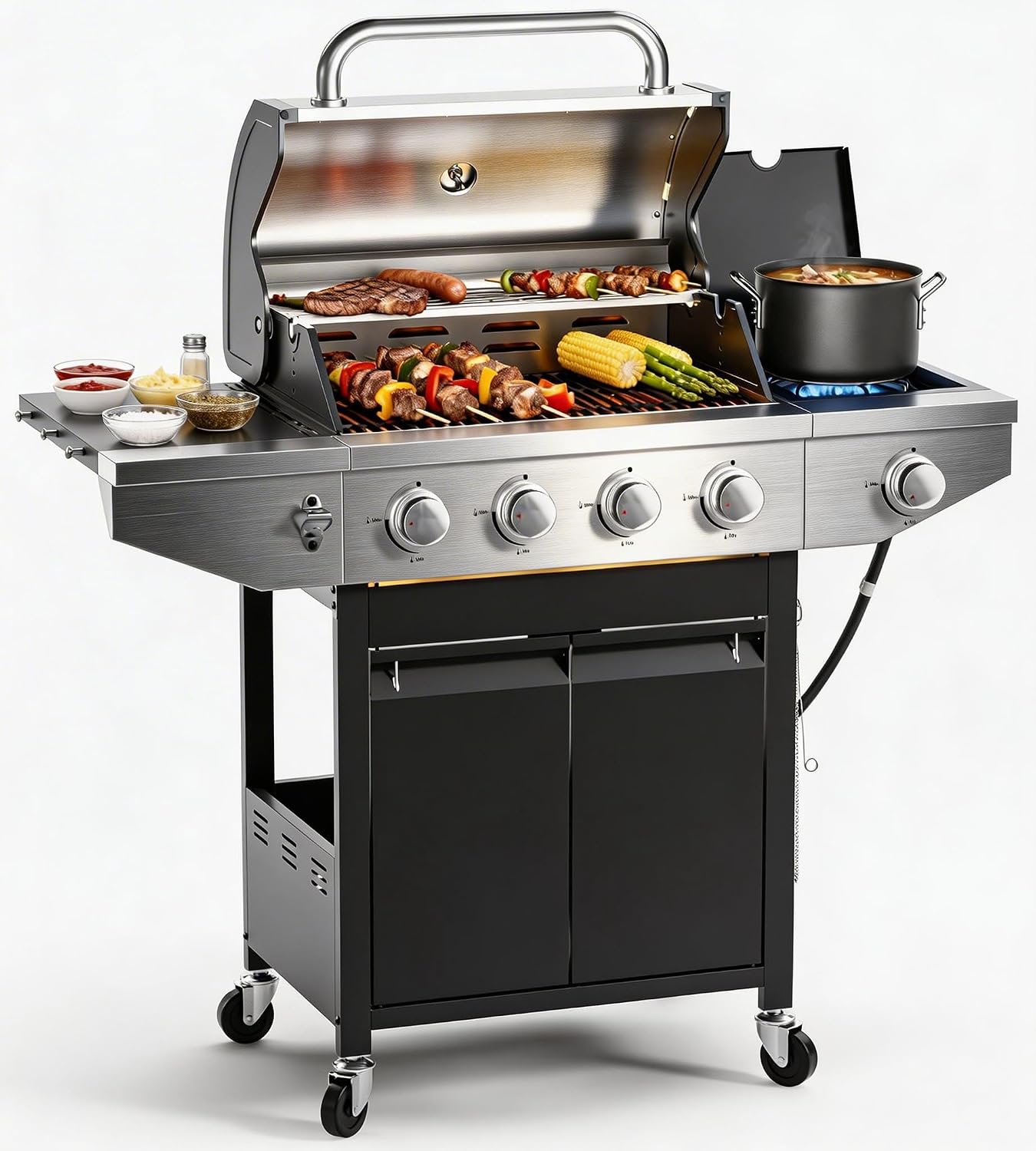 Visit on Amazon → EUHOME 4-Burner |
4 main burners plus side burner | Cart with side tables | 46,500 BTU, enameled cast iron grates, stainless steel | $299.09 |
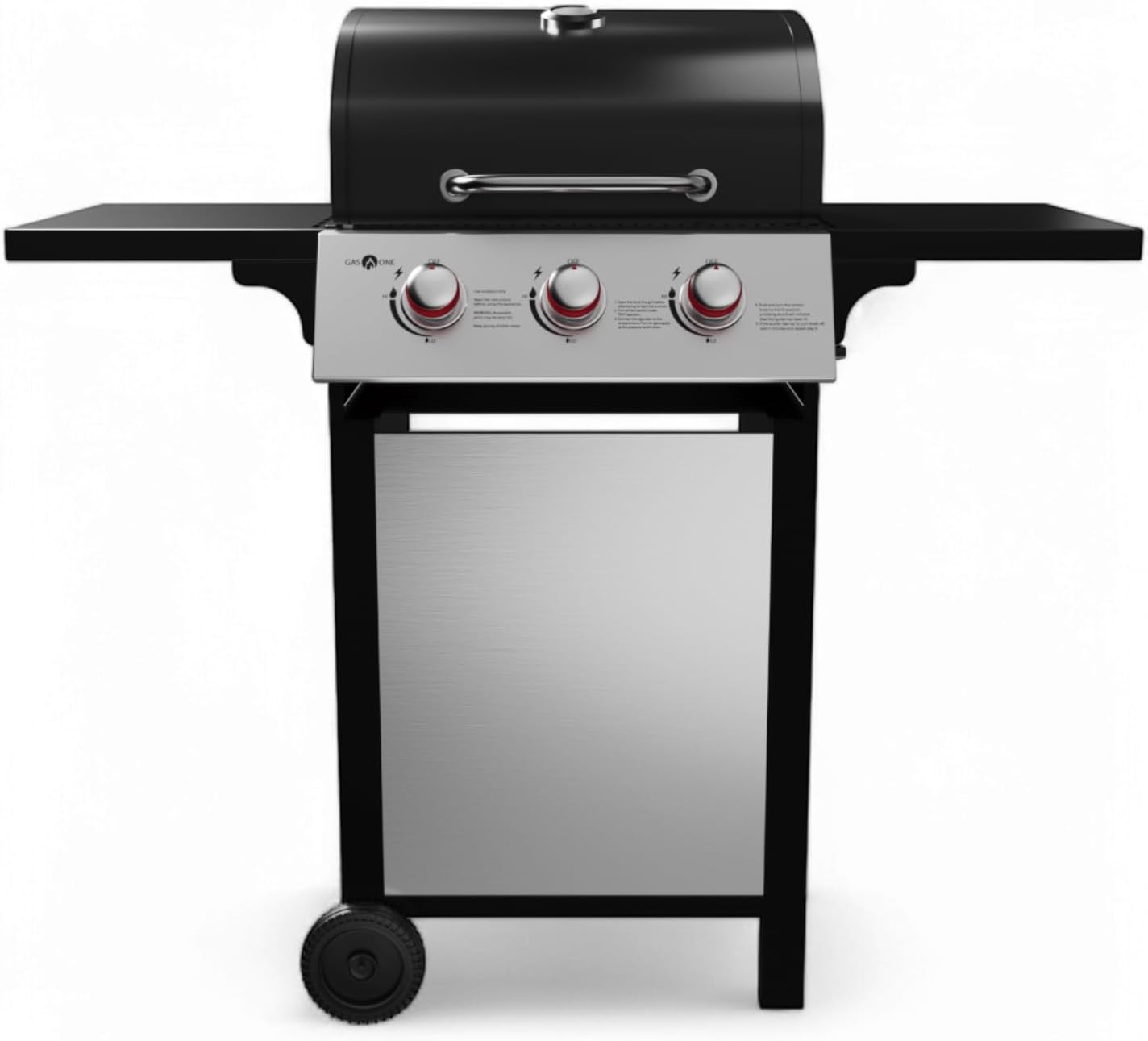 Visit on Amazon → GasOne GP-1030S |
3 burners | Cabinet cart with wheels | Hidden tank, high-temperature paint coating, black finish | $159.99 |
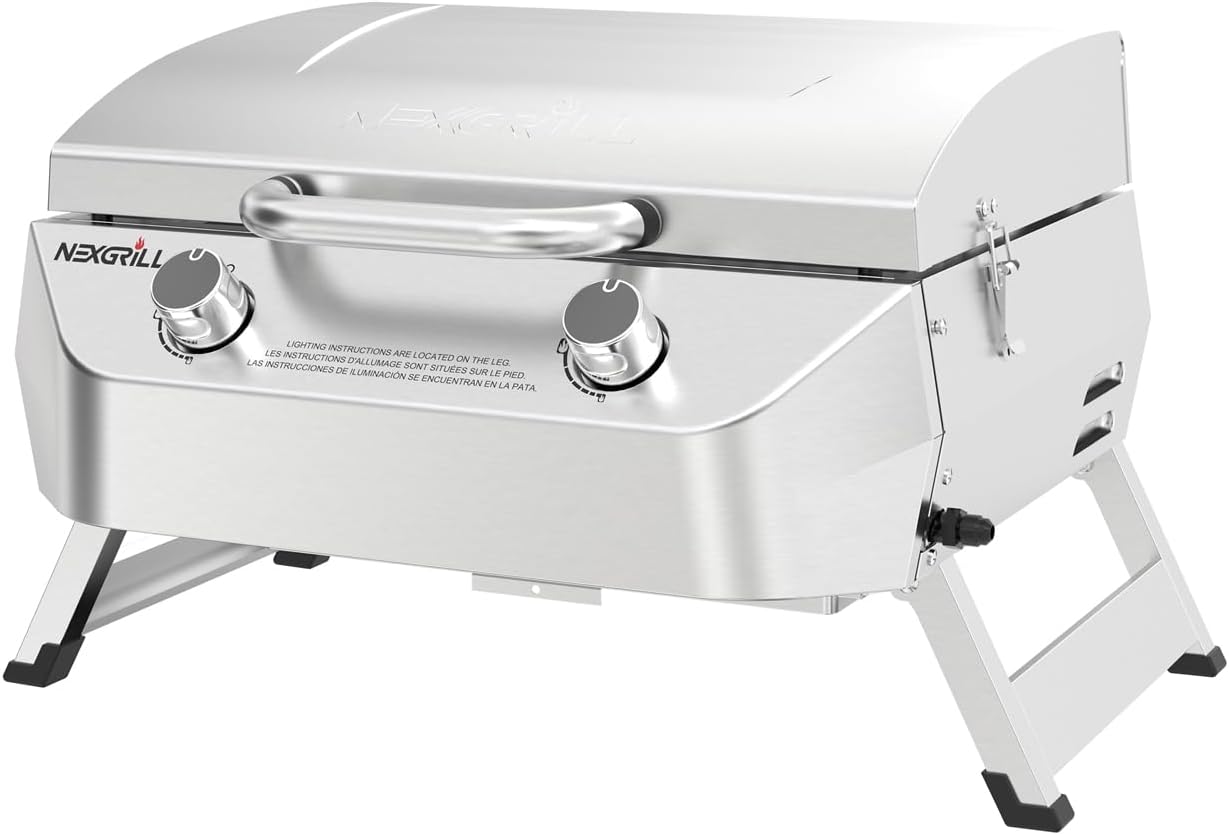 Visit on Amazon → Nexgrill Tabletop |
2 burners | Tabletop with folding legs | Stainless steel, stores small, portable | $164.99 |
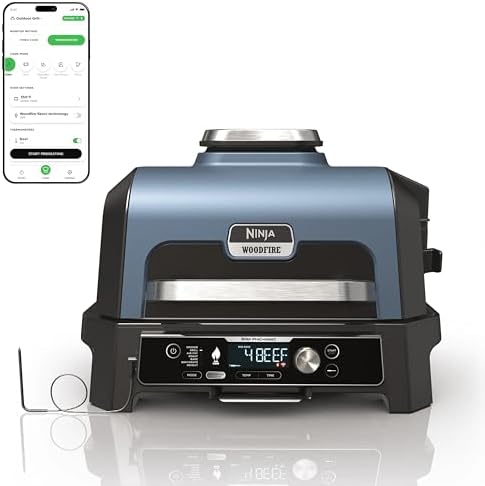 Visit on Amazon → Ninja Woodfire ProConnect Premium XL |
7-in-1 modes | App-enabled countertop or patio unit | Mode count instead of burner count, blue finish | $499.99 |
What the specs actually tell you
BTU divided by burner count is a more useful figure than total BTU. A 46,500 BTU four-burner works out to roughly 11,600 per burner, which is a sane number for a backyard grill. A huge total spread across too many burners is a marketing decision, not a cooking one.
Grate material matters more than most shoppers think. Enameled cast iron is the one to want at this level. It sears, it holds heat through a flip, and it tolerates being left outside.
Format is really a question about your space. Wheels are for patios with sun and wind. Folding legs are for storage and for people who cook on a table. A cabinet is for anybody who hates looking at a propane tank.
Count the side burner as a real feature, not a checkbox. On most carts it becomes the second most used cooking surface after the main grate.
App control is a genuine convenience and a genuine distraction. It does not make food taste better. It makes timing easier, which is not nothing.
What none of these spec sheets tell you: recovery time, igniter quality, and where the hot spot lands. Those three things decide whether you still like a grill in month six, and you find all three on cook one. Which is exactly why I would rather read a layout than a brochure.
Should you buy the EUHOME 4-Burner Propane Gas BBQ Grill?
Yes, if you cook for a group and want one cart that does the whole job. Four burners, a side burner, cast iron grates, side tables on both ends, stainless steel. It is the most complete setup in this group for a backyard that feeds people regularly.
The tradeoff is size. A four-burner cart takes up patio real estate, and it takes a few cooks to learn its zones. Buy it for the cooking you actually do on a Saturday, not the party you host twice a year.
Should you buy the Ninja Woodfire ProConnect Premium XL?
Yes, if you want 7-in-1 flexibility and app control, and you would rather monitor a cook from the kitchen than stand over it. It is a different machine with a different logic, and for some cooks that logic is exactly right.
No, if what you want is a wide grate, one knob per zone, and a lid you work by feel. In that case a propane cart is the tool, and the other three grills here cover that ground at three different sizes.