Related: How to Stop a Gas Grill From Flaring Up
Every spring the neighbors ask me the same question, and every spring I give the same answer: it depends on whether you cook on a patio or out of a truck bed. I spent fifteen years on a restaurant line and twelve more judging barbecue competitions, and I keep four grills at the house because no single one does everything. Portable propane grills, a cabinet-style three-burner, and a handheld torch solve three different problems. Most people buy the wrong one because a showroom flatters the wrong thing.
A grill with a side table and a cabinet is not going into the truck for a tailgate. A grill that folds down to the size of a briefcase is not going to hold temperature through a long cook. BTU ratings are marketing. Even heat distribution is engineering. I test with burgers, not brochures, and I would rather own two cheap grills that each do one job well than one expensive grill that does nothing well.
Here is how I think about the four pieces of gear that cover the most ground.
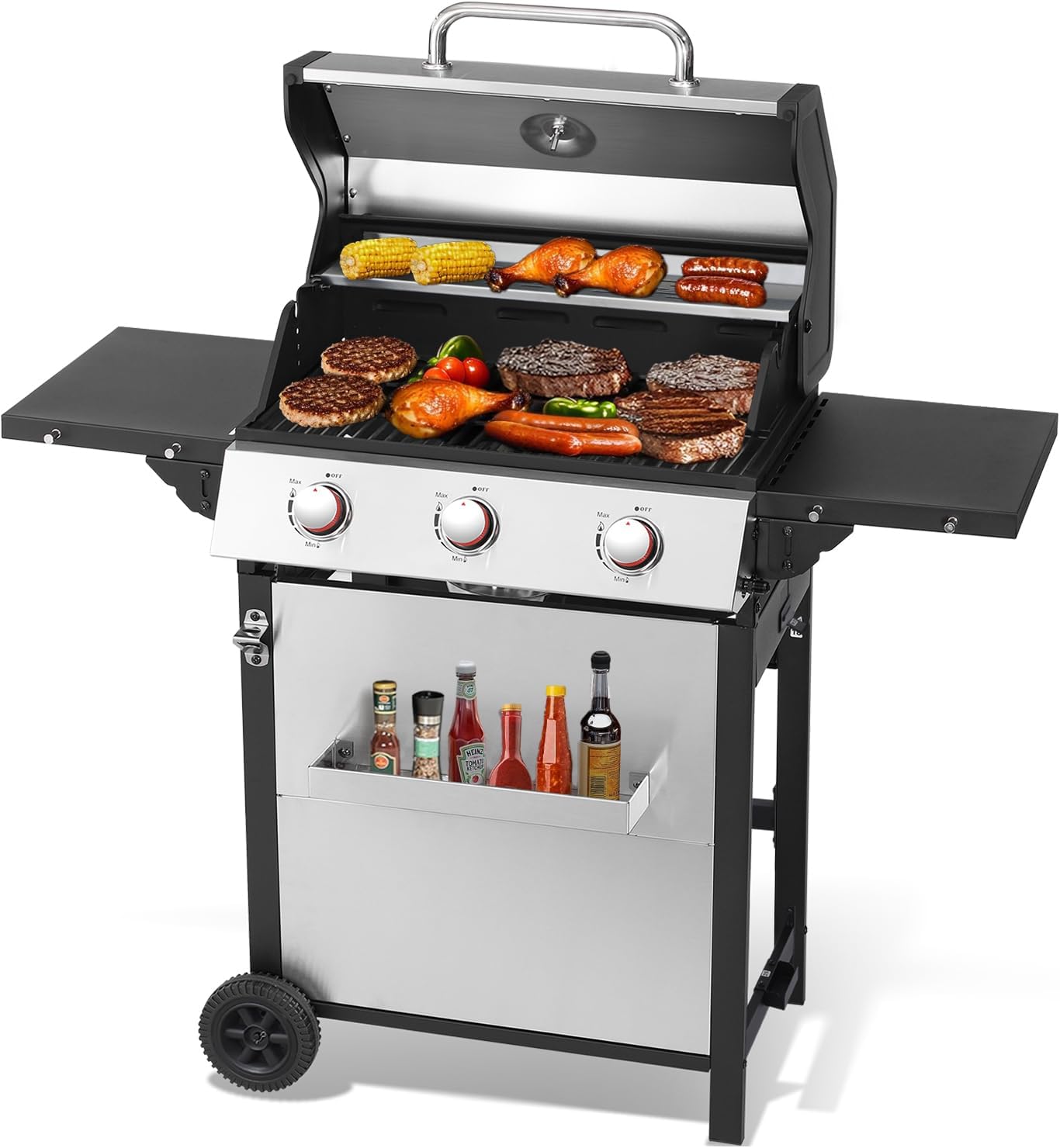
Best for Backyard Cooking: 3 Burner Propane Gas Grill
The case for three burners is not the total heat output. It is the zones. With three burners under one grate you can run the left one wide open, leave the middle low, and shut the right one off entirely, which gives you a sear zone and an indirect zone in the same box. That is how you cook a whole chicken without turning the skin into charcoal, and it is how you finish a steak without a flare-up ruining your evening.
This one is built around a stainless steel cabinet with a side table and a full-size grease tray, and it has a thermometer in the lid. The cabinet matters more than people expect, because it keeps the tank out of sight and gives you a place for tools. The full-size grease tray matters more than the cabinet. A small tray fills up during a long cook and turns into a problem at the worst possible moment. A lid thermometer is not a substitute for a probe thermometer, and I will say that plainly, but it does tell you when the lid is hot enough to be worth opening.
Check the side table dimensions before you buy. My oldest pet peeve in this category is a side table smaller than a plate, and there are plenty of them.
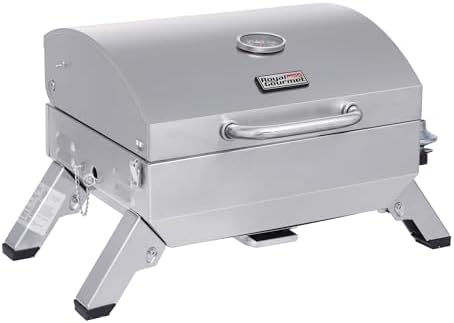
Best Tabletop: Royal Gourmet GT1001 Stainless Steel Portable Grill
A tabletop grill is the right answer for a deck, a balcony, or a tailgate where you are not hauling a cart. Ten thousand BTU across a small grate is not a small number, because heat density is what cooks food, not the headline figure. Folding legs and a lockable lid mean it travels like a suitcase and stores on a shelf in the garage.
What you give up is zone control. One burner means one temperature across the whole surface, so you cook in batches and you move the food instead of the knobs. For burgers, sausages, and a couple of steaks, that is a fair trade. For anything that needs an hour of indirect heat, it is the wrong tool.
The stainless steel body and the folding legs are the two things that separate this from the cheapest tabletops. Cheap legs wobble, and a wobbly tabletop with a hot grate on it is how people get hurt.
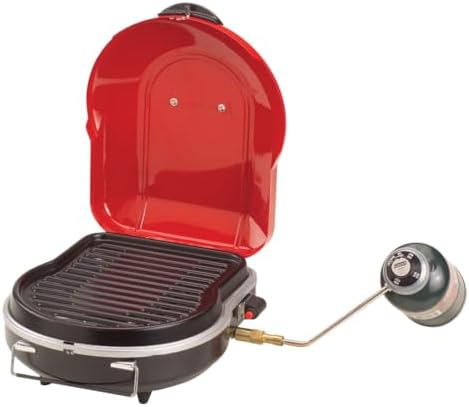
Best for Camping and Tailgating: Coleman Fold 'N Go Portable Propane Grill
Six thousand BTU, a push-button starter, and an adjustable horseshoe burner, in a package light enough to carry one-handed. The horseshoe burner is the interesting part. It wraps heat around the perimeter of a small grate instead of dumping it in the center, which is the right shape for a compact cooking surface, and the adjustable valve lets you dial down to a simmer. Most tiny portables run at one temperature: hot.
This is a camping and tailgating grill. Do not buy it expecting to feed six people at home. Buy it because you want a real flame at a campsite, in a stadium lot, or on a boat, and you do not want to argue with a chimney starter in the wind.
Push-button starters are the first thing to fail on any gas grill, and it is the one part I would test on day one, while the return window is still open. If a starter dies in week three, the grill goes back. That is not a preference, it is a rule.
Best Sear Tool: Grillblazer Su-VGun Propane Torch with Stand
This is not a grill, and that is exactly why it belongs in this list. It is a 240,000+ BTU propane torch on a stand, built for searing steak, lighting charcoal, and starting a campfire. Think of it as the tool that fixes a weak sear zone without replacing the grill that has one.
Here is the honest math on searing. A grate that never gets past a dull orange will never give you a crust, no matter how long you leave the steak sitting on it. A torch gets you the crust in seconds, and then the steak goes back over low heat to finish. It also lights a chimney of charcoal in a fraction of the time, which matters on a windy day in Texas when the newspaper refuses to cooperate.
Safety is not optional with a tool like this. Keep the flame away from the propane line and the tank, never use it indoors or under a roof overhang, and let the head cool before you set it down. Read the manual. I mean it.
How I judge a gas grill
I do not publish scores for a grill I have not cooked on three times. That rule has cost me access to a few brands, and it has never once been wrong. It also means this piece is a buying guide rather than a scorecard, so here are the criteria I run through before I ever light a burner.
The layout comes first. Where the burners sit and what shape they are tells you where the hot spots will be before you cook a single burger. A single horseshoe burner and three straight tubes are different animals, and neither is automatically better. It depends on what you cook and how many people you feed.
Recovery time comes second, and it is the most honest number in grilling. How fast does the temperature come back after you open the lid? That is the difference between a grill and a fire pit with a lid.
The igniter comes third, and I weigh it heavier than most people do. An igniter that dies in the first season is a design failure, not bad luck.
Then grease management, grate material, and the warranty. A ten-year burner warranty is worth more than any badge on the lid, because paper covers parts and steel covers the grill.
Finally, the real test: would I trust this grill with a forty dollar brisket? If the answer is no, it does not matter how good it looks on the patio.
The four options at a glance
| Gear | What it is | Best for | Notes |
|---|---|---|---|
 Visit on Amazon → 3 Burner Propane Gas Grill |
Three burners, stainless cabinet, side table, full-size grease tray, lid thermometer | Patio cooking where you want zones | Visit on Amazon → |
 Visit on Amazon → Royal Gourmet GT1001 Portable Grill |
10,000 BTU tabletop, folding legs, lockable lid | Decks, balconies, tailgates | Visit on Amazon → |
 Visit on Amazon → Coleman Fold 'N Go Portable Grill |
6,000 BTU portable, push-button starter, adjustable horseshoe burner | Camping and tailgating | Visit on Amazon → |
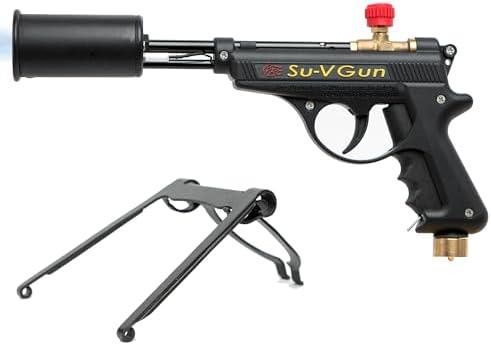 Visit on Amazon → Grillblazer Su-VGun Propane Torch |
240,000+ BTU torch with a stand | Searing, charcoal ignition, campfires | Visit on Amazon → |
Analysis: what the numbers actually tell you
BTU figures are marketing. Heat density is engineering. Ten thousand BTU in a tabletop box is a hotter cooking surface than sixty thousand BTU spread across a six burner patio monster, because the heat is concentrated where the food sits. When someone quotes a big number and nothing else, they are selling you a spec sheet, not a grill.
Burner count is about flexibility, not power. Three burners on a wide box means three zones, but it also means three chances for a hot spot if the tubes are spaced badly. One burner means even heat and no flexibility at all. That is the trade, and it is the same trade whether you spend a little or a lot.
Portability costs you control. Every pound you save is a knob you give up, and every folding leg is a joint that can loosen. That is not a knock on portable grills. It is the reason a serious backyard cook and a serious tailgater should own different gear.
The torch is the outlier in this group, and it is the one I recommend most often to people who already own a grill they like. If your sear zone is mediocre, you have two options: buy a new grill with a better sear zone, or buy a torch and keep the grill. One of those costs a fraction of the other.
And the last thing, which matters more than any spec: buy the grill for the cooking you actually do. Not the cooking you imagine at the showroom. Count how many times last summer you fed more than four people, and count how many times you packed a cooler. The answer tells you which of these four belongs in your garage.
Should you buy the 3 burner propane gas grill?
Yes, if your cooking happens at home and you want zones. Three burners give you a sear zone and an indirect zone in the same box, plus a cabinet, a side table, and a full-size grease tray that will not need emptying mid cook. A lid thermometer is a bonus, not a thermometer replacement.
Skip it if you need something that travels, or if your patio is small. Three burners need width, and width needs room.
Should you buy the Royal Gourmet GT1001?
Yes, if your cooking happens on a deck, a balcony, or a tailgate. The folding legs and lockable lid are the whole point, and the stainless body will survive being stored in a garage. Ten thousand BTU over a small grate gives you real heat for burgers and steaks.
Skip it if you need two zones, or if you regularly cook for a crowd. One burner means one temperature, and that is the end of the story.
Should you buy the Coleman Fold 'N Go?
Yes, for camping and tailgating. Six thousand BTU, a push-button starter, and an adjustable horseshoe burner that wraps heat around the edge of a small grate rather than dumping it in the middle. It is light, it folds, and the valve gives you more control than most portables this size.
Skip it as a primary home grill. It is a companion, not a workhorse.
Should you buy the Grillblazer Su-VGun?
Yes, if your sear zone is weak or you light charcoal often. A 240,000+ BTU torch with a stand gets you a crust in seconds, lights a chimney without newspaper, and starts a fire in weather that would defeat a lighter. It is also the cheapest way to upgrade a grill you already own.
Skip it if you only ever cook hot dogs and vegetables. You do not need a flame thrower for a veggie skewer.