Related: Where the Hot Spots Hide on a New Gas Grill
Four grills are sitting in my notebook this season, and between them they cover the whole argument: propane, natural gas, and one pellet cooker that honestly belongs on the smoker bench. If you are shopping propane and natural gas grills for a backyard that gets used on a random Tuesday and not just on the Fourth of July, this is the lineup I would put in front of you.
My routine has not changed in years. A dozen burgers spread left to right across the grate to find the hot spots. A full brisket to see whether the temperature holds without me standing there with a hand on the knob. A whole chicken, skin side down, to find out what happens when the fat starts dripping and the lid is closed. A grill that cannot hold 350 for an hour without babysitting is a fire pit with a lid, and I have cooked on enough of those to know the difference.
That routine is the lens for everything below. Two of these burn propane, one runs on natural gas, and one burns pellets. All four are worth your attention for different reasons, and I will tell you plainly which one I would buy with my own money.
Best Overall: Weber Genesis E-325
The Genesis is the Corolla of grills. Boring, reliable, and the burner warranty outlives the marriage. The E-325 is the propane cart in black, which means no gas line, no plumber, and a tank swap if you run it dry in the middle of a cook. I keep a spare tank filled for exactly that reason.
What I care about here has nothing to do with the number on the spec sheet. It is whether a dozen burgers spread from the left side of the grate to the right come off looking like they came off the same grill. It is whether the temperature recovers after I open the lid to flip. It is whether the igniter still fires on the first push in season three, because a dead igniter is the fastest way for a decent grill to end up on the curb.
Weber's ten-year burner warranty is worth more to me than any logo on the hood. Paper covers parts. Steel covers the grill. This is the grill I hand to the person who wants to cook dinner and not think about dinner, and the E-325 is that grill in propane form.
Best Sear Zone: Napoleon Rogue PRO 625
Napoleon builds the best sear zone under $1,500, and the infrared side burner on the PRO 625 is the reason. Infrared is not a gimmick when it is built right. It gets screaming hot, it puts a crust on a steak in the time it takes to pour a drink, and it does not care about the wind.
This is the natural gas model with five burners, which changes your whole setup. You run a line, you never buy a tank again, and you stop thinking about fuel at all. That is a luxury, and I treat it like one. The trade is that the grill stays where the line ends, so measure the patio before you commit.
Five burners also means five zones, which is the part people underrate. You can run two burners under a pile of chicken thighs, keep one on low for sauce, and leave the rest off to save gas. That kind of control is what separates a grill you fight with from a grill you cook on.
Best Propane Setup: Napoleon Rogue PRO-S 525
Same family, different job. The PRO-S 525 is a four-burner propane grill with a rear burner and a side burner, and the rear burner is the one that matters if you ever want to spin a chicken over the fire. A rear burner is a rotisserie burner in most carts, and having one built in beats rigging something with foil and hope.
Propane keeps this one portable in a way the natural gas model is not. You can roll it, you can take it to a tailgate, you can move it out of the weather. Four burners is plenty for a family plus a couple of guests, and the side burner gives you a place to finish a sauce without walking back inside.
If your patio has no gas line and no plan to get one, this is the Napoleon I would point you toward. You give up a burner and the infrared sear station, and you keep the build quality that makes the brand worth the money.
The Pellet Question: Traeger Woodridge
Here is where I have to be honest about my own rules. Pellet cooking is a smoker's job, and I send people to the smoker bench for the full breakdown on that side of the hobby. I am not going to pretend a pellet grill is a gas grill with a different fuel door, because it is not.
That said, the Woodridge is in this lineup for a reason. It is a wood pellet grill and smoker with 860 square inches of cooking space and WiFi, which is the modern way of saying you can watch a long cook from the couch instead of from the driveway. If most of what you cook is ribs, pork shoulder, and brisket on a Saturday, this is the tool that matches the cooking style you actually have.
If most of what you cook is burgers on a weeknight, it is the wrong tool. Buy the grill for the cooking you do, not the cooking you imagine at the showroom. That is the whole decision in one sentence.
How I tested
I do not write about a grill until it has cooked at least three times: once for evenness, once for a long cook, and once for something messy and fatty that tests the drip path.
The evenness cook is a dozen burgers, same size and same thickness, spread across the whole grate. I watch which one finishes first and which one is still pink in the middle. That tells me where the hot spots live without ever looking at a diagram.
The long cook is a full brisket or a pork butt, and it tells me about recovery time, which is the most honest spec on any grill. Open the lid, lose the heat, and see how fast it comes back. A grill that takes ten minutes to recover is a grill that will run you ragged on a windy day.
The messy cook is a whole chicken with the skin on. If the fat hits the flavor bars and the whole thing goes up in flames, I want to know that before you do.
I keep a spiral notebook for every cook: ambient temperature, wind direction, which side of the grate ran hot, and how long the lid stayed open. The notebook has never lied to me. Brochures have.
Analysis and test results
BTU ratings are marketing. Even heat distribution is engineering. A big BTU number on a box tells you how fast a burner can burn gas, not whether the heat lands where the food is. I have cooked on high-BTU grills with a hot spot the size of a dinner plate and low-BTU grills that ran like an oven.
Burner layout is the tell. Where the burners sit and what shape they are predicts the hot spots before you ever light the thing. Five burners across a wide firebox give you more zones and more ways to move food away from trouble. Four burners in a tighter box give you fewer zones but often more even heat, because there is less real estate to cover.
Warranty is the other tell, and it is the one people skip. Read what is covered and for how long. A long burner warranty says the company expects the steel to last. A one-year warranty on everything says the opposite.
Flare control is where the marketing gets loud and the truth gets quiet. I have watched "flare-free" grates meet dripping chicken fat, and the grate lost. What controls flare is the drip path, the distance from the food to the heat, and how much grease the system can move away before it catches. No grate design beats a well-planned firebox.
None of this requires a lab. It requires a notebook, a thermometer, and the willingness to cook the same three meals on every grill you consider.
The propane and natural gas grill comparison table
This is the same table I keep in the notebook when someone asks me what to buy. Fuel first, because fuel decides your setup. Then what the badge actually tells you. Then where the grill fits.
| Grill | Fuel | What the badge tells you | Where it fits | Price |
|---|---|---|---|---|
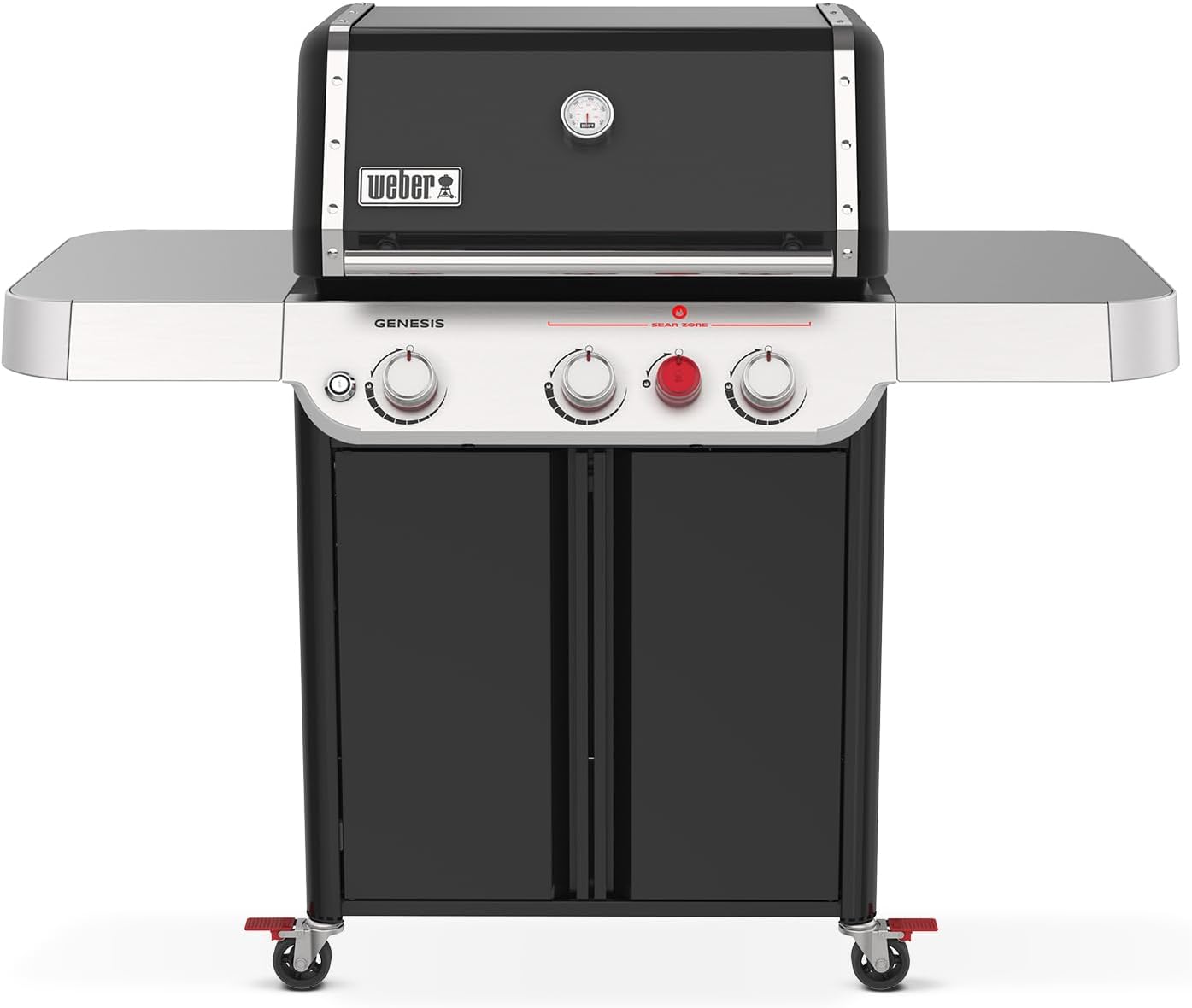 Visit on Amazon → Weber Genesis E-325 |
Propane | Genesis E series, black cart | Weeknight cooking, the safe default | Check current Amazon price |
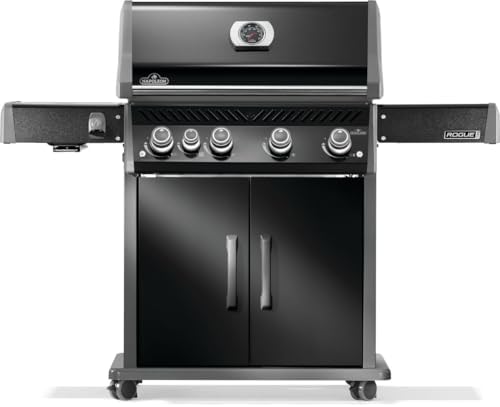 Visit on Amazon → Napoleon Rogue PRO 625 |
Natural gas | 5 burners, infrared side burner | Big cooks, serious searing, fixed gas line | $1,329.00 |
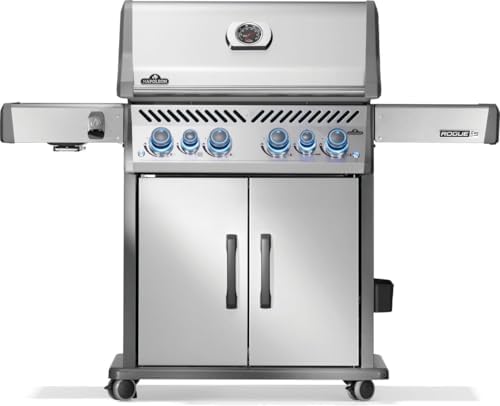 Visit on Amazon → Napoleon Rogue PRO-S 525 |
Propane | 4 burners, rear and side burner | Rotisserie nights, patios without a gas line | Check current Amazon price |
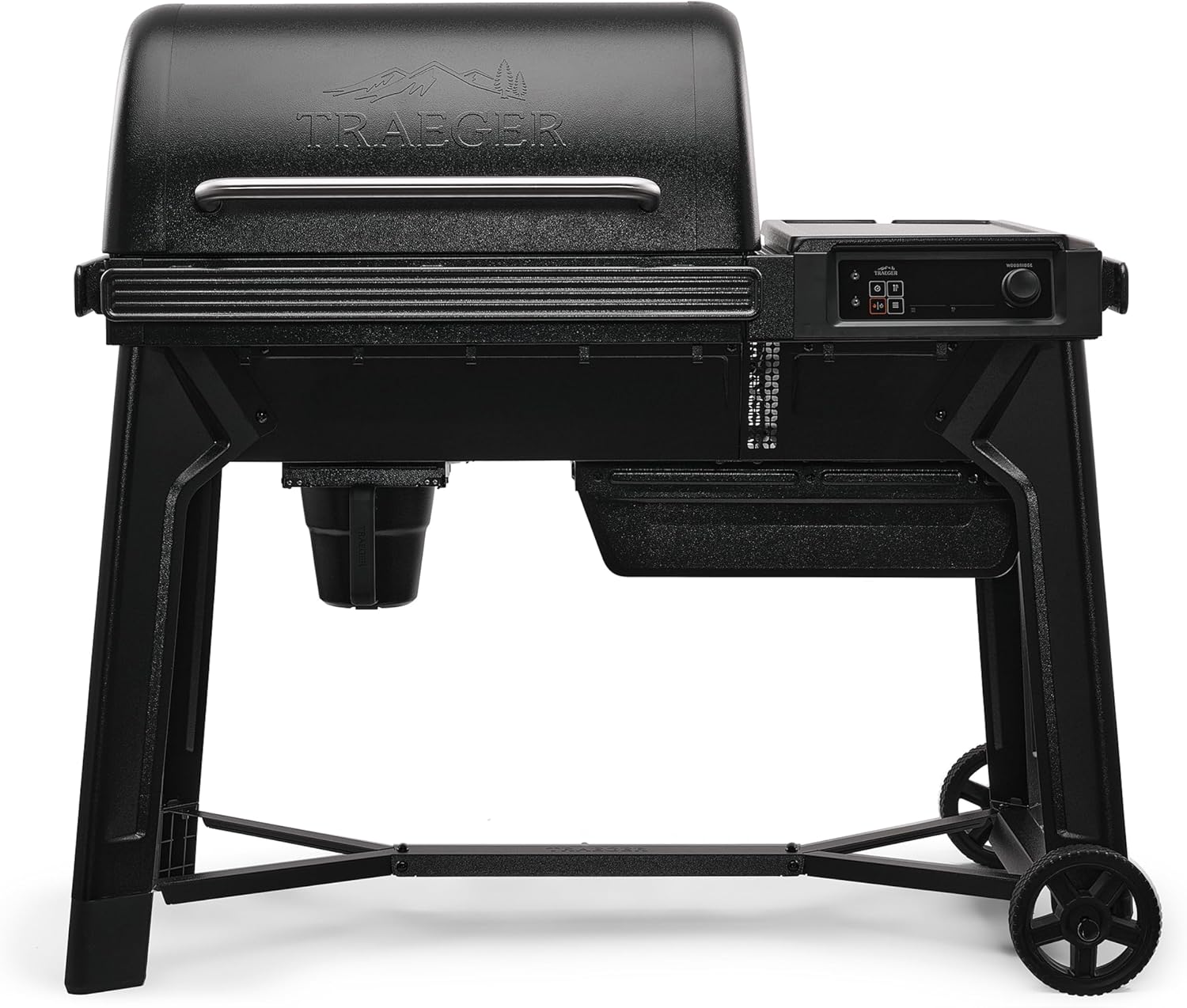 Visit on Amazon → Traeger Woodridge |
Wood pellets | 860 sq in, WiFi | Long low and slow cooks, smoker bench territory | $674.99 |
What the fuel choice really costs you
Propane is a utility. You buy tanks, you swap them, you can move the grill. Natural gas is a luxury. You pay for the line once and then you stop thinking about fuel forever, as long as the grill stays put. Pellets are a third thing entirely, closer to a religion than a utility, and the people who love them really love them.
Pick the fuel that matches your patio, not the fuel that sounds impressive at the store.
Should you buy the Weber Genesis E-325?
Yes, if you want one grill that does everything well and nothing badly. It is the grill I recommend to people who are tired of replacing cheap grills every three summers. The burner warranty is the real selling point, and propane keeps the cart flexible. Check current Amazon price if you want to see where it lands today. If you have a gas line and a bigger budget, read the next section first.
Should you buy the Napoleon Rogue PRO 625?
Yes, if you have a natural gas line and you care about searing. The infrared side burner does work that a standard burner cannot, and five burners give you room to cook a real meal for a crowd. It is the most capable grill in this group, and it asks for a permanent spot on the patio in return.
Should you buy the Napoleon Rogue PRO-S 525?
Yes, if you want the Napoleon build in propane and you plan to use the rear burner. Four burners cover most families, and the side burner earns its keep on sauce night. Skip it if you need maximum grate area, because the 625 has more of that.
Should you buy the Traeger Woodridge?
Yes, if low and slow is your actual cooking style. The 860 square inches and WiFi make long cooks easier to manage, and the pellet flavor is something gas cannot copy. No, if you want a weeknight burger machine, because that is a different tool for a different job.